Field Notes – The Pre-Shoot Ritual: How To Lower Friction For High-Stakes Video
Why Amateurs Need A Safe Container To Perform Under Pressure, aka Psychological Safety Is A Production Asset.
Before AI clipping tools, before everyone had a 4K camera in their pocket, the hardest part of government video was not gear.
It was people.
Executives were worried about looking foolish.
Staff were worried about saying the wrong thing.
Both groups were quietly afraid of being judged on something they were never trained to do.
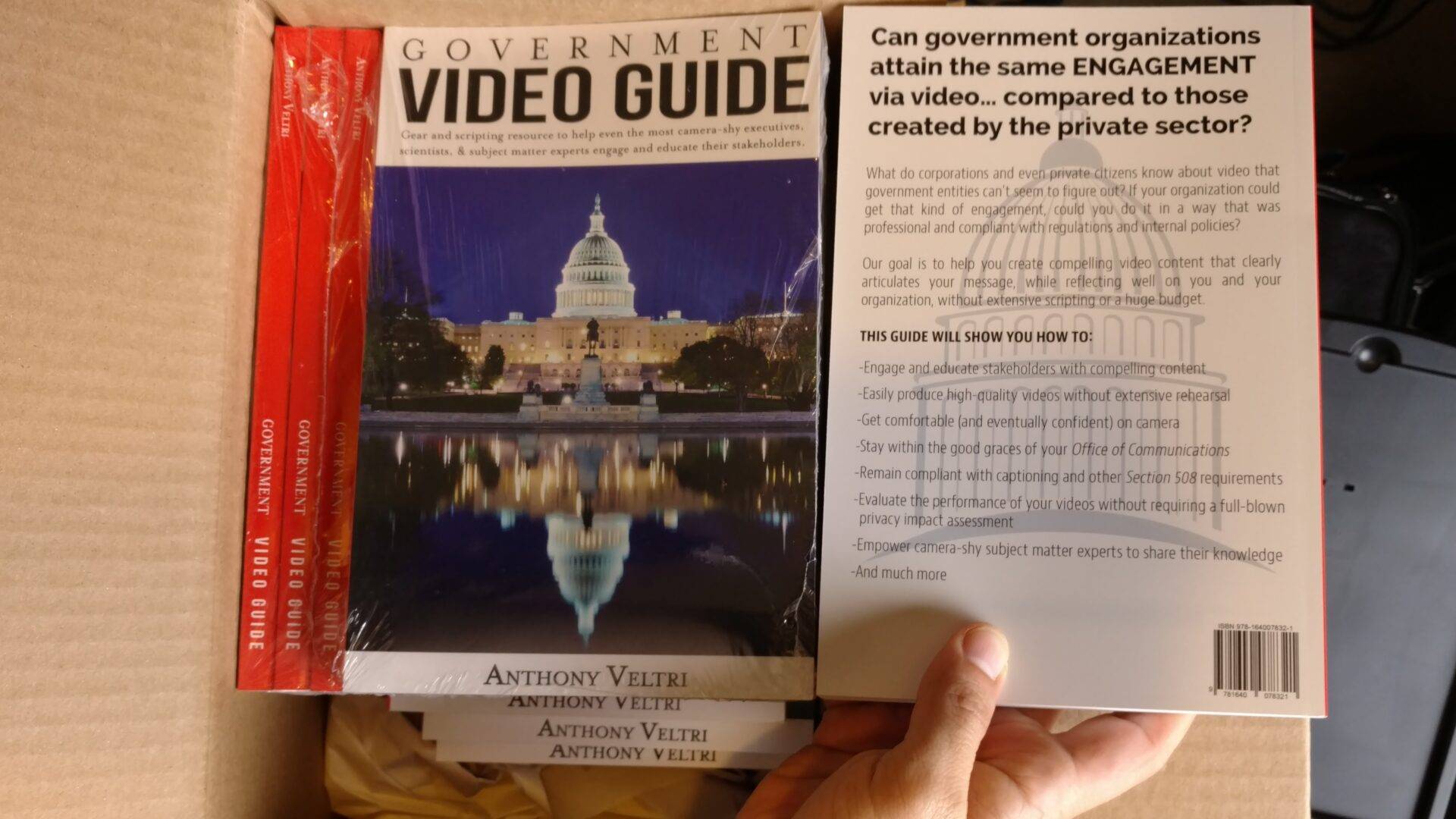
The Government Video Guide was my attempt to lower that friction at a systems level. It gave people inside agencies a practical handbook they could lean on so they did not have to reinvent video from scratch every time.
This field note zooms in on one small piece of that work.
It is the five minute ritual I started using to help normal, camera shy people feel like they belonged on screen. It has nothing to do with a fancy camera. It has everything to do with how you show up as a guide before the shoot even starts.
This video is from many years ago, but the advice it contains is timeless. Original link here https://www.youtube.com/watch?v=vXrthdCmN-g
The methodology behind the ritual: structured knowledge extraction disguised as comfort
The five-minute pre-shoot ritual looks like casual conversation designed to make nervous people comfortable. It’s actually structured knowledge extraction using inverted anti-elicitation techniques.
Early in my federal career (2008), we received anti-elicitation training designed to prevent foreign intelligence from extracting sensitive information through casual conversation. Most people sat through it with glazed eyes. I found it fascinating and immediately inverted the methodology for constructive use.
The same techniques that prevent unwanted knowledge extraction work brilliantly for helping non-media people articulate their expertise on camera when you have legitimate access and mission alignment.
The pre-shoot ritual has a game plan:
Establish the container: “This is a safe space, we can do multiple takes, nothing goes live without your approval.” This lowers psychological barriers and shifts the person from performance anxiety to collaborative conversation.
Prime the expert: “Tell me about the work you do” rather than “we’re going to ask you three scripted questions.” This activates their expert schema and gets them talking in their natural operational voice instead of formal presentation mode.
Extract the operational knowledge: Listen for the moment when they shift from describing what they’re supposed to say to explaining how things actually work. That’s when you start recording.
The ritual works because it converts a high-stakes performance event (being filmed) into a guided conversation where the subject is the expert and you’re genuinely curious about their knowledge. People relax when they realize you’re not there to judge their on-camera skills but to capture what they actually know.
This methodology extracted knowledge that formal interviews never would have surfaced. Scientists explained research implications they’d never articulated before. Executives described decision frameworks they’d never written down. Field operators revealed operational patterns they didn’t know were valuable.
The pre-shoot ritual wasn’t just about making people comfortable. It was about creating the conditions for tacit knowledge to become explicit, on camera, in a way that served both the mission and the practitioner.
The Real Constraint: Normal People, High Stakes, No Rehearsal
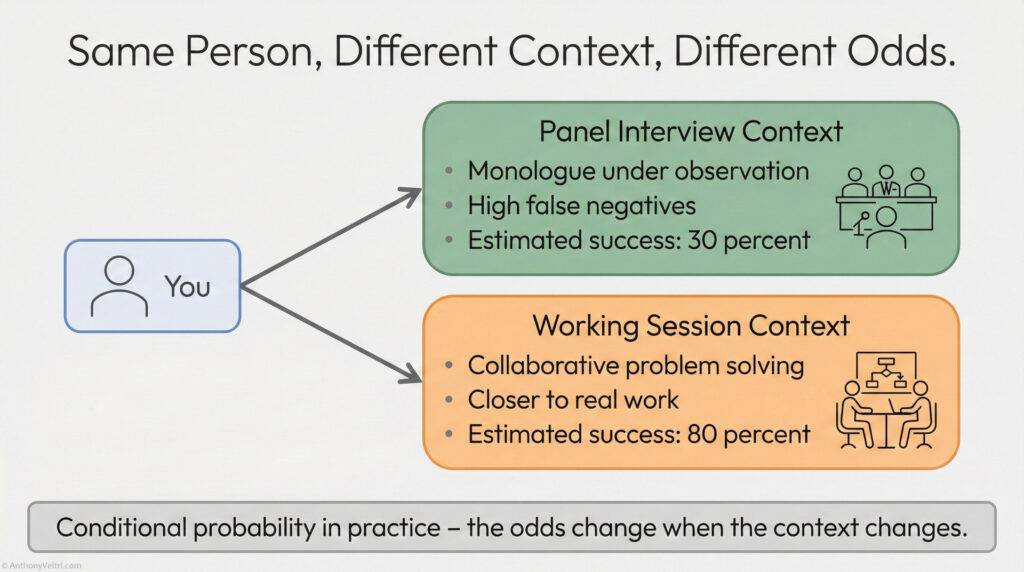
Context Matters. Throwing people into the deep end causes panic, not performance.
If you work in government or any large organization, this pattern will feel familiar:
- You are pressed for time.
- You have one short window with the person you need to interview.
- They do not appear on camera as a normal part of their job.
- There is a lot riding on how they come across, for them and for the agency.
We often pretend that leaders and experts will just “rise to the occasion.”
That is not how nervous systems work.
Appearing natural and confident on camera is like swimming.
If you throw someone into the deep end without practice, they do not rise to the occasion. They panic.
Once I accepted that, the job changed. My job was not to “get a good performance.” My job was to create a safe beginner space for people who had never done this before, in a context that felt very public and very permanent.
That is where the pre shoot smartphone video came from.
The Five Minute Move: Pre Shoot Smartphone Video
A few days before a shoot, I started sending each interview subject a short personal video from my phone.
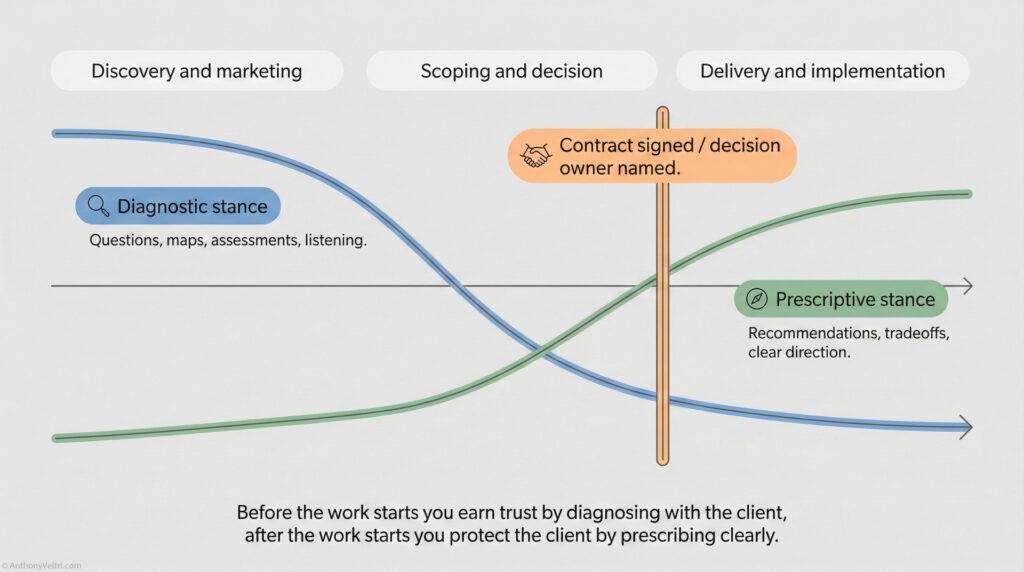
Not a polished promo. Not a script. Just me, talking to them, the same way I would on site.
The goals were simple:
- Introduce myself as a human, not just a title.
- Make my commitment to their reputation explicit.
- Reference a simple checklist that would make their life easier.
- Invite questions in whatever channel was easiest for them.
Here is the kind of message I would send, adapted from one of the original scripts:
Hi, my name is Anthony Veltri. I am the videographer who will be coming out to interview you in a couple of days.
I wanted to take a minute to introduce myself and share what I am aiming for with this video.
First, I want whatever we produce to reflect well on you.
Second, I want it to reflect well on your program and your agency.
Third, I want the actual shoot to feel as relaxed and straightforward as possible.A few days ago I sent you a short checklist with some simple pointers that make this much easier, things like clothing, sound, and timing. If you have any questions about that, please feel free to reach out. Phone, email, whatever works best for you.
My job is to make this a positive experience and to help you tell the story you want to tell. I am looking forward to meeting you in person.
Then I would hit send and go back to my day.
Most people never get anything like this before a shoot. Internally it might feel like “just one more thing.” For them, it is a pattern break:
- Someone has thought about their experience.
- Someone is explicitly on their side.
- Someone has offered a clear path into unfamiliar territory.
That is the beginning of psychological safety.
The Checklist That Makes You Look Like A Professional
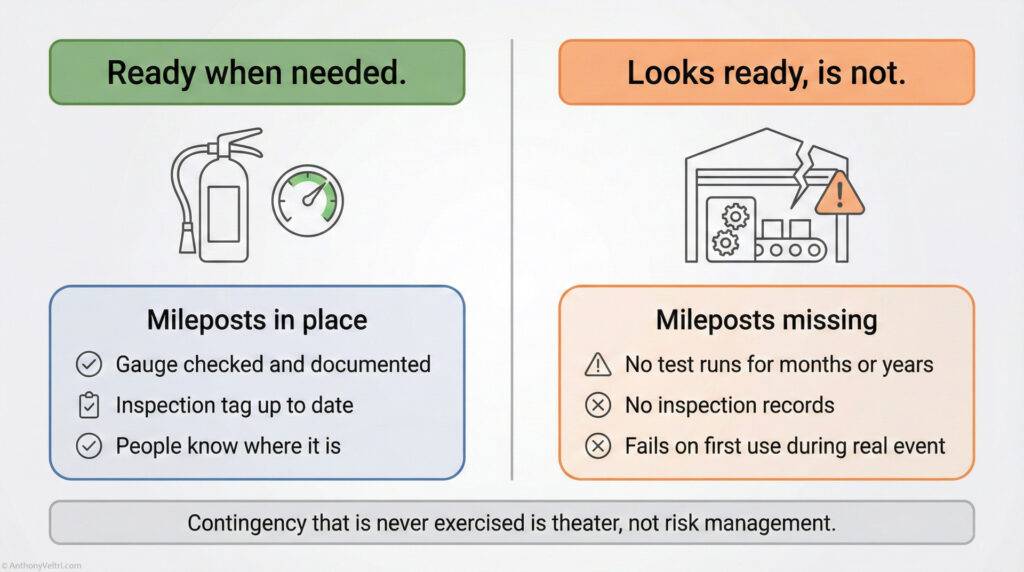
In the video I reference a checklist I send ahead of time. It is not magic. It is basic logistics and respect, written down so people can stop guessing.
You can adapt something like this:
Lighting and location
- Choose a quiet space where you will not be interrupted for 30 to 45 minutes.
- Avoid sitting with a bright window directly behind you.
- If possible, face a window or soft light source.
Clothing and appearance
- Solid colors are safer than tight patterns or stripes.
- Avoid lanyards and noisy jewelry that can bump the mic.
- Bring glasses if you need them to feel comfortable, we can adjust angles if needed.
Time and schedule
- Block 15 extra minutes on either side of the planned shoot.
- Let your assistant or front desk know someone will be arriving to film.
- If you might be called away unexpectedly, tell me that in advance so we can plan around it.
Mindset
- You do not have to memorize anything.
- You are talking to one person who needs your help, not to “the internet.”
- If you lose your place, I will guide you back. That is my job.
The checklist removes avoidable friction. The smartphone video puts a face and voice behind it and gives people permission to be new at this.
Together, they say:
“You do not have to carry this alone. We are in it together.”
The Smallest Piece Of Gear That Changes Everything
In that original walkthrough I also mentioned one more tiny piece of kit.
Always wear an easy to read name tag.
It sounds almost silly until you remember what a shoot day feels like for everyone else. New faces. New gear. New pressure. A moving set of names and titles that nobody wants to get wrong.
Every time you step into a new office or field environment, you are asking people to trust you with two things:
- Their time.
- Their image.
The least you can do is remove the awkwardness of “what was your name again” and give them an easy on ramp into conversation.
My rule for government shoots became simple:
- If people have to squint to remember my name, I am making their job harder.
- If they can see it at a glance, I have removed one more source of tension.
When the goal is to put people at ease, small social signals matter as much as gear.
A Real Example: The Balcony Interview
One of my favorite examples of this pattern in action was an interview with a Forest Service staff member, Michel Mouzong.
We had:
- Forty five minutes on the calendar.
- A room that turned out to be double booked.
- The only available alternative was a balcony with foot traffic and noise.
In other words, not a textbook setup.
Because we had already:
- Exchanged the pre shoot video and checklist.
- Built rapport around the idea that my job was to make him look good and keep him comfortable.
- Framed the conversation as a chance to tell a real story, not recite talking points.
The balcony was not a crisis. It was just another constraint to work around together.
We did not use a script. There was no memorization. We focused on:
- His story of emigrating from Cameroon.
- His time in the Marines.
- Why he chose to work in the Forest Service.
- What it felt like to be part of a “special unit” digitizing Eagle Creek fire records.
- The way that work connected back to his kids and future generations.
If you watch that video, what you will see is not a perfect set or flawless delivery. You will see a human being who is fully present, grounded in his own story, talking to another human being just off camera.
That is what the pre shoot ritual is buying you.
Why This Belongs Next To The Government Video Guide
In the main article, Field Notes: What I Learned Writing The Government Video Guide, I focused on the larger patterns:
- Why I wrote the guide.
- How we used it in programs and disaster recovery.
- What it taught me about systems, accessibility, and not becoming the bottleneck.
This safe beginner pattern is one of the small, repeatable moves that sits underneath all of that.
If the Government Video Guide is the handbook for planning and running video inside a government context, this field note is one of the micro rituals that makes the human side work in practice.
It works outside government too, any time you are:
- Asking a nervous expert to go on camera.
- Filming leaders who are used to written remarks, not conversation.
- Bringing a camera into an environment where trust is not automatic.
You can use the same sequence:
- Short personal smartphone video a few days before the shoot.
- Simple checklist that respects their time and context.
- Visible, low friction signals on site that you are on their side.
You do not have to call it a “safe beginner space.”
If it helps, you can just call it being a decent host.
How To Adapt This For Your Own Work
If you want to try this pattern, you do not need my exact words.
You do need to be explicit about three things:
- Your role
- “I am here to help you tell this story.”
- “I am responsible for making this go smoothly, not you.”
- Their safety
- “You do not need to be perfect on camera.”
- “If something does not feel right, say so and we will adjust.”
- The path
- “Here is what will happen when I arrive.”
- “Here is what we will do together.”
- “Here is what happens to the footage after we are done.”
If you give people those three things before the shoot, you change what the day feels like in their body. You are no longer “the camera person.” You are the guide who walked in with a plan and a human connection.
That is how you get normal people, in high stakes environments, to show up as themselves on camera.
It is a small move. It does a lot of work.
If you would like to see the broader context, you can read Field Notes: What I Learned Writing The Government Video Guide, which covers the original handbook, the one page Video Testimonial Guide, and what those projects taught me about high visibility work inside government.
Last Updated on March 15, 2026