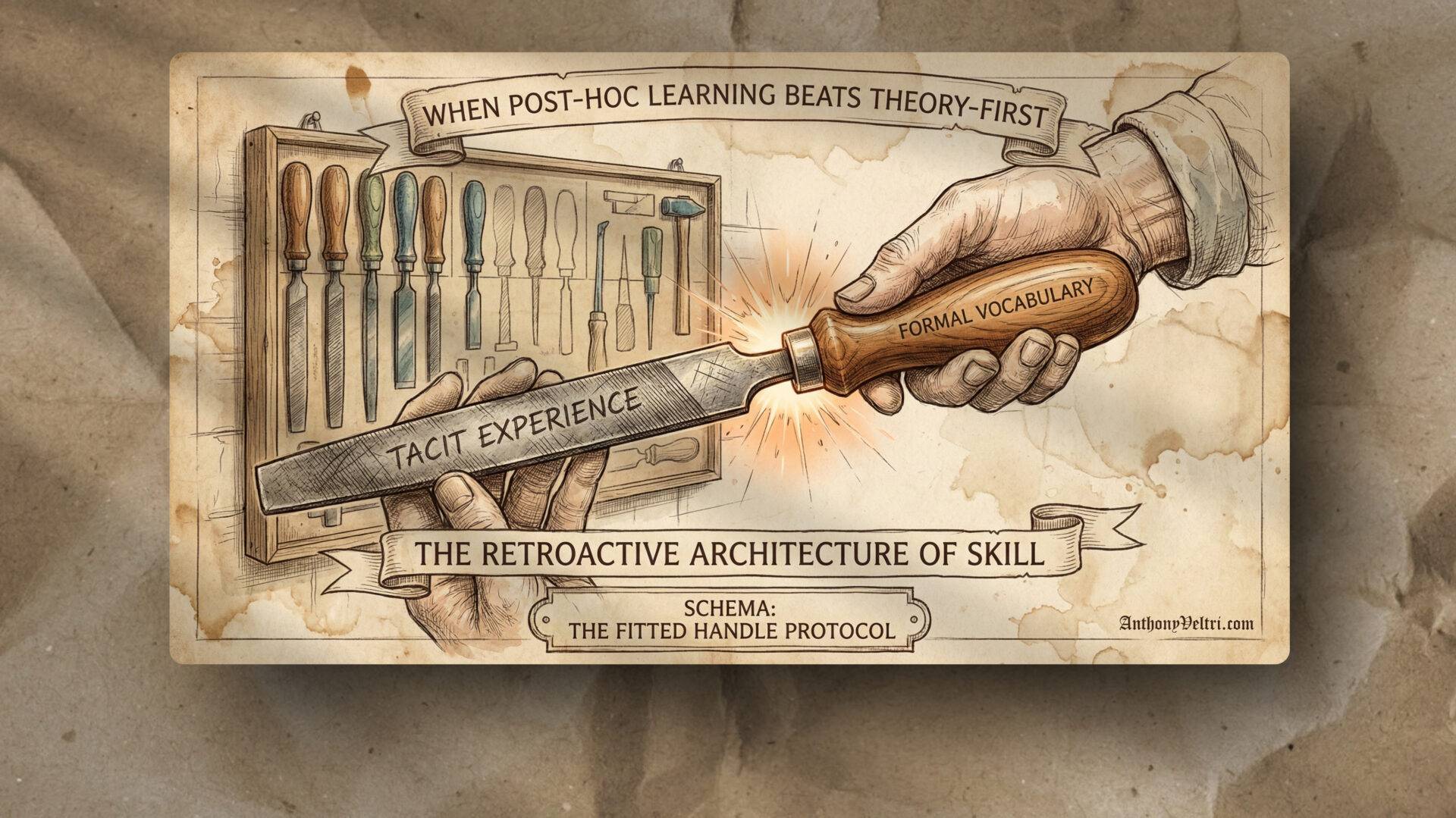
TLDR (Read This First) #
Organizations fail when they expect humans to track, decide, and support more than their cognitive limits allow.
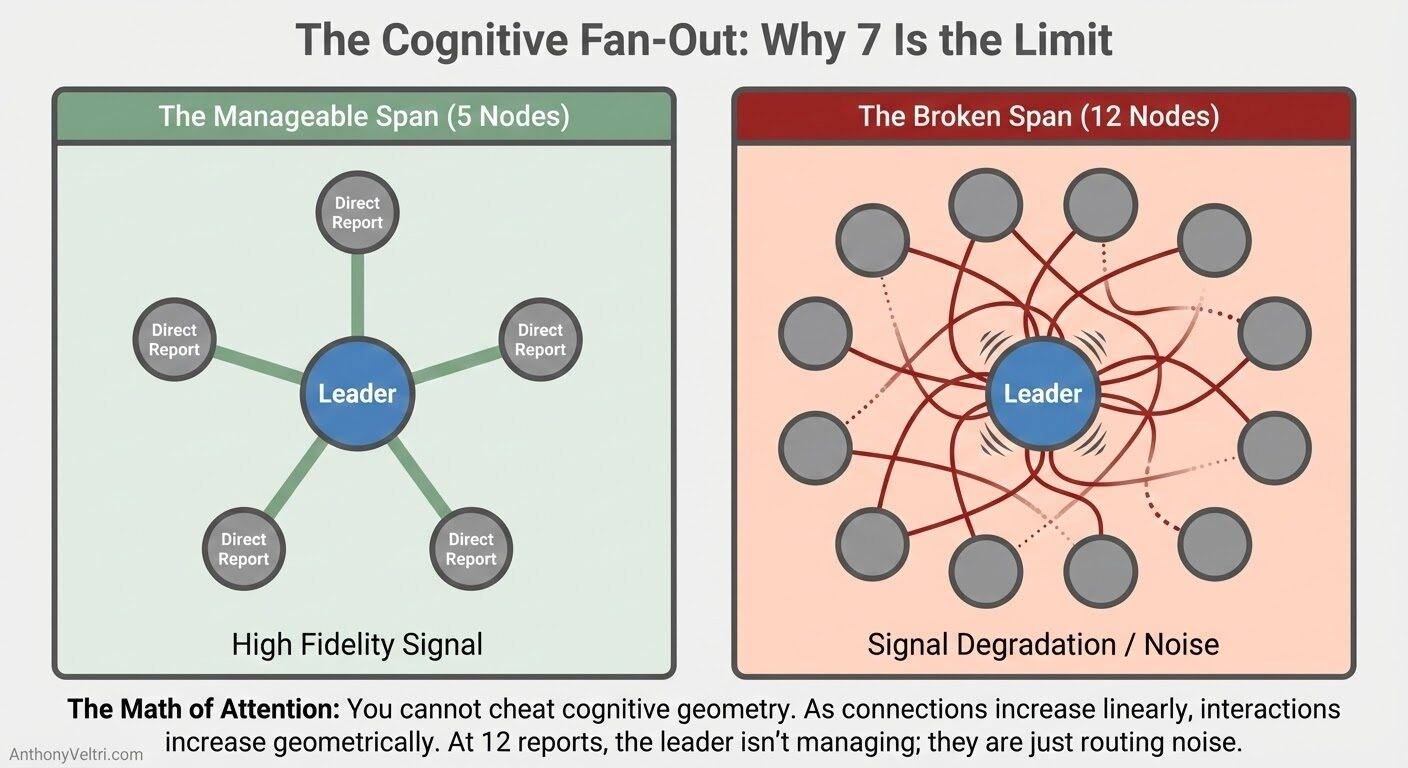
Most people can reliably manage three to seven direct relationships, decisions, or workstreams. Beyond that, performance degrades and risk rises.
Span of control and cross training are not management preferences.
They are human constraints that must be designed for.
If a system collapses when one person is unavailable, the system is fragile, not efficient.
Why This Matters #
Many organizations assume that overload can be solved with:
- Better leadership
- More effort
- Stronger accountability
- “Stepping up”
None of these change human cognitive limits.
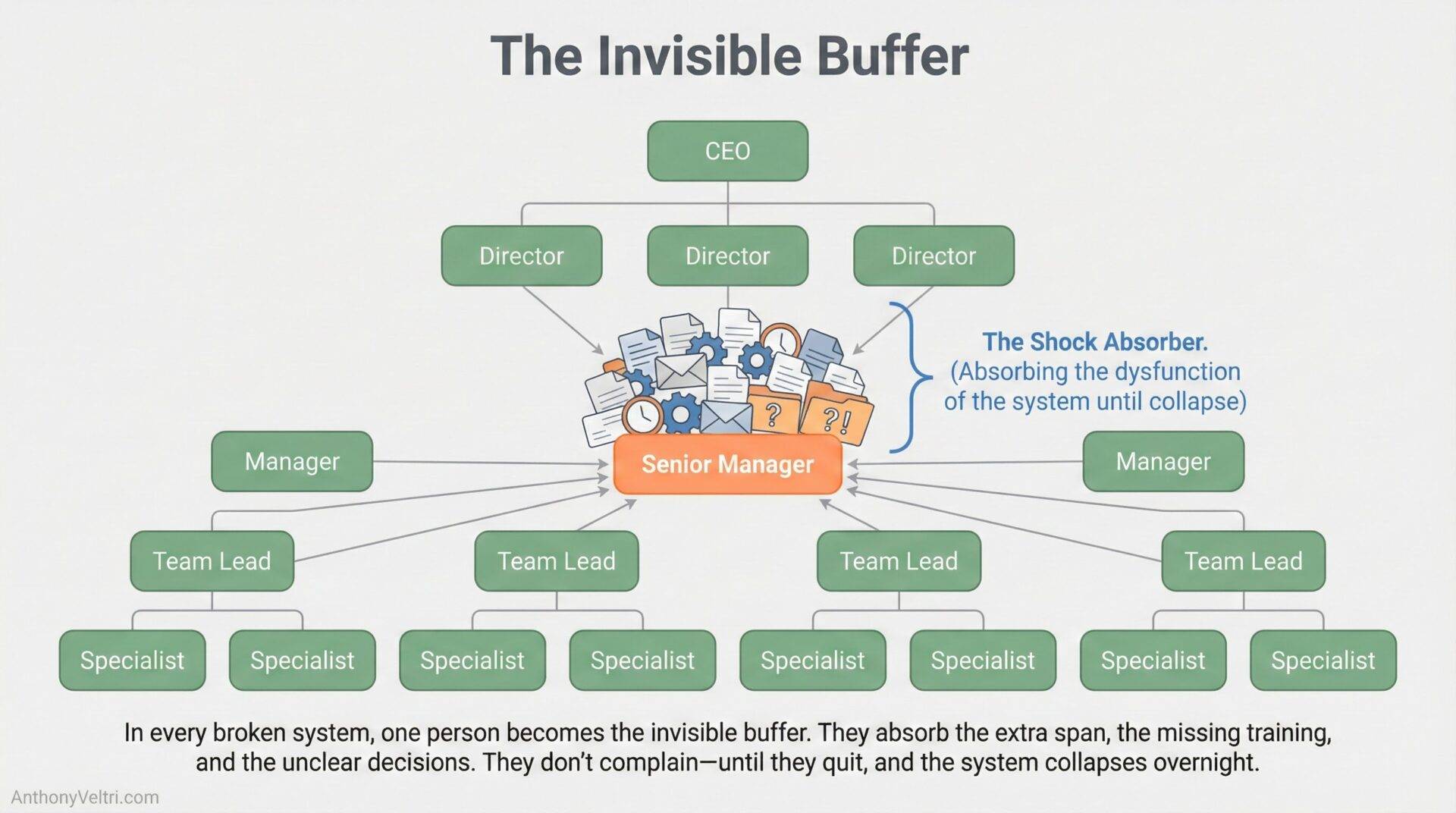
When span of control is exceeded and cross training is absent, systems do not fail loudly. They fail quietly through delay, burnout, missed signals, and heroics.
Span of Control (The Constraint) #
Span of control is the number of people, decisions, or workstreams a single human can reliably track, prioritize, and support.
Operational disciplines such as fire, aviation, emergency response, and systems engineering converge on the same range:
Approximately three to seven direct relationships.
Beyond this:
- Memory becomes unreliable.
- Exceptions are missed.
- Decisions bottleneck upward.
- Leaders appear informed but are not.
- Subordinates wait instead of acting.
This is not a leadership flaw.
It is a biological and cognitive limit.
What Happens When Span of Control Is Ignored #
Systems that exceed span of control without redesign show predictable patterns:
- One person becomes the invisible buffer.
- Absence causes disproportionate disruption.
- “Just one more thing” becomes permanent.
- Decisions migrate upward under stress.
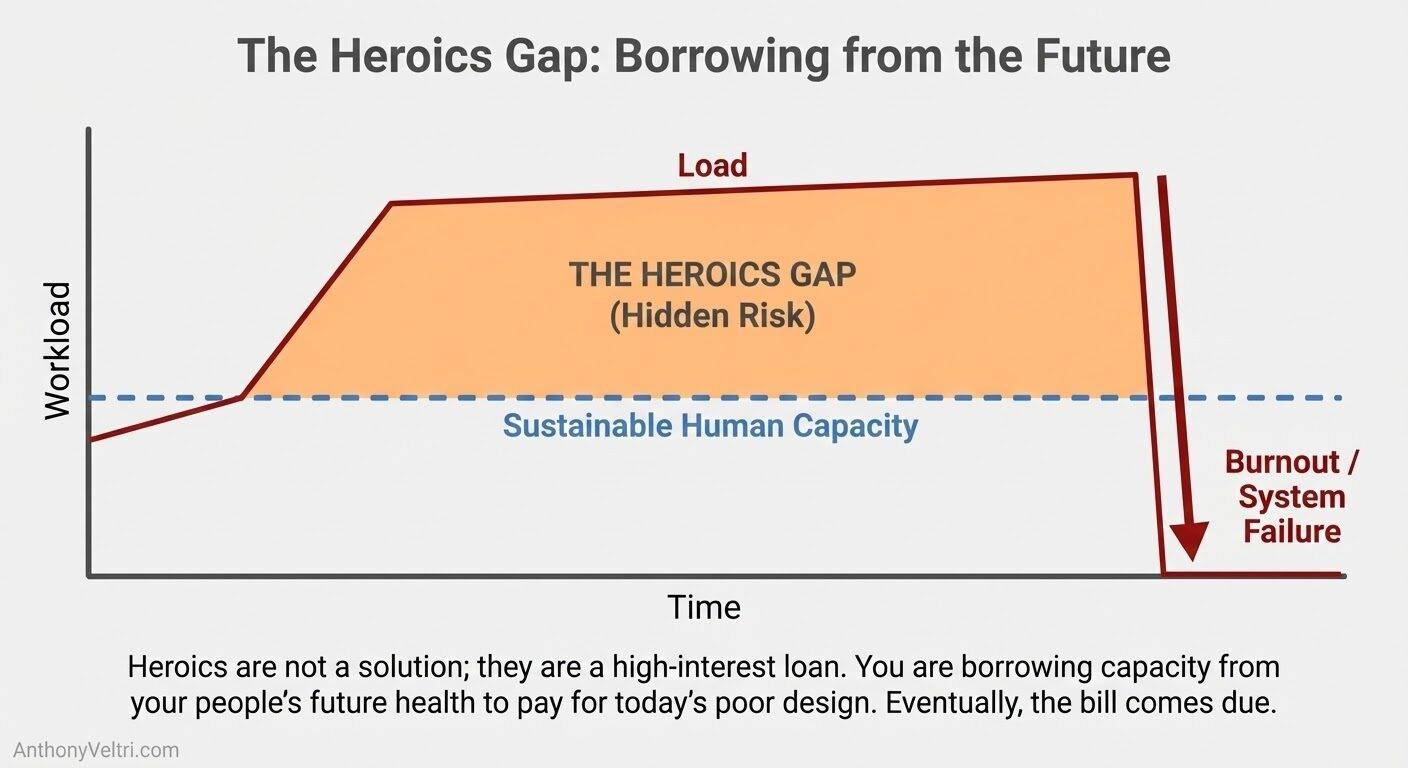
- Heroics replace design.
- Burnout becomes structural.
These are architectural symptoms, not individual failures.
Delegation Is Not Optional #
Once span of control exceeds human limits, delegation is mandatory.
Delegation means:
- Explicit authority.
- Clear decision boundaries.
- Known standards.
- Trust reinforced by structure, not hope.
Systems that refuse to delegate do not become safer.
They become slower, more brittle, and more political.
Cross Training (What It Is) #
Cross training is not about making everyone do everything.
It is about ensuring that no critical role exists in only one head.
Cross training enables:
- Continuity during absence.
- Surge capacity under load.
- Graceful degradation instead of collapse.
- Reduced reliance on heroics.
If cross training only exists on paper or “for emergencies,” it does not exist.
Failure Pattern: Heroics as a Substitute for Design #
Organizations often praise:
- “Can-do spirit”
- “We’ll figure it out”
- “Going the extra mile”
These behaviors are valuable only when:
- Time-bound
- Explicitly exceptional
- Actively paid down afterward
When normalized, they hide risk and consume people instead of solving problems.
Heroics are a warning signal, not a success metric.
Constraint #
If a system cannot tolerate:
- One person being unavailable, or
- One leader exceeding seven meaningful direct relationships
without operational degradation, it is not resilient.
It is borrowing capacity from people instead of designing for reality.
Corollary (Compression-First) #
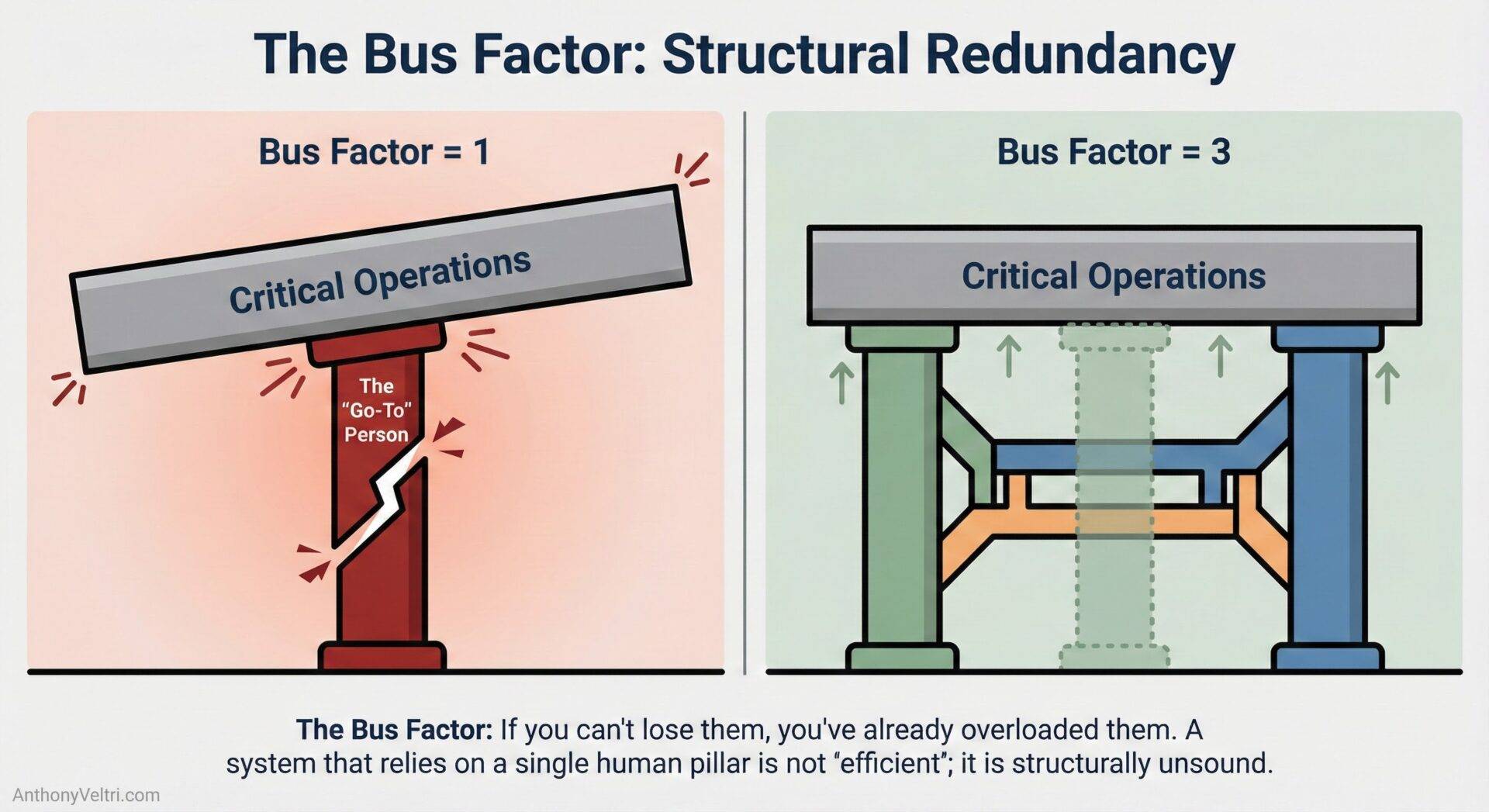
If you cannot lose someone, you have already overloaded them.
The “Bus Factor” Metric #
Engineers use a morbid but useful metric called the Bus Factor: The number of team members who can be suddenly lost (hit by a bus, won the lottery, quit) before a project stalls or collapses.
- Bus Factor = 1: If Steve leaves, the system dies. (Critical Risk)
- Bus Factor = 2+: If Steve leaves, Sarah can keep the lights on. (Resilient)
A Bus Factor of 1 is not “job security.” It is a structural defect. If your organization relies on individuals who cannot be lost, you are not managing a team; you are gambling on their health and loyalty every single day.
Related Doctrines #
- Degraded Operations Are the Normal Mode, Not the Exception
- Resilience Is an Emergent Property, Not a Feature
- Architecture Must Accelerate Teams, Not Bottleneck Them
Last Updated on February 22, 2026