This Doctrine Companion guide presents different ways of thinking and different structures to fit those needs.
Constraint 1: Construction Before Compression #
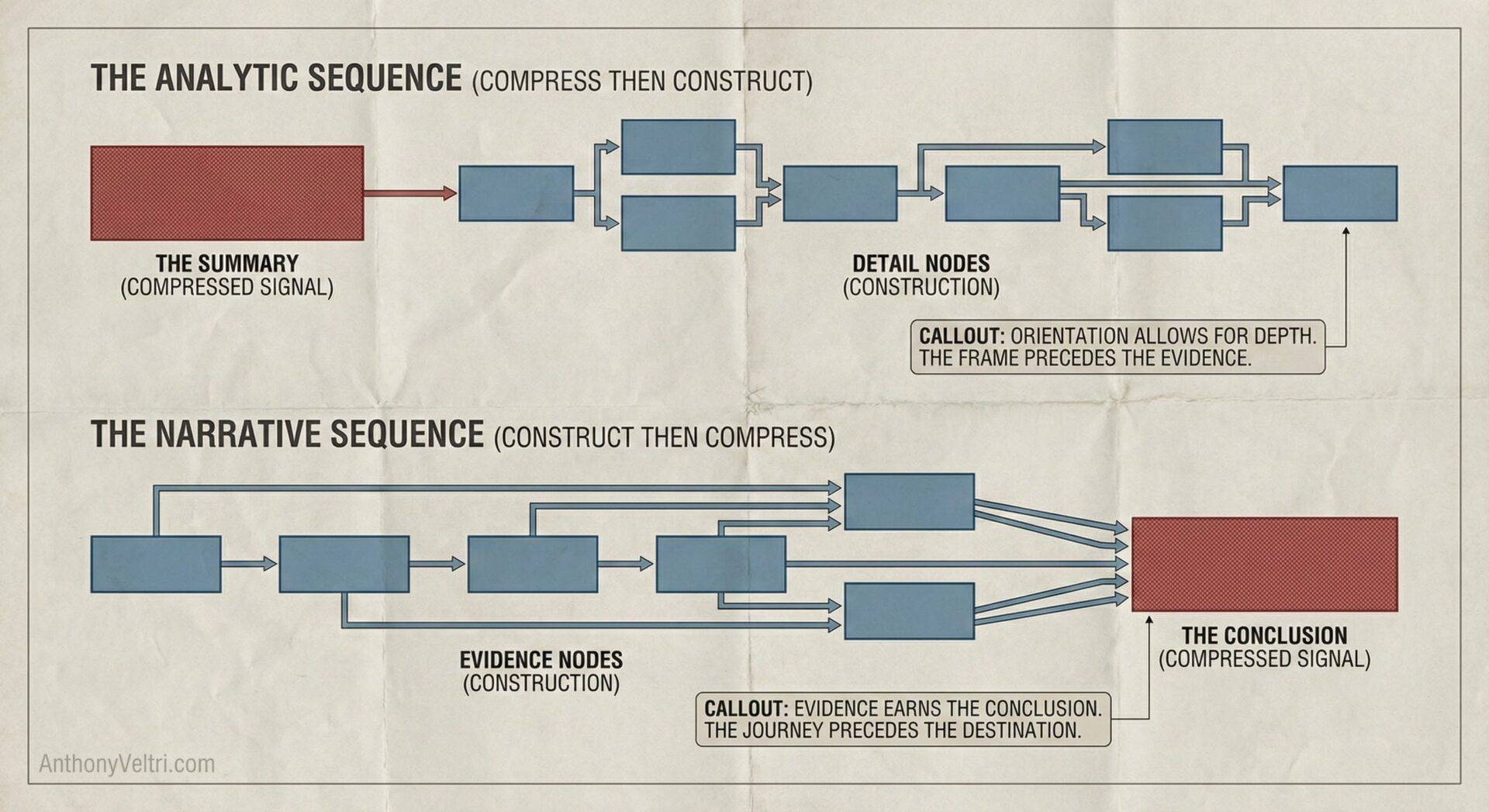
Some thinkers require time to construct the model before they can accurately compress it into conclusions, summaries, or decisions.
For these thinkers:
- Examples precede definitions
- Scenarios precede abstraction
- Reasoning precedes labeling
When forced to compress first, accuracy degrades. When allowed to construct first, clarity accelerates.
This is a sequencing constraint, not a knowledge gap.
Constraint 2: Compression Before Construction #
Some audiences require an initial compressed frame before they can engage with detail, nuance, or examples.
For these audiences:
- A summary creates orientation
- Labels create entry points
- Structure precedes exploration
Without early compression, attention drops and engagement stalls. Once a frame exists, these audiences can absorb depth efficiently.
This is also a sequencing constraint, not a limitation.
Corollary Relationship (Neutral Framing) #
These constraints are not opposites.
They are complementary sequencing needs.
Effective communication in complex systems often requires bidirectional translation:
- Construct first, then compress
- Or compress first, then construct
Failure occurs when one sequencing style is imposed universally.
This is the same failure mode seen in centralized systems that assume one standard fits all participants.
Note: Methodology vs. Sequencing #
Technical Note: Model Extraction vs. Information Delivery
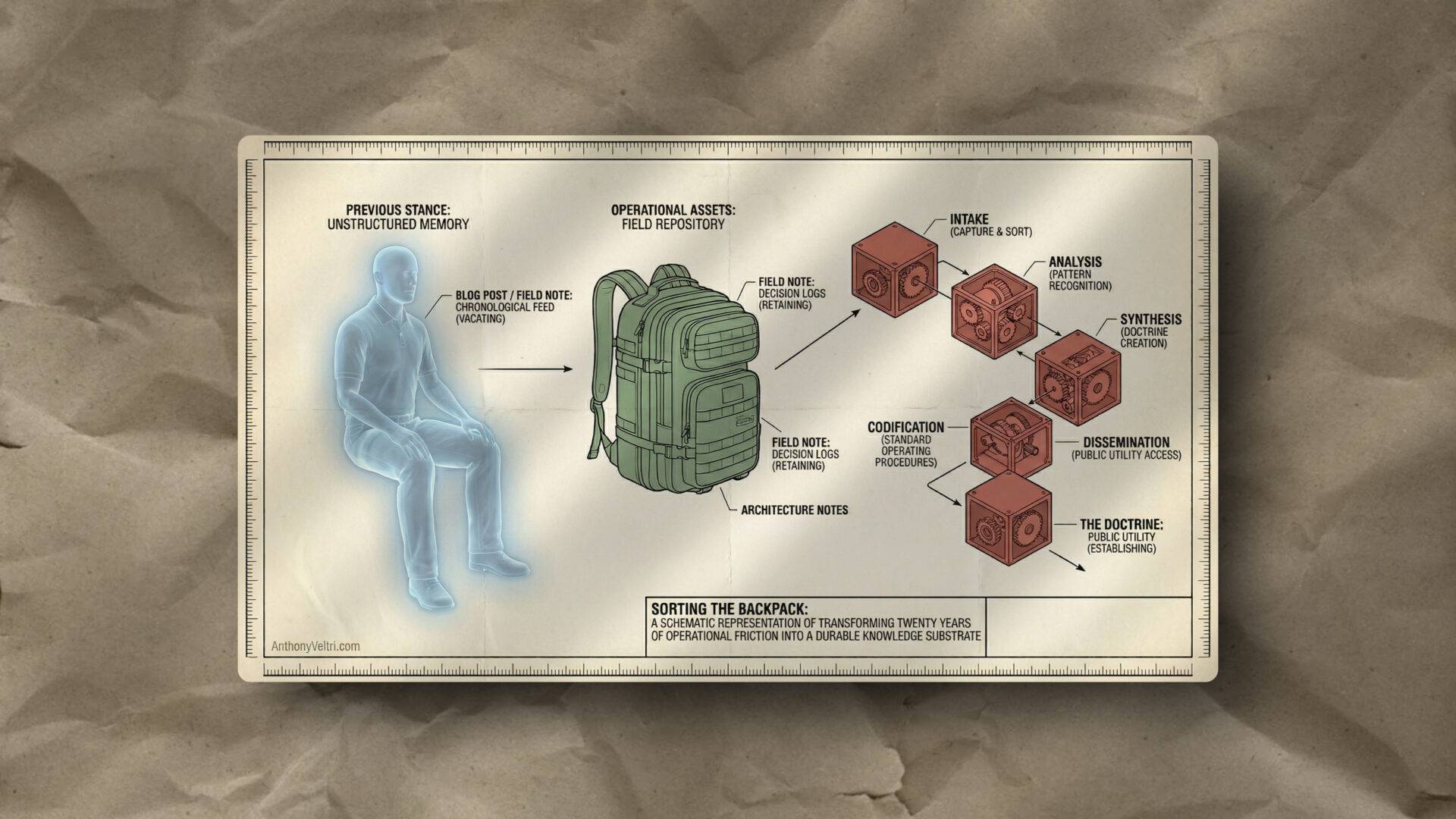
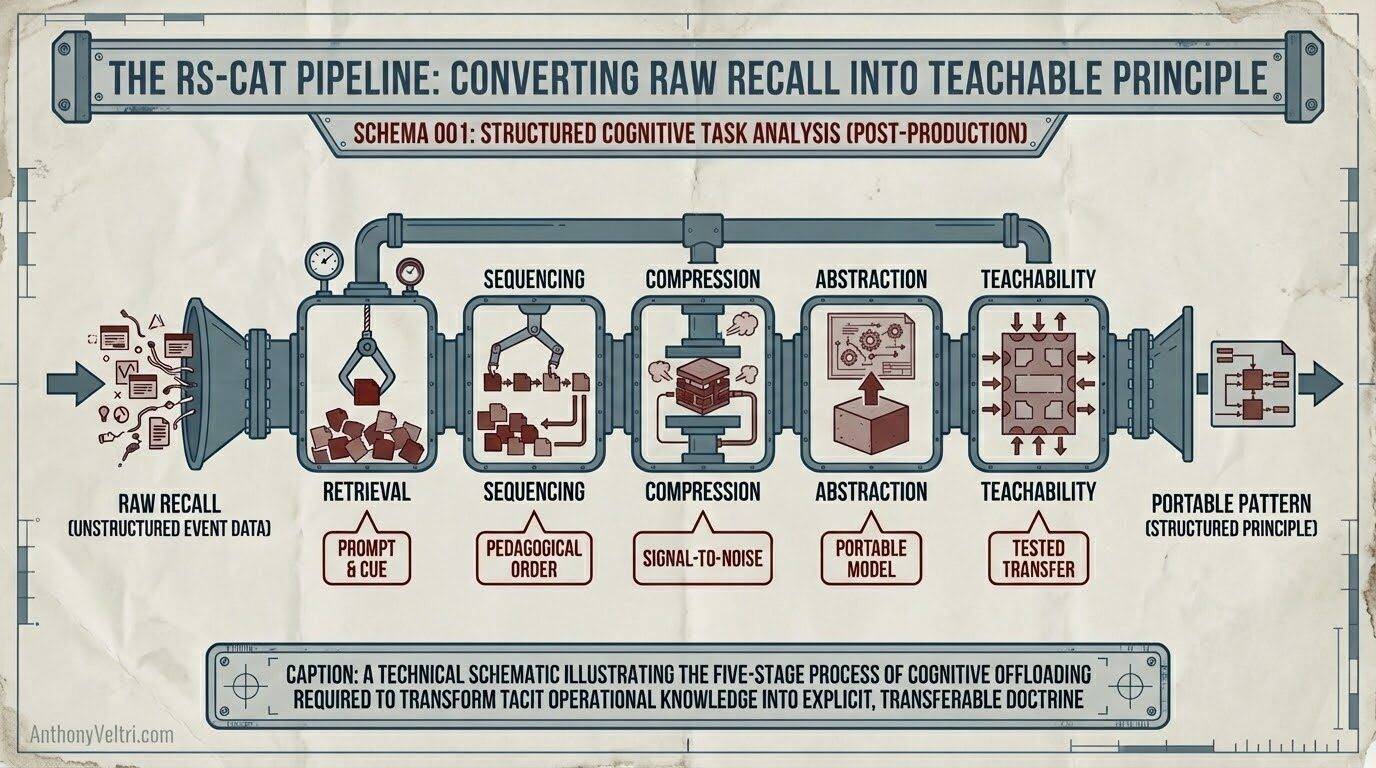
While this page addresses the sequencing of information (the interface between two thinkers), the RS-CAT Pipeline is the specific methodology used to extract and compress operational expertise.
RS-CAT is designed to prevent the common failure mode of Construction before Compression. This failure occurs when a model is designed in a vacuum (an “Ivory Tower” model) and then reality is forcibly squeezed into it. Whether a model was inherited from a predecessor or designed under pressure, if the construction preceded the compression of real-world signal, the resulting framework will lack the texture required for actual mission success.
Using the RS-CAT pipeline ensures that the final teachable pattern is grounded in the Durable Substrate of operational results, rather than a legacy schema that no longer fits the terrain.
The Stewardship Clause: Solving for the “Next Guy” #
We have all been “the next guy.” You inherit a project, a spreadsheet, or a process that was built by someone else. They might have been brilliant, but if they only gave you the Compression (the final result) without the Construction (the logic of how they got there), you are in trouble.
This is what I call Legacy Schema Debt.
It sounds technical, but it is actually very simple: it is the “tax” you pay for trying to use an old map for a new road. If the person before you built a model in a vacuum and didn’t leave you the “source code” for their thinking, you are stuck trying to force reality into their outdated box.
Why we spell out the acronyms: When I spell out an acronym in a meeting, I am doing it for the “next guy” in the room who is too afraid to ask. In the same way, when we use the RS-CAT Pipeline, we are doing it so the next person who inherits our work doesn’t have to guess what we were thinking.
We don’t document things to satisfy an academic requirement. We document them so the mission doesn’t stop when we leave the room.
The Signal Check: Are we Ritual-Following? #
If you find yourself using an acronym or a model without being able to explain the Construction behind it, you are likely Ritual-Following. You are going through the motions of a schema you don’t actually own.
- The Fix: Stop the conversation and ask: “Wait, what does that acronym actually stand for in this context?”
- The Result: You move the team back from “Vibes” to the Durable Substrate of reality.
Last Updated on February 22, 2026