Why missions fail without intent, even when the data are perfect #
This page is a Doctrine Guide. It shows how to apply one principle from the Doctrine in real systems and real constraints. Use it as a reference when you are making decisions, designing workflows, or repairing things that broke under pressure.
This Doctrine guide is the manifesto for Action over Paralysis. It argues that “Intent” is a functional substitute for “Data” when the clock is ticking.
Perfect data never arrives on time #
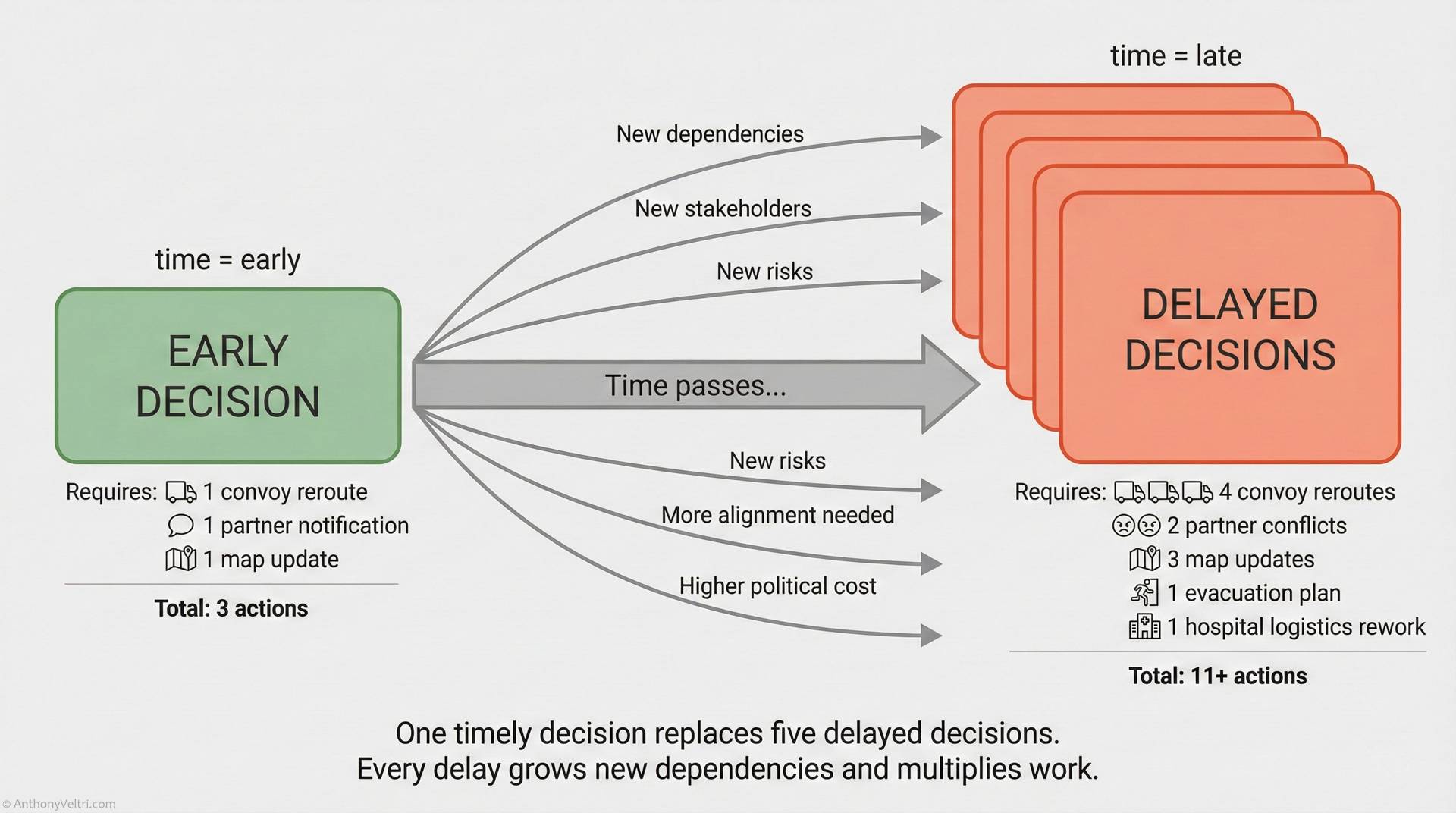
If you wait for perfect data, you will make perfect decisions too late.
In mission systems, the world moves faster than your inputs.
Conditions change. Partners lag. Models drift. Networks degrade.
Intent is what lets a team act decisively even when the information picture is incomplete.
Intent is the anchor.
Data is the accelerant.
Lived Example: The day the “perfect” flood model was useless #
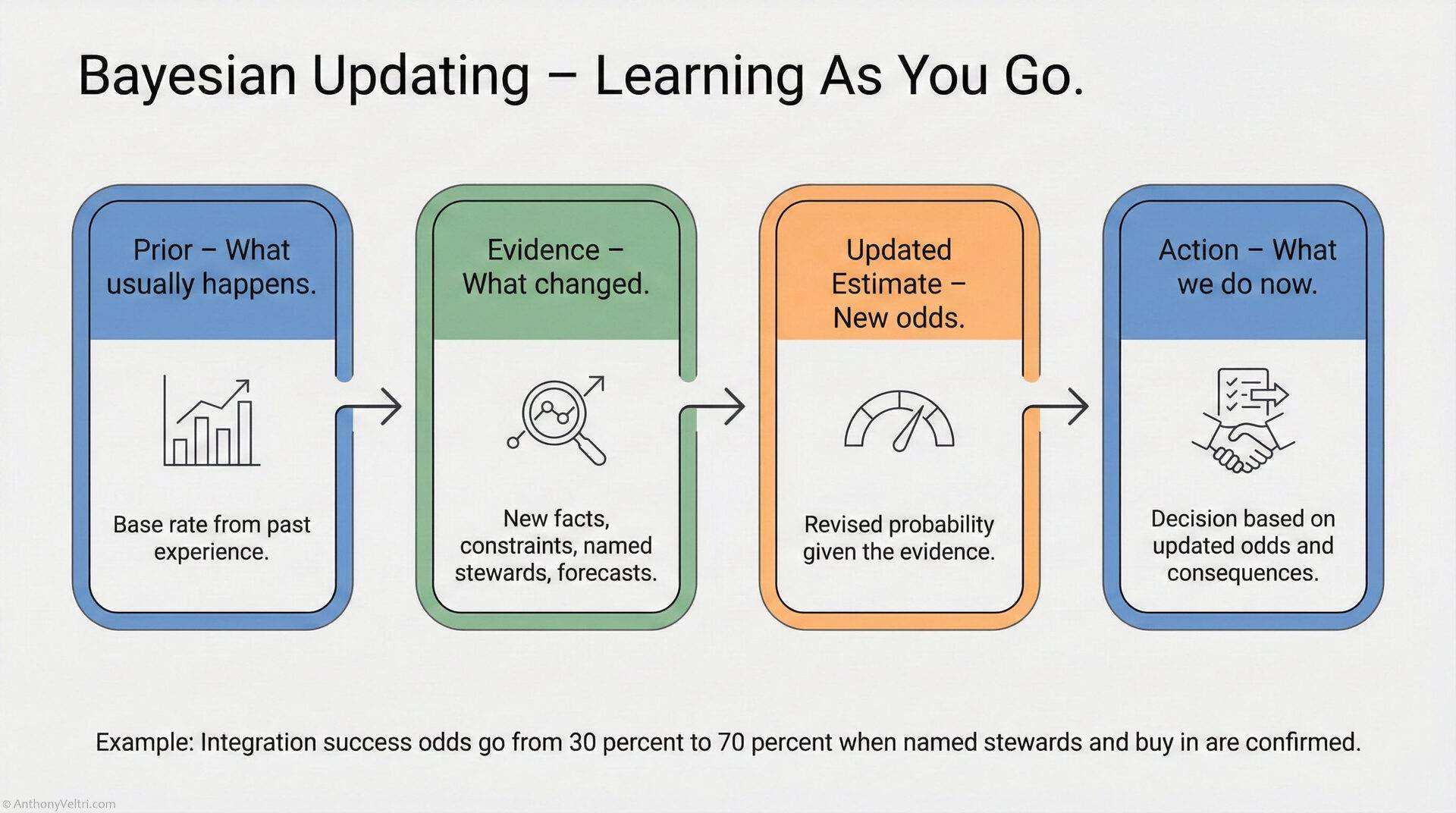
During a severe weather activation, we had access to an extremely detailed flood model that had been trained, tuned, and validated for years.
It delivered near perfect predictions at test time.
But on the day of the activation:
- a tributary failed upstream
- a levee breach redirected flow
- partner data feeds lagged
- field teams could not confirm ground truth for hours
- satellite passes were delayed due to cloud cover
The model was perfect for last year.
Intent was what mattered that day.
Our team had clear priorities:
- protect evacuation routes
- preserve hospital access
- maintain logistics corridors
- focus on life safety first
Those priorities let us act even as data was catching up.
Intent carried the mission.
Data followed.
Business Terms: What intent does #
Clear intent:
- tells teams what outcome matters most
- guides decisions when input is incomplete
- reduces escalation
- creates alignment without requiring a meeting
- lowers cognitive load
- avoids decision drag
- Empower partners to act under ambiguity
Perfect data cannot do any of this.
Intent communicates what to optimize for.
Data only communicates what the world looks like right now.
System Terms: How intent stabilizes complex environments #
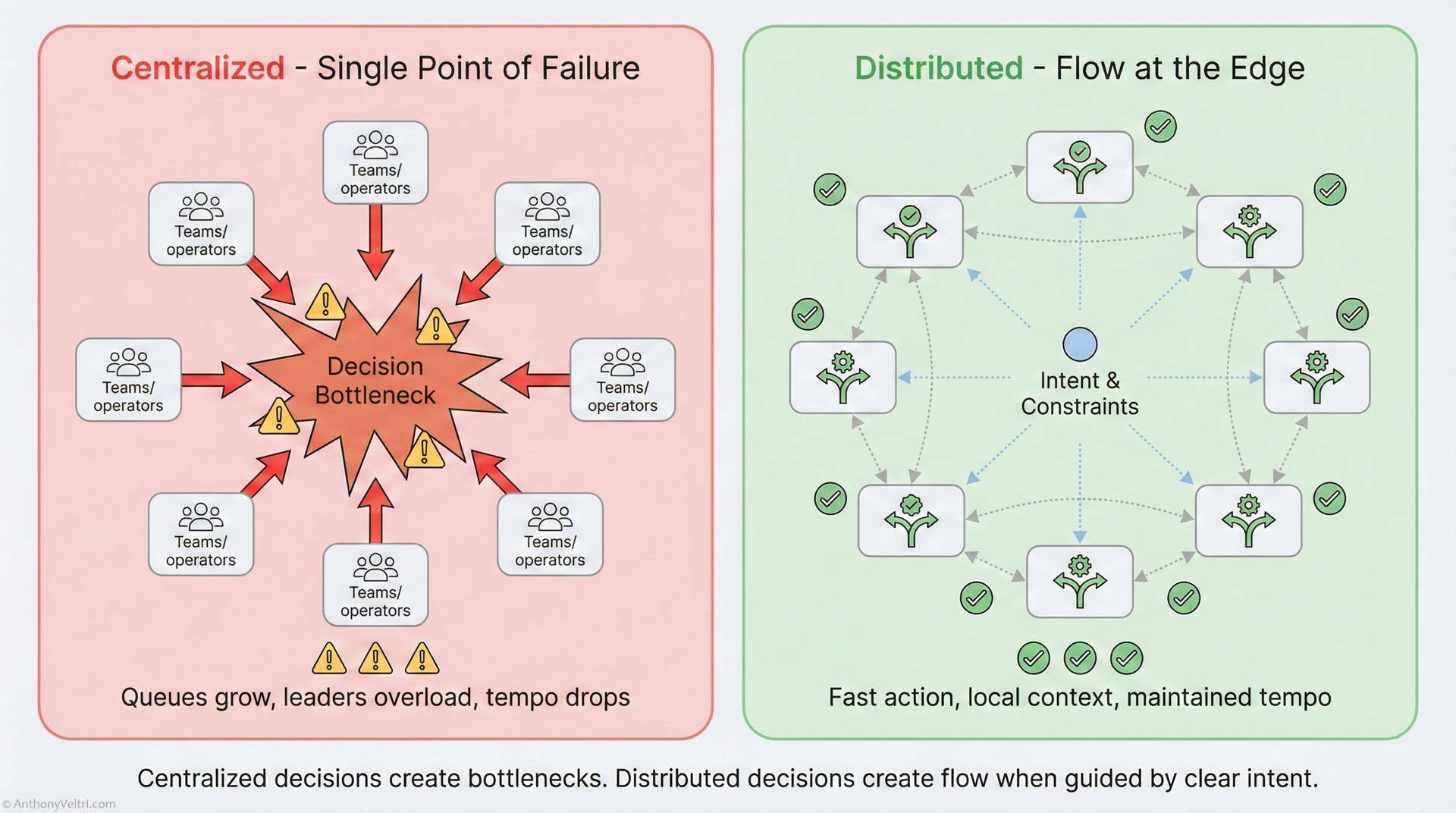
In system language, intent is:
- the top-level constraint
- the north star
- the governing objective
- the priority function applied to every decision node
- the meta-signal that aligns distributed agents
Without intent:
- agents optimize for local goals
- the system develops unintended behavior
- coordination saturates
- decision drag explodes
- data gets over weighted
- changes ripple unpredictably
With intent:
- distributed decisions converge on shared priorities
- autonomy becomes safe
- variance becomes productive rather than chaotic
- asynchronous operations maintain coherence
Intent is a stabilizer.
Data is an input.
Why “waiting for the perfect picture” fails #
Business perspective #
Perfect data is a trap because:
- it arrives too late
- it requires too many approvals
- it depends on infrastructure that fails under stress
- it gives a false sense of certainty
- it delays action until the window of impact has closed
- partners feel blocked waiting for the “official” view
If you wait for the full picture, you lose the ability to shape the picture.
System perspective #
Perfect data is impossible because:
- sensors drift
- feeds lag
- schemas evolve
- partners publish asynchronously
- maps do not match ground truth
- edge cases dominate
- models degrade out of distribution
Systems built around perfect data collapse under real conditions.
Why clear intent wins every time #
Business perspective #
Clear intent:
- aligns teams without needing perfect information
- reduces rework
- lowers friction
- reduces email chains
- speeds up approvals
- lets partners act independently
- clarifies what not to do
- reduces political conflict
Teams need to know the mission, not every number.
System perspective #
Intent is the optimization function.
It allows:
- distributed local action
- safe autonomy
- degraded mode operation
- resilience under partial failure
- consistent behavior despite variable inputs
Intent gives systems coherence when data is incomplete.
Business Example: When a GIS outage did not stop mission tempo #
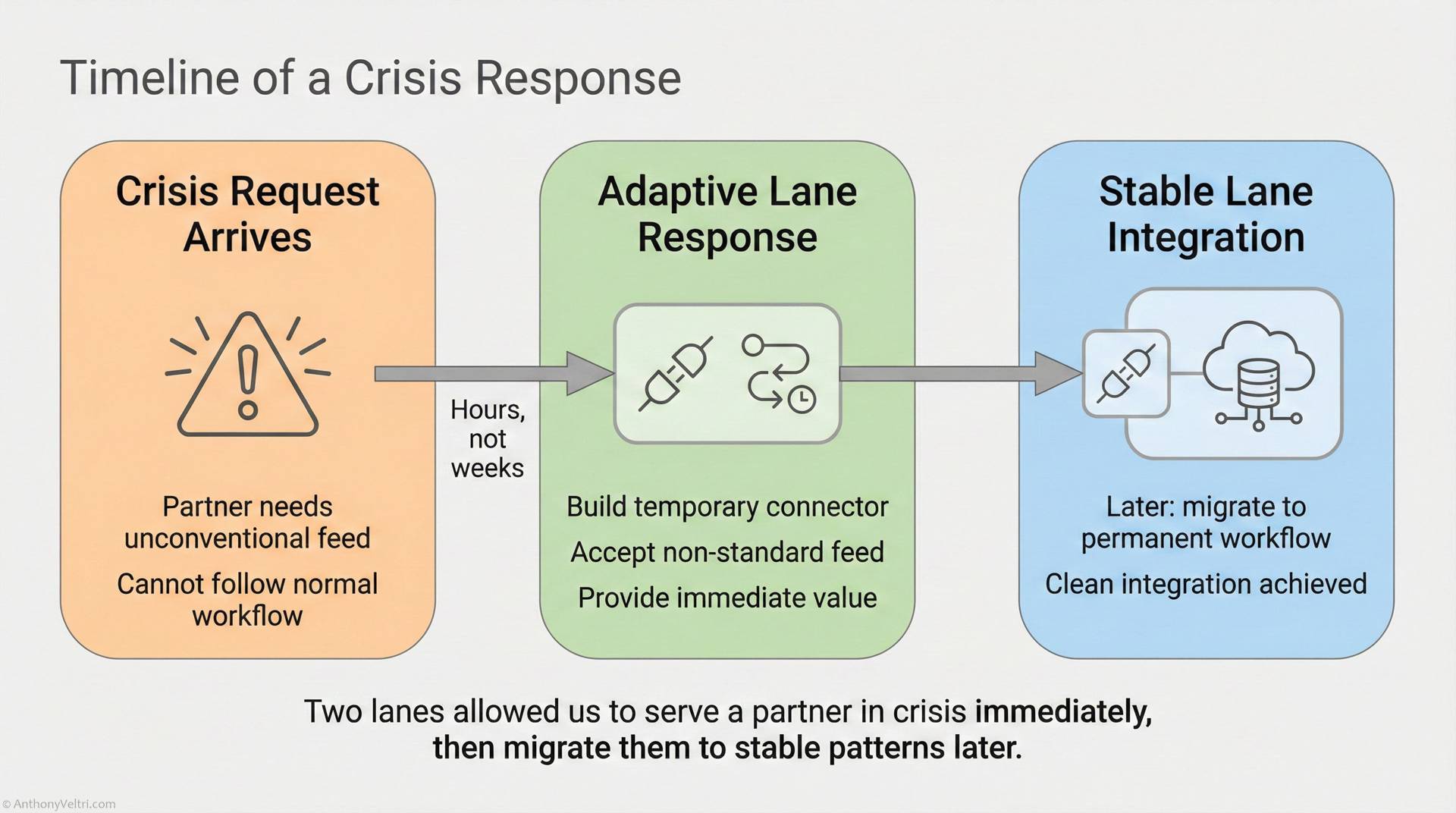
During a multi-day activation, a key GIS service went down due to a regional infrastructure issue.
Without that layer, some teams thought activity had to pause.
But because our intent had been clearly communicated:
- protect critical corridors
- preserve access to special facilities
- prioritize vulnerable populations
Teams acted quickly with what they had, not what they wished they had.
They used local maps, field calls, radio updates, and human judgment.
Mission tempo never slowed.
Intent filled the gap left by missing data.
System Example: iCAV and the “minimum viable picture” #
In USDHS’s iCAV, the harmonization layer often received incomplete, out-of-date, or asynchronously published feeds from partners.
If the system required all feeds to be current, it would fail regularly.
Instead:
- intent drove which feeds were prioritized
- the system displayed partial truth when full truth was unavailable
- stale layers were marked but still shown
- caching preserved the last known good view
- degraded operation modes were intentional
This allowed decision makers to work with partial data while preserving situational awareness.
Intent guided the system.
Not perfection.
Architect Level Principle #
As an architect I design systems around intent, not perfection.
Intent enables distributed action under uncertainty.
Data accelerates intent, but it cannot replace it.
In Summary: #
Perfect data never arrives on time. Intent gives teams clarity on what to do even when the picture is incomplete. In mission environments, I design around intent first and data second, because intent keeps decisions aligned when conditions change, feeds lag, or models drift.
Cross Links to Other Principles #
This principle directly connects to:
- Distributed decision making
- Degraded operations
- Resilience as emergent
- Two-lane systems
- Decision drag
- Portfolio thinking
- Innovation at the edge
Each relies on intent as a stabilizing force.
Doctrine Diagnostic – For Reflection: #
Ask yourself:
If your data feed went dark for an hour (or whatever tempo is important to you), could your team still act?
If the answer is no, you are optimizing for data, not intent.
Fix that.
Last Updated on February 22, 2026