Culture As Invisible Spec: Training A Media Specialist For Wildland Fire
Field Note Context: Fire and Aviation Management, United States Forest Service
A former Navy camera operator joined USFS Fire and Aviation Management as a media specialist. His footage was sharp. His audio was clean. His compositions were strong.
And yet, product after product was quietly rejected by the Washington Office.
The problem was not his technical skill. It was the invisible spec of wildland fire culture.
This Field Note is about how we:
- Turned unwritten cultural rules into a practical guidebook
- Mentored him on safety optics and public perception
- Built media tradecraft that respects both the mission and the audience
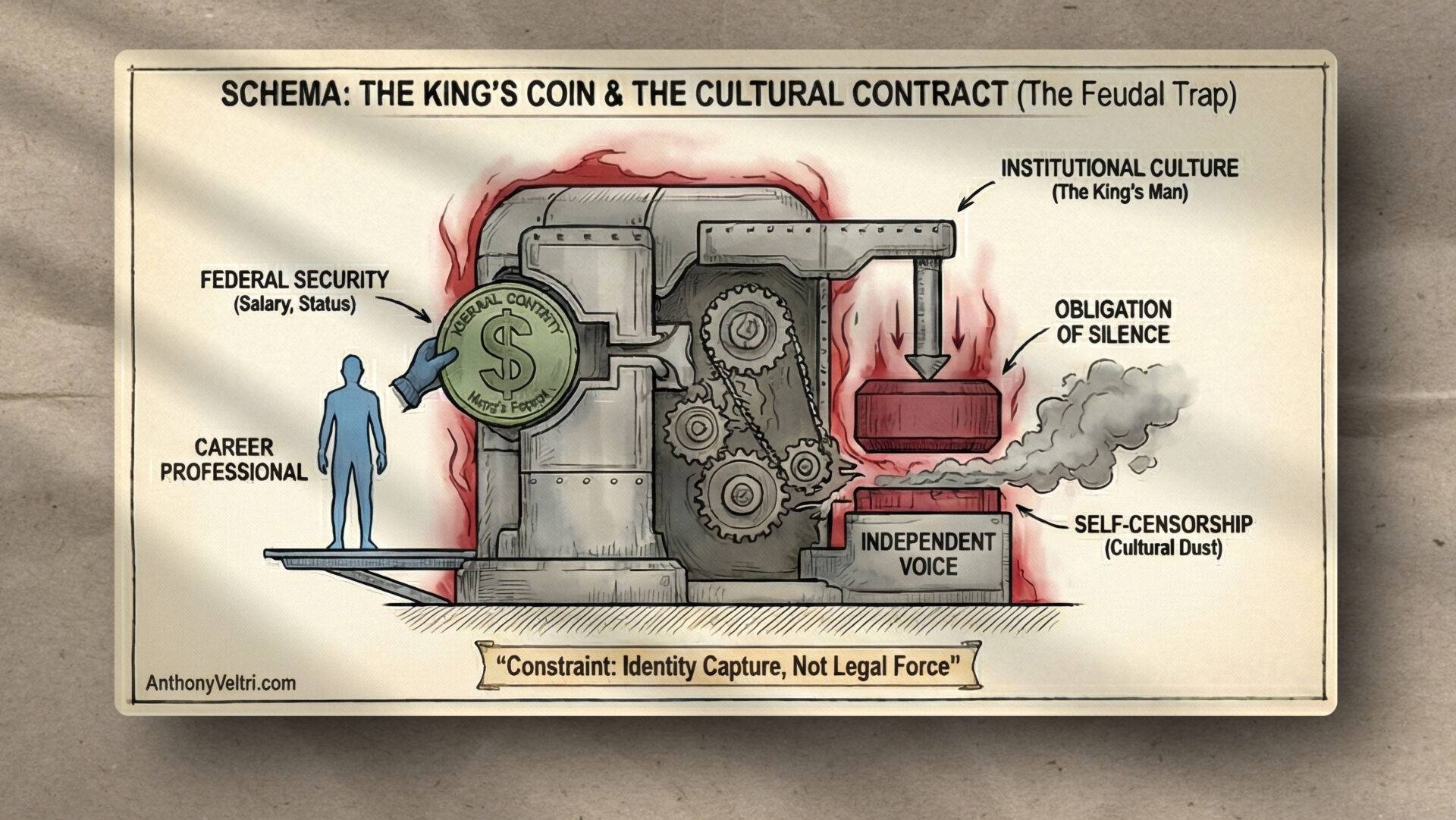
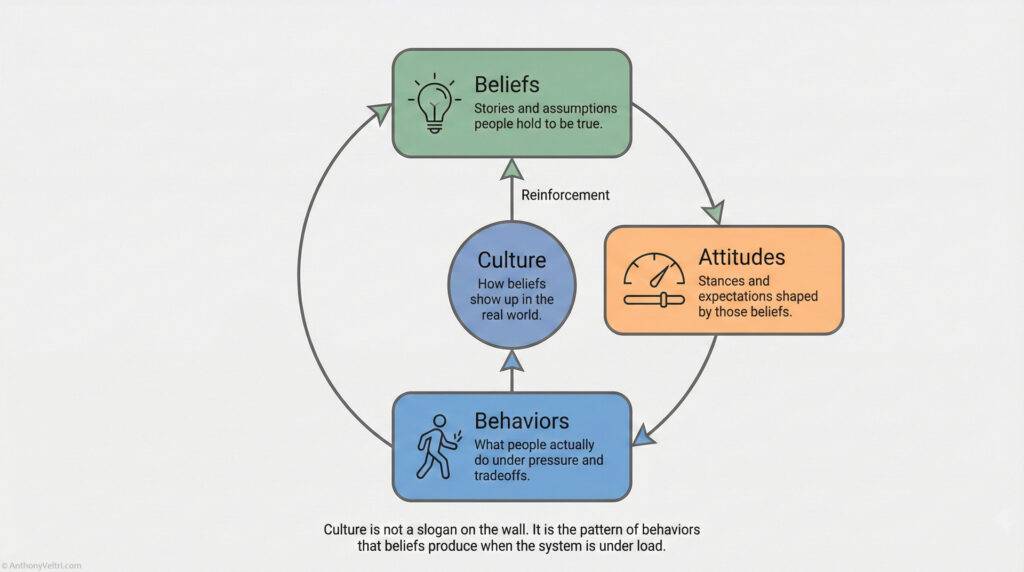
It ties directly into my doctrine on human contracts, commitment over compliance, and the idea that culture is an invisible specification you must surface on purpose.
1. Summary
A technically perfect image is not always a usable image.
In high-consequence organizations, there is a layer of unwritten rules that sits under policy and SOPs. I call this the invisible spec.
This Field Note is about:
- A former Navy camera operator hired into USFS Fire and Aviation Management
- Why his skills were not enough on their own
- The guidebook and mentoring I created to bridge the gap between technical craft and wildland fire culture
The pattern is simple:
If you ignore the invisible spec, your work will be rejected quietly, even if it is technically correct.
Principal technologists have to surface that spec and teach it on purpose.
2. The Navy Cameraman And The Missing Spec
Fire and Aviation Management brought in a very capable media specialist.
He had:
- Navy training as a camera operator
- Strong technical skills on exposure, focus, composition and gear
- Real experience in controlled, high-stakes environments
- A good personality and strong work ethic
On paper, he was exactly what the program needed.
In practice, his early products kept missing the mark when they reached the Washington Office Office of Communications. It wasn’t his work ethic or technical skill either. It was the invisible specification he was missing
The feedback was not about f-stops or shutter speed. It was about things that were never written down.
Nobody had ever explained the invisible spec.
That is when they asked me to help.
They brought me in my office in Oregon to the Fire and Aviation Management Training Center in Sacramento.
On paper, I was an IT and science person.
In reality, I was the best bridge they had between:
- Fire and Aviation culture
- Agency communications
- Media production in the real world
3. What The Camera Does Not See
In wildland fire, there are many situations where an image can be technically fine and culturally wrong at the same time.
Examples:
- A firefighter on the line with a bit of bare wrist showing (or an ungloved hand (gasp!))
- A crew smiling in front of an active fire
- A posed shot near a burned structure that reads as casual or lighthearted
Inside the culture:
- People understand that PPE slips for a moment, especially during a long shift
- People know that a smile often means relief, camaraderie or coping, not joy at destruction
Outside the culture, the public reads something else.
- Bare skin near flame looks like a safety violation
- Smiles in front of a burning forest or home look like firefighters are enjoying the scene
None of this appears in formal policy.
There is no chapter in a manual that says:
- “Do not submit photos with visible wrist exposure”
- “Avoid smiling group shots with an active burn in the background”
Yet the Washington Office will quietly reject products that carry the wrong signal.
From the media specialist’s point of view, this looked arbitrary.
He did not lack talent.
He lacked the invisible spec.
4. Extracting the Invisible: how we built the Guidebook
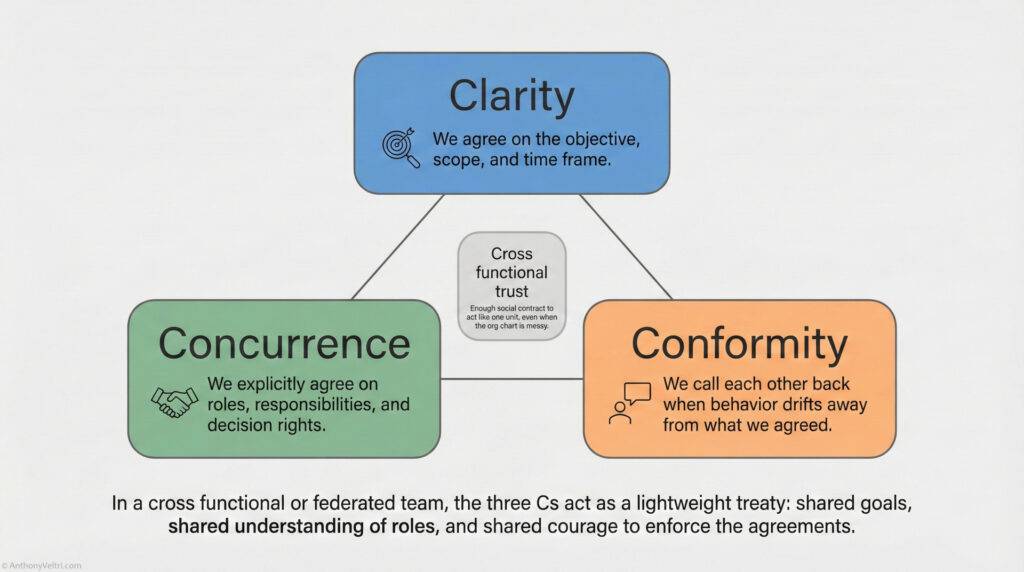
My job was to make that spec visible.
I wrote a guidebook and built a mentoring session around it that covered three domains:
- Technical proficiency
- Stakeholder management and scripting
- Legal, procedural and cultural constraints
The Navy camera operator had excellent technical skills. What he didn’t have was access to the unwritten cultural rules that governed wildland fire media. Nobody had written them down because the people who knew them had never needed to articulate them.
This wasn’t a training problem. It was a knowledge extraction problem.
I sat down with fire leadership, public information officers, and seasoned media specialists who had worked incidents for decades. The interview approach came from the same inverted anti-elicitation methodology I’d developed earlier in my federal career. I wasn’t asking “what are the rules?” I was asking questions that revealed the decision patterns: “When do you show firefighters without helmets?” “What footage gets rejected and why?” “How do you know when safety optics matter more than dramatic shots?”
The answers exposed the invisible spec. Wildland fire culture values safety discipline, professionalism under pressure, and respect for the public’s perception of risk. Show a firefighter taking a break without PPE and leadership sees liability. Show aerial footage of retardant drops without ground context and the public sees taxpayer waste. These weren’t written policies. They were cultural signals that practitioners knew instinctively.
I converted those scattered interview responses into a systematic guidebook that made the invisible explicit. The Navy camera operator could now reference specific guidance instead of guessing at cultural expectations. His work improved immediately because he finally had access to the operational knowledge that had always been tacit.
But we didn’t just write about it. We sat in a classroom and then in the field.
We talked through:
- Safety optics and how they differ from bare safety rules
- How a framing choice can read very differently to a DC staffer than it does to a crew boss
- Why certain shots would never make it past the Washington Office, no matter how beautiful they were technically
The message was not:
- “You can never capture a smiling firefighter”
- “You must somehow police every pixel of PPE at all times”
The message was:
- “If these elements end up in your final piece, your product will probably be unusable, and nobody will tell you why in writing.”
The guidebook turned those unwritten taboos into practical guidance.
It did not scold. It translated.
5. The Three Domains Of Mastery
The training broke media work in Fire and Aviation into three interlocked domains.
a. Technical proficiency
- Camera operation
- Sound, light and composition
- File formats, backups, and basic post production
Without this, nothing else matters. The Navy background covered most of it.
b. Stakeholder management and scripting
- Who the real audience is for a given product
- How to interview line firefighters, pilots, and leaders respectfully
- How to structure a narrative that works for Washington, regions and the field
This is where agency and federal context matter.
You are not just telling a cool story. You are speaking for a mission.
c. Legal, procedural and cultural constraints
- What PPE should look like in official imagery
- When a smile supports the story, and when it undermines it
- How to show hardship and danger honestly without glamorizing risk or signaling carelessness
- How the Office of Communications evaluates media, even if they never publish their criteria
This third domain is where most new people stumble, because it lives in conversations, not in manuals.
The guidebook pulled all three domains into one place.
It allowed a technically strong operator to become an effective storyteller inside a very particular mission culture.
6. Doctrine Connection
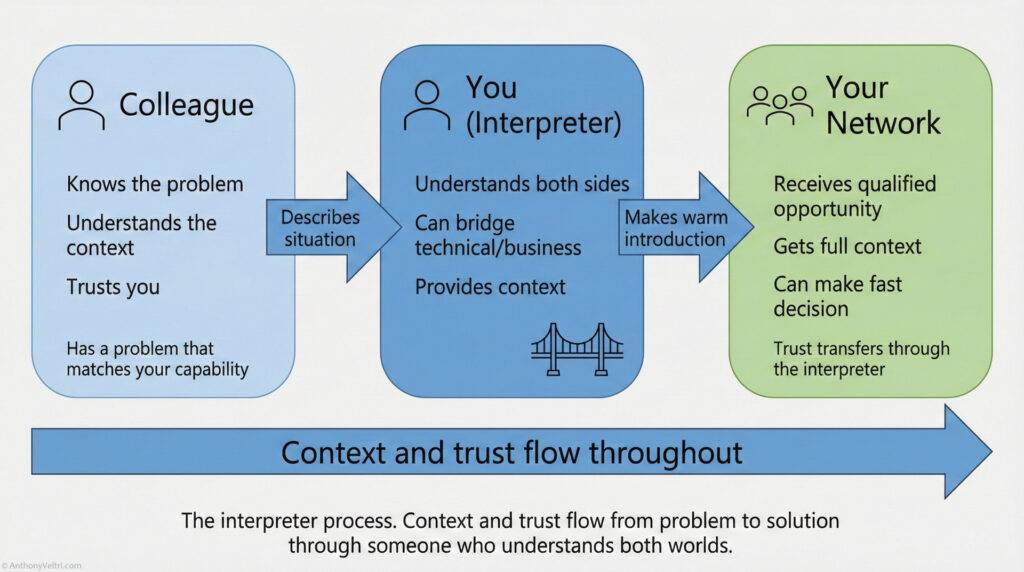
This Field Note connects to several doctrine elements:
- Culture As Invisible Spec
Systems have formal requirements, and they have unwritten expectations. Both shape what is “correct.” - Human Contracts Under The System
The Washington Office and Fire and Aviation leadership have a human contract with the public about how firefighters and risk are portrayed. - Commitment Over Compliance
The goal is not to police frames mechanically. The goal is to equip media staff so they can commit to telling the story in a way that supports safety, trust and recruitment. - Patterns: Two Owner Interface, Single Source Of Meaning
The media specialist sits at the interface between field reality and public perception. The guidebook turned that interface into something predictable.
The deeper lesson:
Principal technologists and leaders must make tacit rules explicit, or they guarantee unnecessary failure for people who are trying to help.
7. How To Reuse This Pattern
If you are responsible for a system in any high visibility domain, ask:
- Where do we quietly reject work that is technically correct but culturally wrong
- What unwritten rules are we enforcing through silence
- Who is our “James” who is skilled and motivated, but guessing at an invisible spec
Then:
- Write down the patterns that never make it into policy.
- Turn them into a short, practical guide.
- Deliver it as mentoring, not as a scolding.
- Update it after every real world incident where something was rejected for “vibes” alone.
You are not locking people down.
You are giving them the information they need so their work can be used.
Context: The Training Academy Behind This Story
This video is the academy environment that James, the media specialist in this story, was dropped into. It shows how seriously Fire and Aviation takes developing Type 3 leaders, building team cohesion, and creating a safe place to practice under realistic stress. Three weeks away from home unit during field season is not a casual decision, it is a visible commitment from both supervisors and students.
What the video does not show is the invisible spec for how that culture is supposed to be seen and understood by someone who did not grow up inside wildland fire. That is where my work with James came in. My job was to make the values you hear in this video usable as a media assignment, so that a technically solid videographer could also succeed at the cultural interface between incident management and the outside world.
8. Doctrine Diagnostic – For Reflection:
If you are reading this inside an organization, try this prompt:
“What is one place in our world where someone like James keeps getting quietly corrected without ever being given the invisible spec”
Write down the answer.
That is your next guidebook.
Last Updated on December 23, 2025