Unjust Is Not the Same as Inefficient
Companion Field Note: The Archive That Hiring Throws Away (A tactical look at the internal costs and operational extraction caused by institutional amnesia).
The previous note argued that modern hiring systems waste merit. This one argues something harder: that is not an accident. The first note described what the system does. This one describes what the system is.
The System Is Working As Designed
In 1967, Melvin Conway observed that organizations which design systems produce designs whose structure mirrors the organization’s own communication structure. The principle has been applied to software architecture, product design, and bureaucratic process.
It applies equally well to hiring.
A compliance-first organization produces a compliance-first hiring system. Not because the people running it are malicious. Not because they do not value talent. Because the organization’s internal logic, its structure of authority, approval, documentation, and defensibility, reproduces itself in every system the organization designs.
The hiring system is not broken. It is working exactly as Conway would predict.
The failure is upstream.
What the Factory Knew
To understand where this logic came from, it helps to go back further than most people bother.
The Prussian military in the nineteenth century developed administrative and industrial models built around one core requirement: reliable, predictable, compliant output from large numbers of people operating under hierarchical command. The insight was not that individual genius was worthless. The insight was that individual genius was unreliable at scale and therefore less valuable than disciplined collective execution.
This was not entirely wrong for its context.
A factory producing ten thousand identical components per day cannot be organized around the judgment of each individual worker. The value of the system came from its predictability. Variance was the enemy. Compliance was the product.
That logic passed into the industrial model and then into the professional administrative model. It became the grammar of how large organizations think about people. Not as sources of irreplaceable judgment but as units of reliable output.
My wife and I chose Montessori for our children partly because of this. Once you understand what the Prussian factory model was actually designed to produce, and once you recognize how thoroughly it shaped the schools most of us attended, you start making different choices. The model optimized for the right answer on command, delivered on schedule, with minimal variance. That is useful if you are staffing a production line. It is less useful if you are trying to raise a person.
The hiring system that emerged from this logic was not designed to find Einstein.
It was designed to fill a seat with someone who would not cause problems.
The Einstein Problem
Someone, in a context I cannot precisely locate, once observed that he wondered how many Einsteins were killed in wars, never born into conditions that could develop them, or ground down by systems that had no use for what they carried. The thought changed how he understood civilization’s actual track record.
It is a reasonable thing to wonder.
If the Prussian factory model could not afford individual variance, it also could not afford to notice what it was discarding. The genius that did not fit the compliance template was not visible as loss. It simply did not register. The system had no instrument for measuring what it could not use.
Modern hiring systems have the same blind spot in a different form.
They have instruments for compliance: documented process, scored assessments, panel consensus, audit trails. They do not have instruments for irreplaceable judgment, accumulated operational knowledge, or the kind of experience that cannot be credentialed because the credential does not yet exist for what the person has actually done.
The system can rank candidates within its own frame. It cannot see what its frame excludes.
That is not a measurement error. It is a design choice. The frame was built to minimize variance, not to find the thing that breaks the existing categories.
The Inheritance Without the Excuse
Here is where the modern situation diverges from the original.
The Prussian factory model was operating in a context where interchangeable labor genuinely was the primary resource requirement. The factory needed bodies in seats, hands on the line, compliance with the process. Individual genius was not only unnecessary for most roles; it was occasionally disruptive. The model fit the moment, however unjust it was in other dimensions.
Modern scientific, technical, and intergovernmental organizations are making a different claim about themselves. They say they need the best people. They publish vacancy notices describing candidates who could only have developed through twenty-year career arcs of highly specific, non-replicable experience.
And then they run a compliance-first selection process designed for a completely different purpose.
The inherited logic no longer fits the stated goal.
The factory model had an excuse for discarding Einstein: it did not need Einstein. It needed someone who could run the press.
The modern intergovernmental or scientific organization has no such excuse. It has announced that it needs the judgment, the experience, the irreplaceable operational knowledge. And then it runs a process optimized for producing defensible decisions rather than finding the person it says it needs.
That is not a resource problem. It is not a fairness problem. It is a design problem.
The Locked Back Door
Before going further, something should be acknowledged.
The caution is not entirely irrational.
Removing a bad hire from a modern intergovernmental or federal organization is slow, expensive, legally exposed, and sometimes effectively impossible. The practical friction at the exit creates rational pressure at the entrance. If you cannot easily correct a mistake after the fact, you become very careful about making the mistake in the first place.
The fortress at the front door exists because the back door is locked.
That is worth understanding. The defensibility instinct did not emerge from nowhere. It is a rational response to a real structural problem. In 1955, a factory floor supervisor could let someone go on a Friday. That option does not exist in the same form in most modern institutional contexts, and everyone involved knows it.
Conway’s Law says the organization will produce a system that mirrors its structure. If the structure is built around managing exit risk, the hiring system will reflect that. The frame will be optimized for defensibility. The instruments will be optimized for producing a paper trail that survives an audit, not for finding the best person.
The question is whether the organization is honest about which one it is actually optimizing for.
Because here is the part that does not hold up: the system designed to manage hiring risk is discarding the evidence that would most directly reduce that risk. A returning finalist who has cleared the bar twice and come back anyway is lower risk than an unknown who appeared in the applicant pool this morning. The fortress is pointed in the wrong direction.
The Internal Cost Nobody Measures
HR functions rarely measure what they cost the applicant. They also rarely measure what institutional amnesia costs the organization.
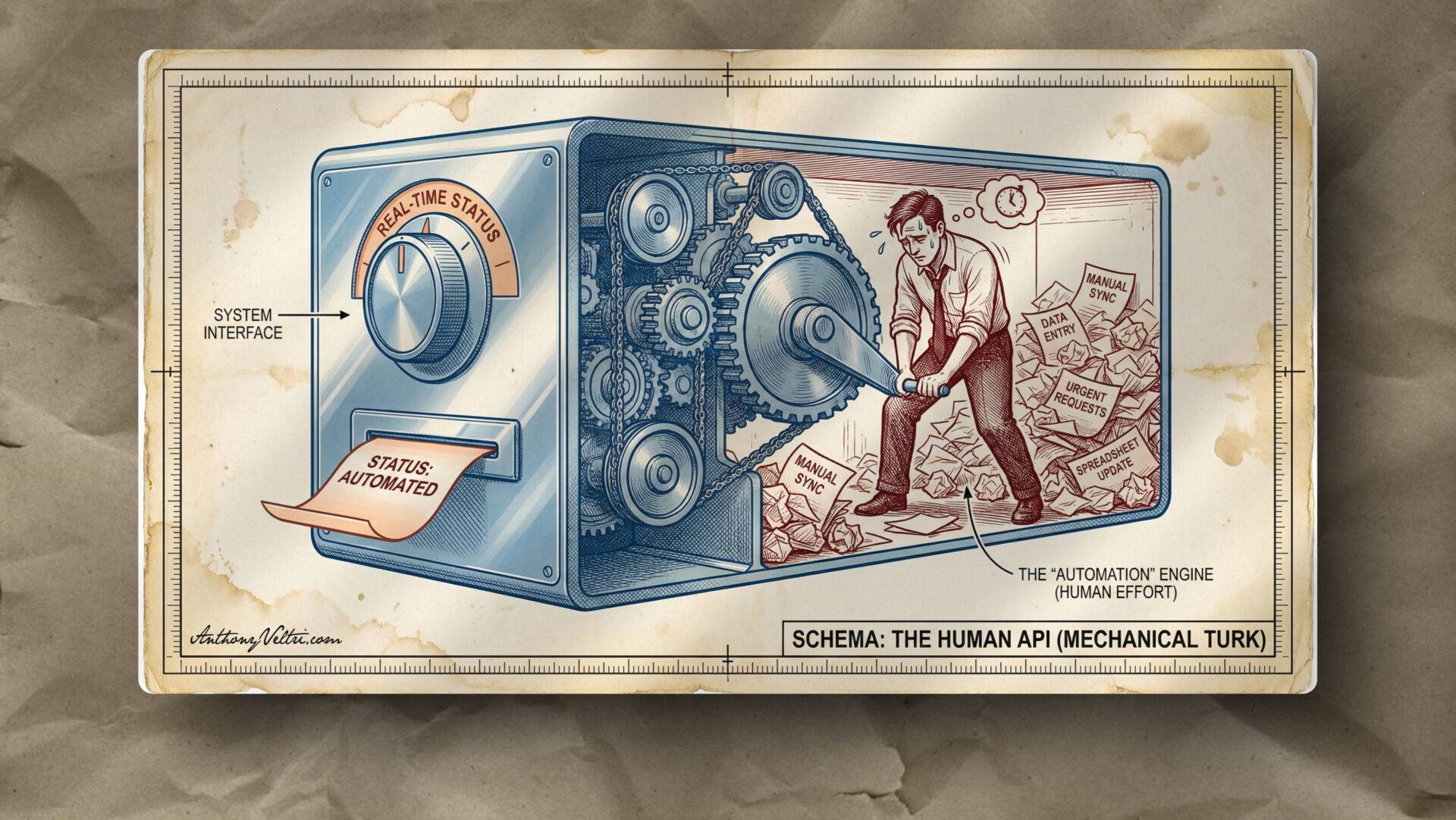
Running a full senior competition takes months. It consumes panel time, executive attention, legal review, HR coordination, and structured assessment effort from people who are not interns. They are senior technical and scientific staff. Re-running that process because the institution failed to maintain memory of who it already evaluated is not just extracting free labor from candidates.
It is burning internal capital.
The waste goes in both directions. The candidate pays for it in unpaid hours of preparation. The organization pays for it in senior staff time that will never appear on any efficiency report, never trigger an audit finding, never show up in an annual review of operational costs.
The seat upgrade gets written up. The six-month panel re-run does not.
Same accounting problem. Different direction.
Two Kinds of Failure
Organizations fail at talent identification in two distinct ways, and the distinction matters.
The first is measurement error: the system is trying to find the best person and getting the assessment wrong. This is fixable. Better instruments, better panel training, better structured interviews, better scoring rubrics.
The second is design failure: the system is not trying to find the best person. It is trying to produce a defensible record of having followed the process. The output looks like a merit-based selection. The process was optimized for something else.
Most reform efforts treat the second problem as if it were the first. They improve the rubrics. They train the panels. They add structured assessment stages.
None of that changes what the system is actually trying to do.
A compliance-first system, retrained with better rubrics, is still a compliance-first system. It will still select the candidate who fits the frame, not the candidate who breaks it productively. It will still discard the archive after each competition. It will still reset the meter for the returning finalist. It will still impose the full requalification tax on the candidate who has already paid it once.
Because that is what it was designed to do.
What Honest Reform Requires
The honest version of this argument is uncomfortable.
Fixing the hiring system requires changing what the organization is actually optimizing for, not just improving the instruments it uses to pursue the current goal.
That means naming the tradeoff explicitly. Defensibility and capability are not always in conflict, but they are in tension. A hiring process optimized entirely for defensibility will sacrifice some capability. A process optimized for capability will accept some reduction in procedural certainty. Most organizations have made that tradeoff implicitly, in favor of defensibility, without saying so.
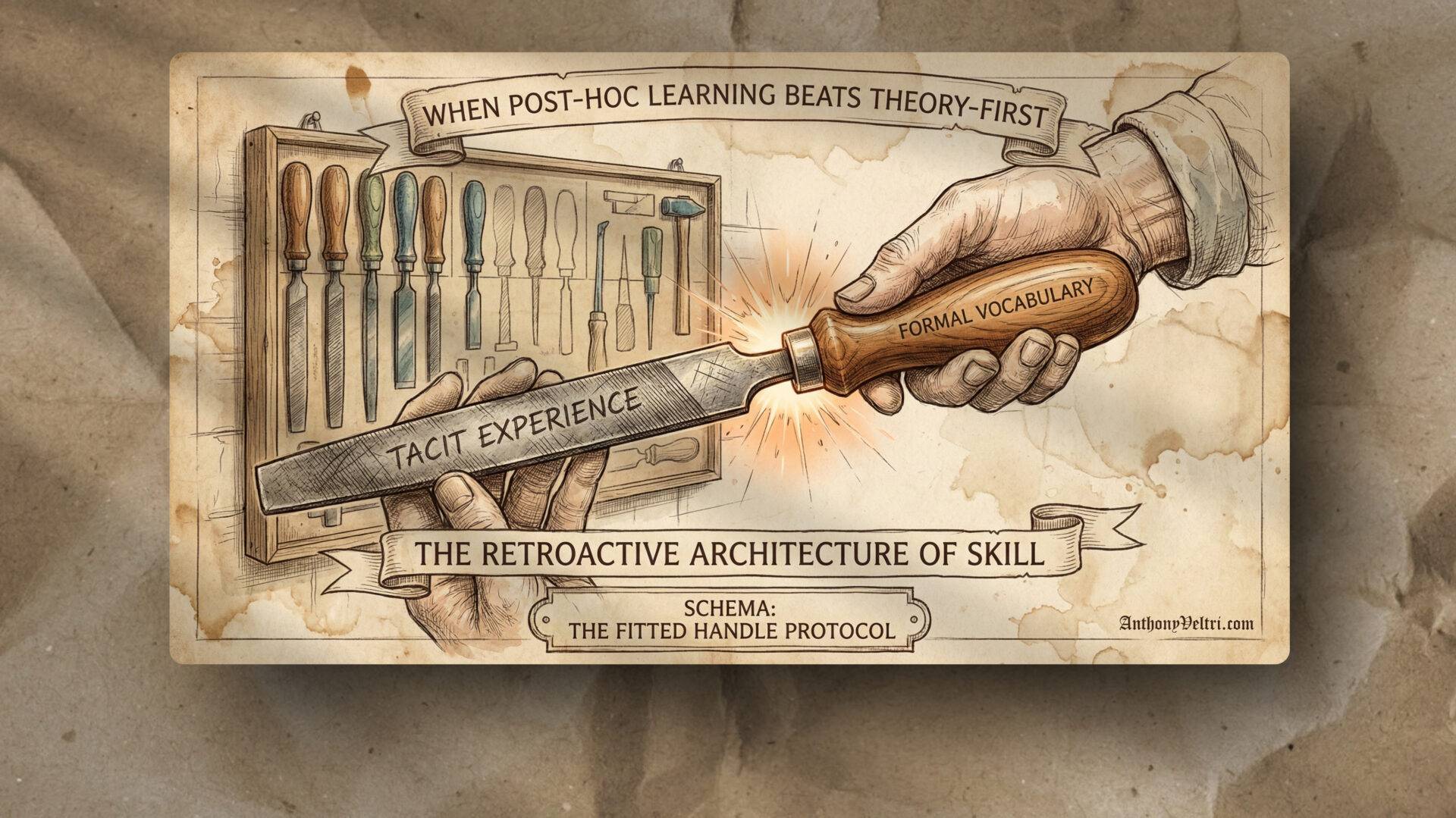
It means building a stewardship function around candidate memory: a named owner, a maintained bench, a consent mechanism, a commitment to carrying prior evidence forward rather than resetting after each vacancy.
It means accepting that the returning finalist is not the same as the first-time applicant. Treating them identically is not fairness. It is the erasure of evidence.
And it means being honest about Conway’s Law. The hiring system will continue to reflect the organization’s structure. If the organization wants a different hiring system, it needs a different structure, not just different forms.
The Point
Unjust is not the same as inefficient.
The Prussian factory model was unjust in many dimensions and efficient enough within its own logic. It was not designed to find Einstein. It was designed to produce compliant output at scale, and it largely did. It knew what it was.
The modern compliance-first hiring system presents itself as a merit-finding instrument while functioning as a compliance-producing one. It is more procedurally fair in form. It is less honest about what it is actually optimizing for.
The people who pay for the gap between the system’s stated purpose and its actual design are not the people who designed it.
They are the people filling out the motivation letter for the third time, for the same institution, having cleared the bar twice already, starting again from zero.
That is not institutional amnesia as a side effect.
It is institutional amnesia as a feature.
And the oxygen mask test does not care how defensible the process was.
It only asks whether a qualified person was able to earn a wage.
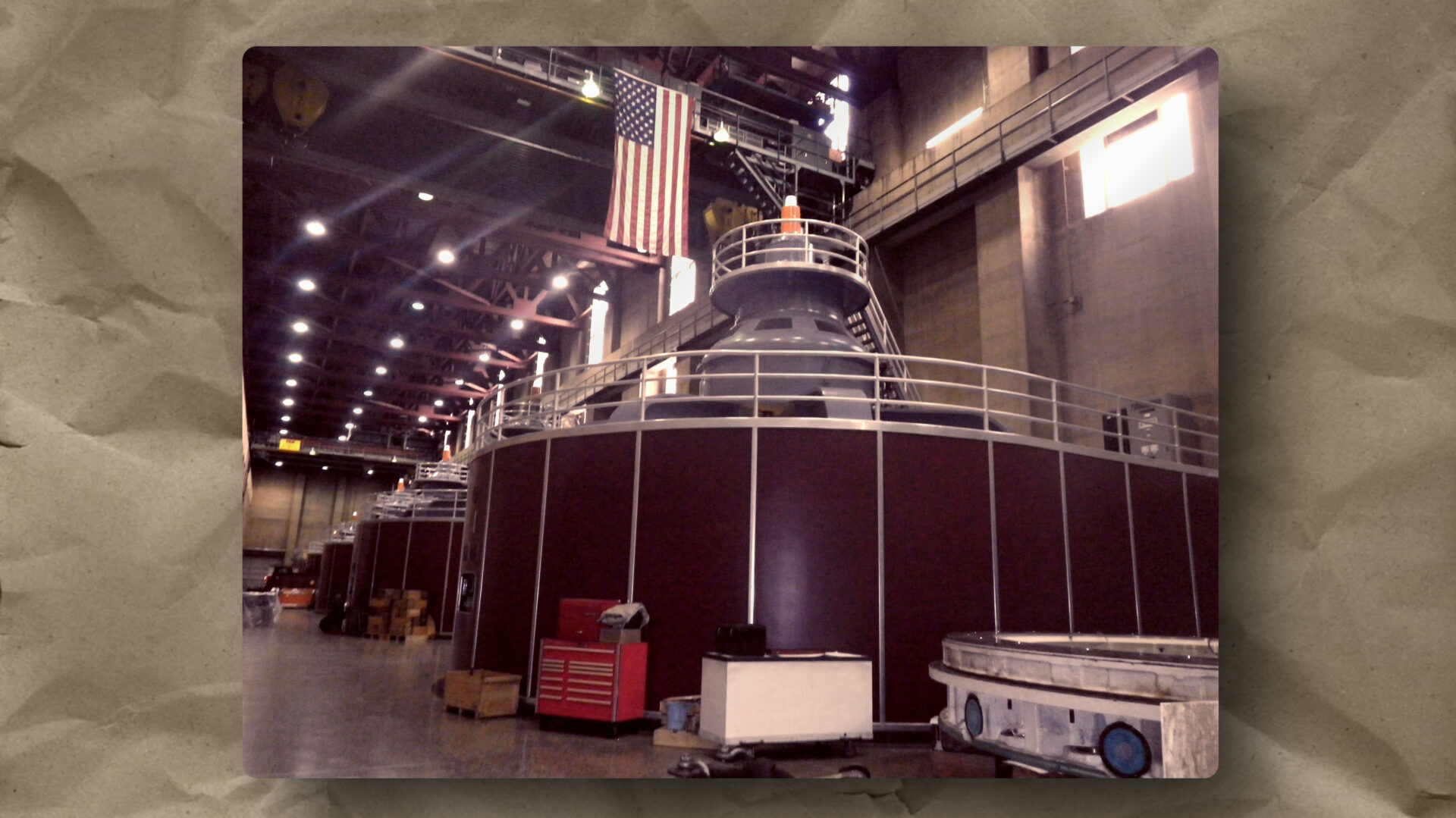
Featured Image: The Arizona generator hall at the Hoover Dam from the author’s archive. A nod to Mike E. and the “Hoover Dam lessons.” It is a physical manifestation of the industrial model. The people who installed these original alternators entered a labor market that needed them immediately. Today, a skilled technician faces an ambiguous labyrinth of procedural hoops just to maintain them. The machinery survived. The direct path to working on it did not.
Last Updated on May 8, 2026