Badge-Function Mismatch – When the badge is bigger than the job, the badge is doing work
What this helps with: Spotting early escalation and normalization when the law and institutions still look “normal” on paper.
Strategic Intent: I am documenting this because uncoordinated or simply uncalibrated agency branding is creating accidental friction for our Allies. In the Milan case study, a branding mismatch handed a narrative weapon to local critics and a diplomatic liability to Host Nation partners. My focus here is strictly on mission assurance: how do we secure the Olympic safety mission without forcing our allies to spend political capital defending our presence?
TLDR
If the actual job is “ops room, liaison, vetting, analysis, support,” and the public wrapper is a coercive enforcement brand, pay attention. If a calmer wrapper would have done the job just fine, the louder wrapper is not accidental. It expands permission structures and normalizes a higher-signal identity in a new space.
This is not “proof of illegality.”
This is a way to detect trajectory before rule changes and before anyone kicks a door.
Bounded claim
Permission structures can shift before formal authority does.
Executive Summary (Primary – Entire Field Note)
This field note examines the gap between constraint-based forecasting (what institutions are supposed to do under formal rules) and behavior-based forecasting (what actors do when incentives and enforcement diverge). Using the proposed deployment of U.S. immigration enforcement to the Milan Olympics as a case study, it argues that branding, posture, and agency choice are themselves operational signals, even when the stated mission is “analytical” or “support.” When sacred norms rely on discretion rather than reflexive enforcement, early boundary testing should be treated as a warning signal rather than dismissed as optics. The note provides falsifiable conditions for downgrade and escalation, emphasizing early detection over alarmism.
Executive Summary (Addendum – Consulate Corroboration)
Subsequent to publication (roughly two hours after initial publication, in fact), U.S. immigration enforcement officers attempted to enter the Ecuadorian consulate in Minneapolis without consent, prompting a formal diplomatic protest. Video evidence shows a pause at the door, undermining claims of exigent “hot pursuit.” This incident corroborates the field note’s central concern: that boundary discipline around sacred norms is weakening, and that accountability mechanisms (such as body-worn cameras) are not consistently engaged. The event is treated not as proof of intent, but as confirmatory evidence that norm testing is already occurring domestically, reinforcing the need to watch for replication rather than rhetoric.
Use this when
- The function is coordination, liaison, vetting, advising, analysis, or support
- The badge is enforcement-coded (coercion, detention, interdiction vibes)
- A lower-signal wrapper was available
- You are trying to catch normalization early
Do not use this when
- The function truly requires coercive authority (arrest, detention, interdiction, armed control)
- There is no realistic alternative wrapper
- It is a one-off comms error that gets corrected and never repeated
Key terms in plain English
Badge–Function Mismatch Test: “Does this job actually need that badge?”
Narrative Ratcheting: A framing move that quietly resets what feels normal.
Permission-Structure Expansion: Implied permissions expand even if the law did not.
Boy Scout Mode vs Terrain-Aware Reasoning: Boy Scout Mode treats the written rules, procedures, and institutional checks as constraints that reliably govern behavior (constraint-based forecasting). Terrain-Aware Reasoning recognizes that rules can become selectively enforced or abandoned entirely, making actual behavior patterns and trajectory more predictive than official policy (exception-based environments). This distinction is explored fully in Handbook vs Terrain (Trophy vs. Kill.)
Managed Outcomes vs Procedural Legitimacy: The paperwork can stay clean while the baseline shifts.
Further reading:
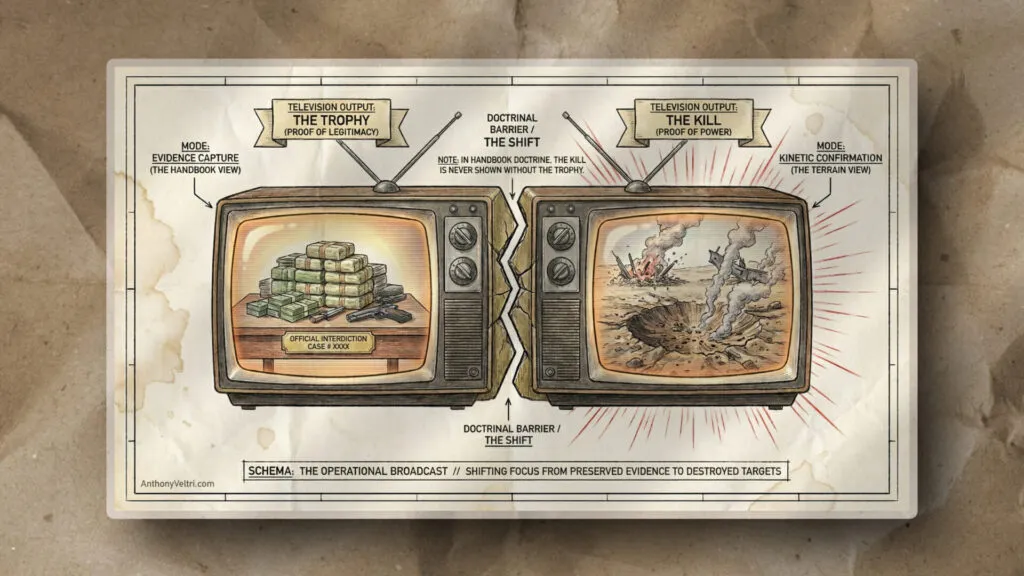
Field Note: Handbook vs Terrain – When Constraint Forecasting Failed and Indications Won
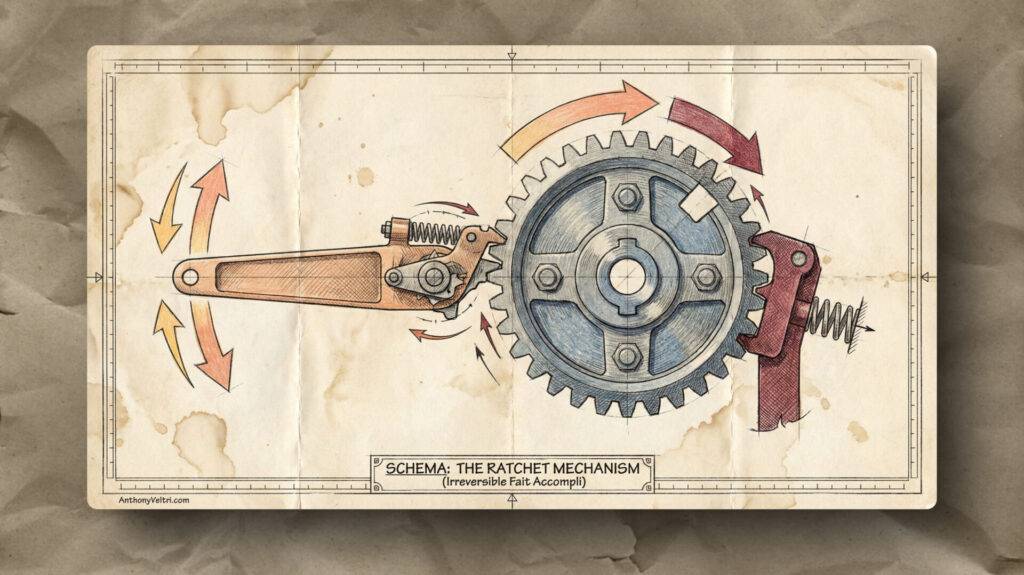
Field Note: Loosely Coupled Power Grabs
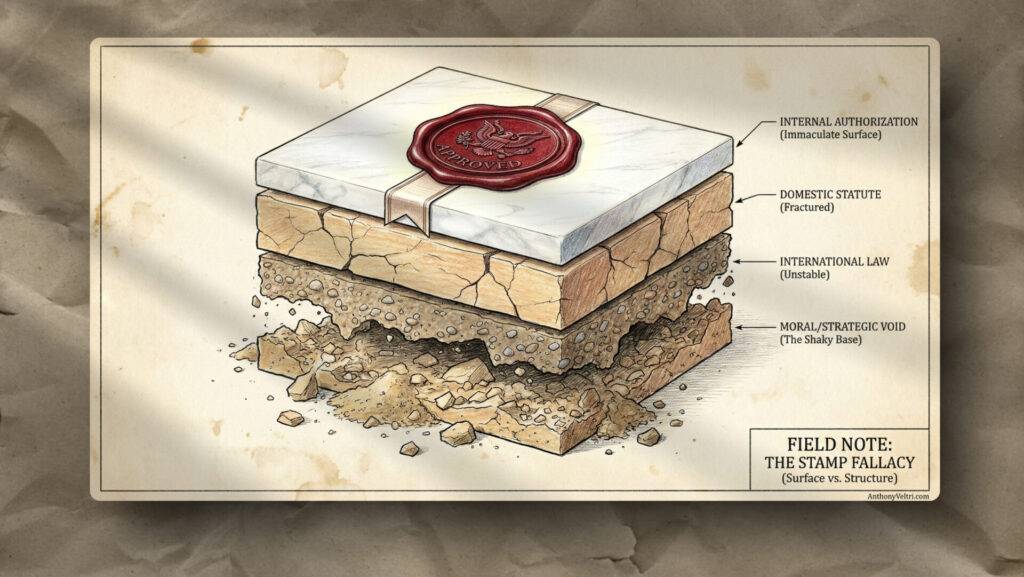
Field Note: The Stamp Fallacy at the Interface
Quick discriminator: First bin
Before you run the Badge–Function Mismatch Test, do this quick sort. If you get this wrong, everything downstream gets contaminated.
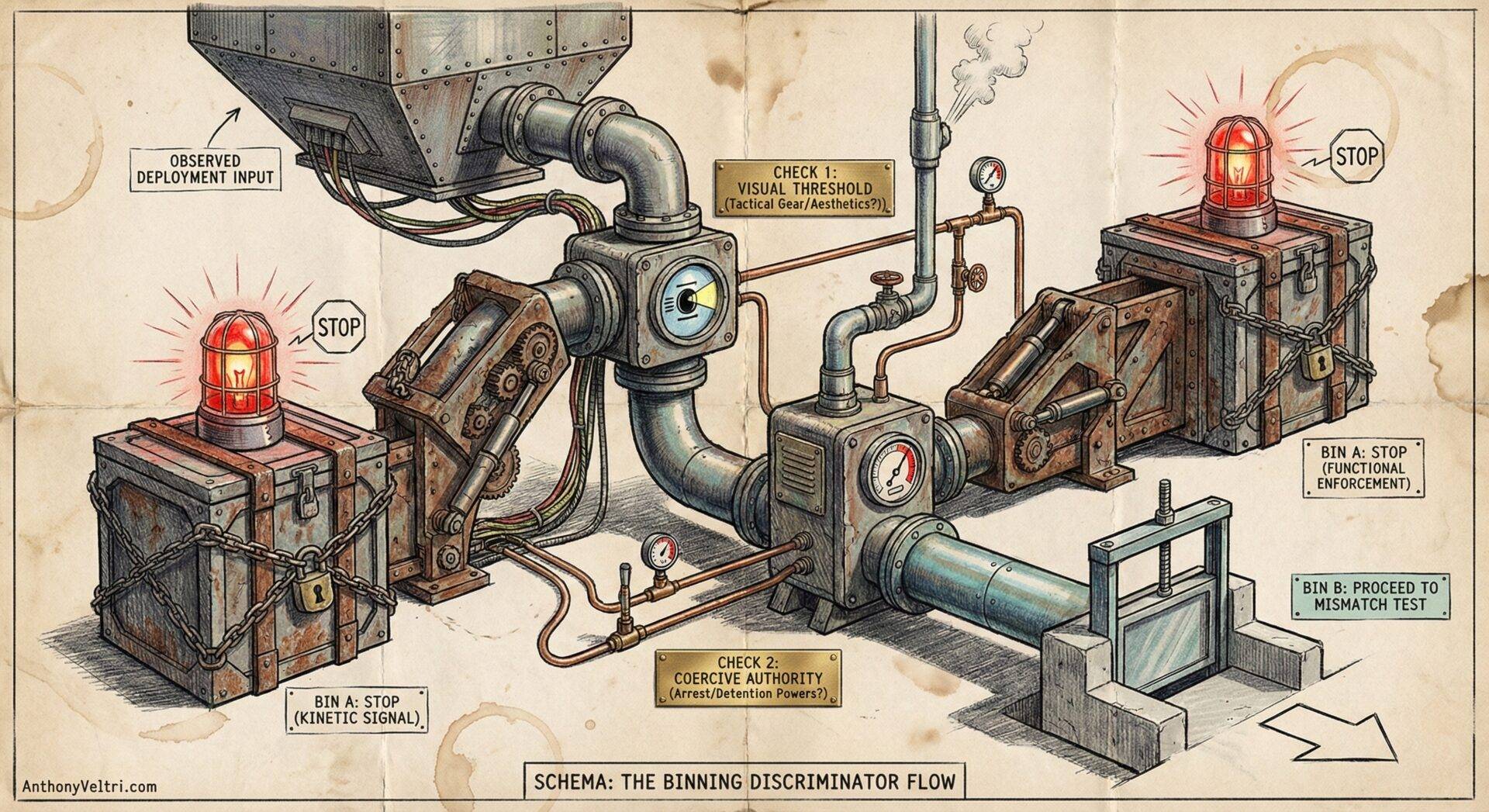
Question
In this situation, are these people acting as sworn law enforcement with enforcement powers (or directly enabling enforcement actions), or are they acting as analysts/liaisons/support?
Bin A: Functionally law enforcement (Yes)
Put them here if, in this specific context, they are doing any of the following:
- Visually projecting kinetic force: Wearing tactical gear, plate carriers, visible weaponry, or “raid” attire that signals immediate enforcement capability (the “operator look”).
- Making or directing enforcement decisions (stop, search, detain, arrest, remove). Directly participating in the chain of custody or interdiction (as opposed to providing information that others might use for enforcement.)
- Exercising coercive authority or clearly operating “in the chain” of coercion.
If Bin A is true:
Badge–function mismatch usually does not apply. Your analysis becomes “jurisdiction, authorities, ROE, oversight,” not “wrapper optionality.”
Bin B: Not functionally law enforcement (No)
Put them here if, in this specific context, they are doing things like:
- Vetting, watchlisting support, threat assessment
- Intelligence fusion, link analysis, pattern analysis
- Liaison/coordination with host nation or partner agencies
- Planning support, ops-room support, information sharing
- Advisory roles where they do not execute enforcement
If Bin B is true:
Now the Badge–Function Mismatch Test is live. Because if the job is fungible, wrapper choice is where signal leaks.
Tie-breaker rule (when it’s blurry)
Bin as Not functionally law enforcement unless you can point to a coercive act, coercive authority being used, or direct enabling of a coercive action.
One-sentence safety check
“What happens to a person if these folks act?”
- If they can change liberty/movement/status: likely Bin A
- If they produce information or coordinate: likely Bin B
⛔ CONTAMINATION WARNING (stop sign)
If you mis-bin this, stop. Re-bin. Do not continue.
The single biggest failure mode is treating “analytic support” as “enforcement presence” (or the reverse). That error poisons every downstream conclusion.
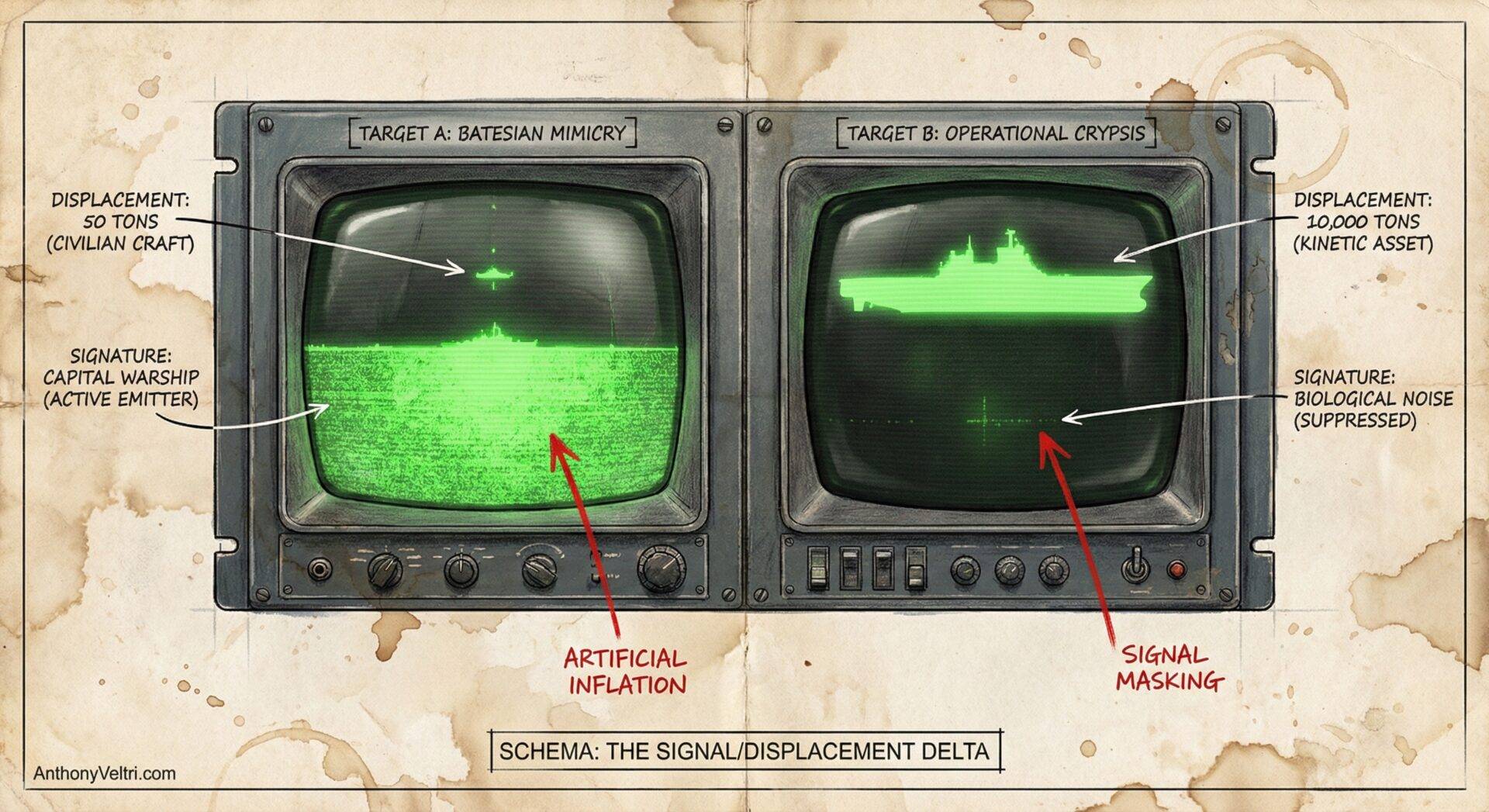
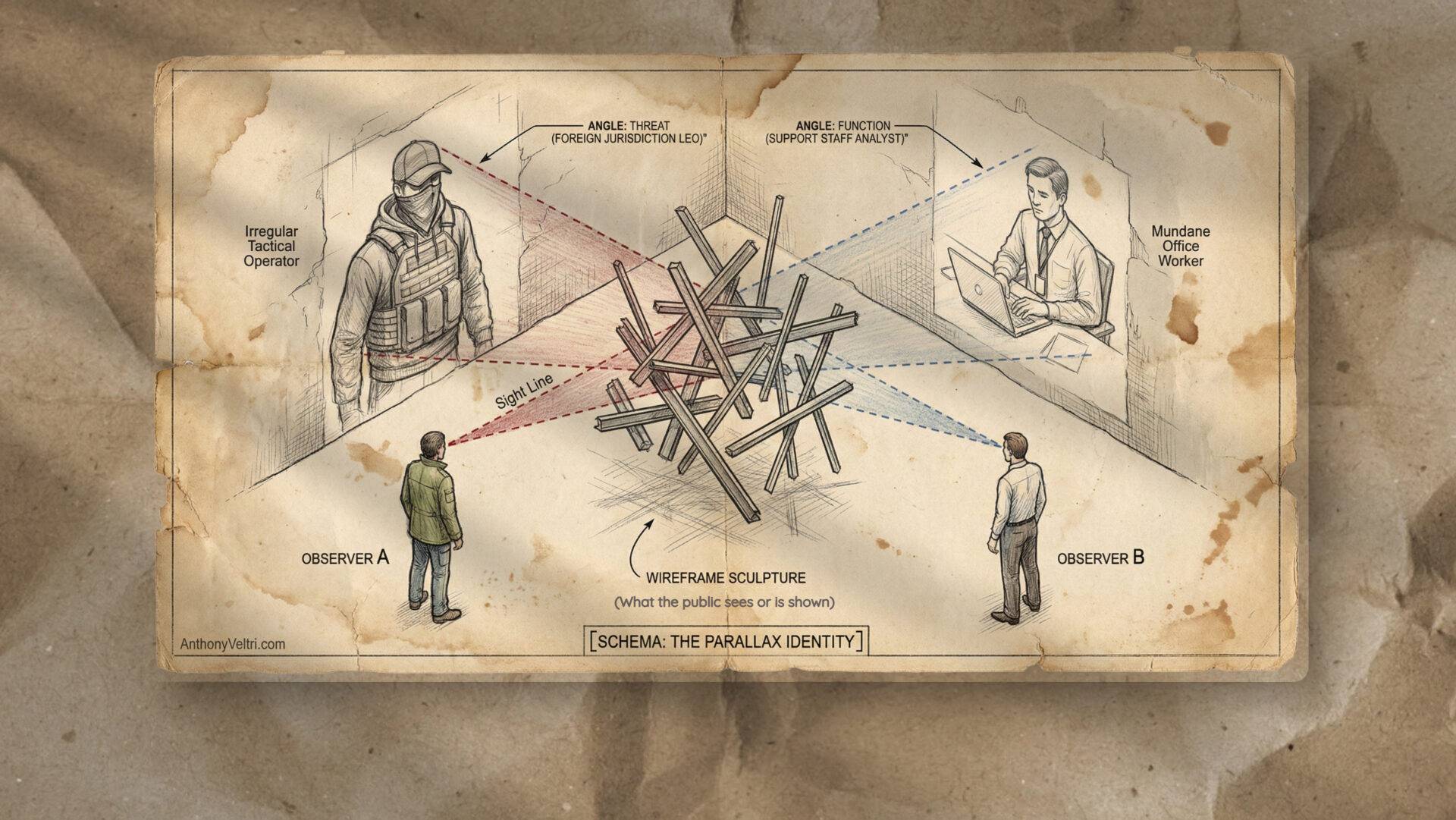
Target A (Left) shows Batesian Mimicry: A harmless function (small displacement) projecting a massive threat signal to borrow authority. This is the “Inflation” we see in the Milan example.
Target B (Right) shows Crypsis/Camouflage: A dangerous kinetic function (large displacement) masking its signal to appear harmless or invisible. The Takeaway: In a high-stakes environment, the broadcast signal rarely matches the operational reality. The wrapper is an intentional manipulation of the observer’s sensors.
The test: Badge–Function Mismatch
Step 1: Write the function in one sentence
What are they doing, operationally? (Vetting, liaison, ops-room support, threat analysis, coordination.)
Step 2: Write the badge in one sentence
What does the brand signal to normal people? (Enforcement, coercion, detention, “they can make you comply.”)
Step 3: Ask the discriminating question
If the function stayed identical, could a lower-signal wrapper have done it?
- If yes: the badge is doing extra work. That “extra” is the signal.
- If no: you may be looking at genuine operational necessity.
Step 4: Add the jurisdiction lens
Ask: is this badge operating in a domain where it’s expected and normal? Or is it out of its usual jurisdiction or theater?
Out-of-jurisdiction / foreign / unusual domain: Stronger signal, because wrapper choice carries more meaning. The badge appearing where it doesn’t normally operate makes the choice more visible and more likely to be intentional.
In-jurisdiction / routine domain: Weaker signal, because the badge is not novel. For example, HSI operating in New York City is less eyebrow-raising than HSI operating in Milan, because the first is normal jurisdiction and the second is not. The test can still apply in normal jurisdiction, but assign lower confidence unless you can show a real wrapper choice and a permission ratchet beyond the baseline.
Step 5: Track repetition
One-off is noise. Repetition is signal. Watch time, theaters, and domains.
What this is (and is not)
What this is
A way to notice when optional branding choices expand what is thinkable, justifiable, and “normal” later.
What this is not
- Not a conspiracy claim
- Not a claim of illegality
- Not a claim that escalation must continue
- Not a claim that institutions are irrelevant
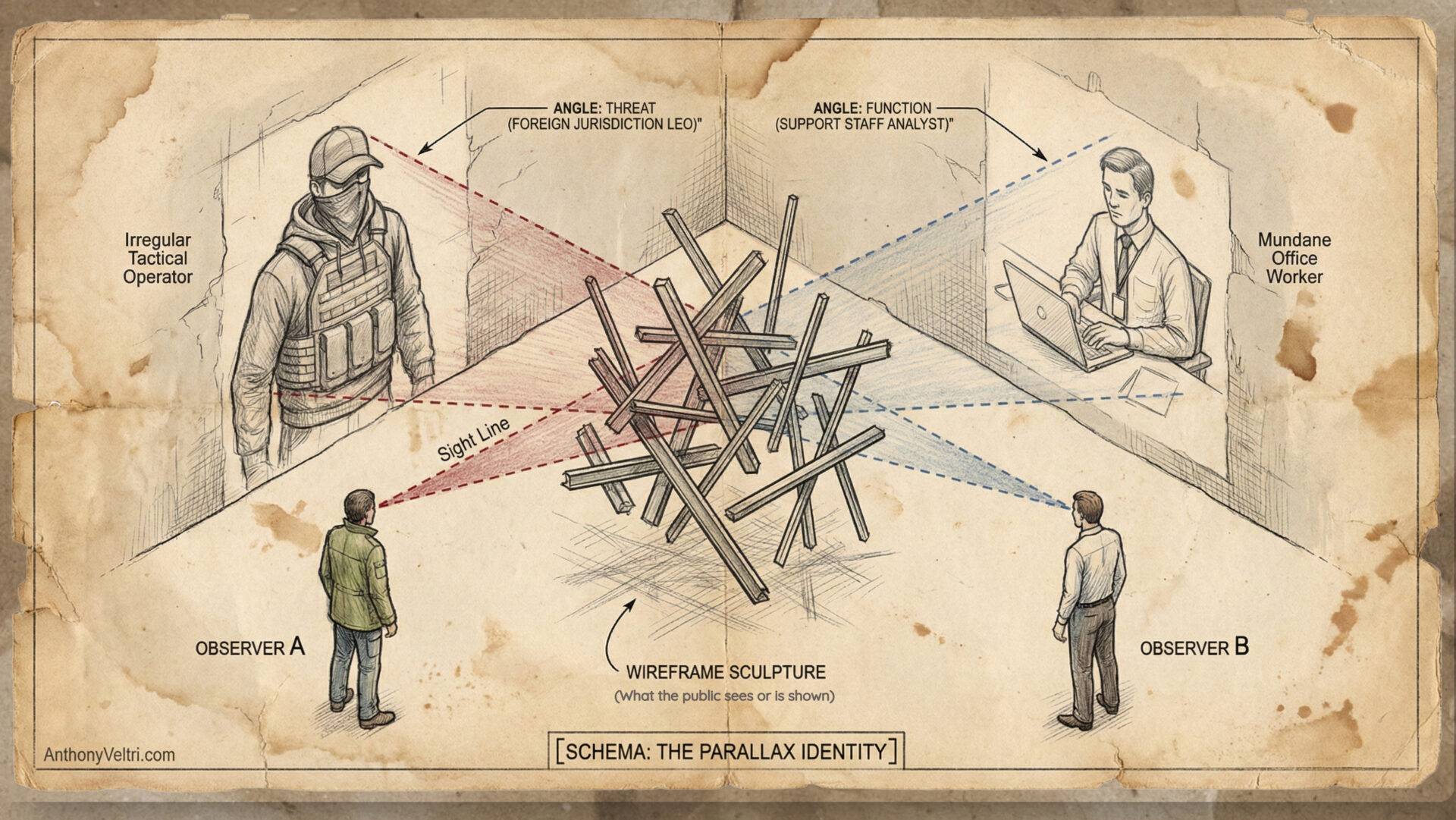
Worked example: Milano Cortina 2026
Running the test on current reporting regarding the 2026 Winter Games demonstrates how to apply this systematic analysis.
Step 1: Function HSI providing vetting support, threat assessment, and liaison coordination from inside U.S. diplomatic offices.
Step 2: Badge ICE/HSI, which signals enforcement, detention, and immigration control to most public audiences.
Step 3: Discriminating Question Could a lower-signal wrapper have done it? Yes. The State Department’s Diplomatic Security Service (DSS) already leads U.S. delegation protection and has done so since 1976.
Step 4: Jurisdiction Lens Out-of-jurisdiction. HSI is operating in foreign host nation territory (Italy), where the badge choice is more visible than routine domestic operations.
Step 5: Repetition Check Former ICE senior official confirmed HSI has been present at “previous Olympic Games.” This is a pattern, not a one-off.
Conclusion A Badge-Function mismatch is present. The function (liaison/vetting) is fungible, but the wrapper choice (ICE/HSI) carries a specific, high-friction signal that was not operationally required.
Analyst’s Note: The Image Delta as Evidence This case is particularly useful because the public reaction itself is data. The operational function was clearly Bin B (liaison/analyst work), but the public response was to Bin A (tactical enforcement).
- The Reaction: The Milan Mayor referred to a “militia that kills,” and online petitions opposed “ICE presence.” Crucially, this pushback is not coming from fringe elements; it is coming from Host Nation Authorities. The branding error didn’t just annoy protesters; it forced our partners to distance themselves from the mission.
- The Signal: This gap proves the wrapper is doing work independent of the function. If DSS (the established low-signal wrapper) had been the only visible brand, the operational reality would have been identical, but the political friction would have been zero.
- Signal Contamination: The distinction between HSI (International Liaison) and ERO (Domestic Enforcement) collapsed entirely on Jan 27, 2026, when ICE agents attempted to physically breach the Ecuadorian Consulate in Minneapolis. This domestic event immediately validated the “Militia” narrative in Milan. The badge that kicks doors at home cannot be worn as a “Support” badge abroad.
This gap is the signal. The public is responding to the badge (plate carriers, door kicks, detention imagery), not the operational reality (GS-13/GS-15 analysts doing consulate-based vetting). The confusion points to the likelihood that the wrapper is carrying weight independent of the function. If DSS (the established Olympic delegation security wrapper since 1976) had been the only visible brand, there would be no petitions, no mayoral statements, and no friction.
When the public reaction doesn’t match the operational reality, that is not a communications failure. That is the badge doing work.
Mechanism: Institutional Aposematism
Why agencies wrap low-threat functions in high-threat wrappers.
In biology, Aposematism is the use of warning coloration (bright red, yellow, contrast patterns) to signal to predators that a creature is toxic or dangerous. Batesian Mimicry occurs when a harmless species evolves to mimic those warning colors, borrowing the “Don’t Touch Me” signal of a predator without possessing the actual venom.
We are observing Institutional Aposematism.
- The Model (The Venom): A Tactical Entry Team. Their “Warning Colors” (Plate Carriers, Drop Holsters, Hoodies, Face Masks) signal legitimate kinetic violence. The public instinctively knows to yield space and authority to this signal.
- The Mimic (The Harmless): A Vetting/Liaison Unit. They possess no kinetic mission, but they adopt the “Warning Colors” of the Tactical Team.
The Strategic Logic: The agency mimics the high-threat wrapper not to perform the job (vetting doesn’t require armor), but to borrow the unquestioned authority that the wrapper commands. It is a shortcut to compliance. It makes a mundane bureaucratic function feel “Operational” and “Untouchable.”
The Consequence: While this works for the agency (nobody messes with the guy in the plate carrier), it triggers a false positive in the ecosystem. The public (like the Mayor of Milan) correctly reads the “Warning Colors” and assumes “Venom.” They react to the signal, not the substance.
Field specimen log
When a pattern appears as a clean specimen in open reporting, you log it. Not because the note is “about current events,” but because it gives people a concrete reference point.
Milano Cortina 2026 Winter Olympics
Function: Vetting, liaison, ops-room support for U.S. delegation security, operating from U.S. Consulate in Milan.
Badge/Wrapper: ICE’s Homeland Security Investigations (HSI), which reads as enforcement/immigration control to public audiences.
Jurisdiction note (expected here or out-of-place?): Out-of-place. Foreign host nation (Italy), allied territory, high-visibility international event. HSI does not normally operate in this theater.
Lower-signal wrapper that could have done it: State Department’s Diplomatic Security Service (DSS), which has led U.S. Olympic delegation protection since 1976 and is the established wrapper for this exact mission set.
Official limits/disclaimers (what it is not): Italian Interior Ministry confirmed HSI personnel stationed in control room at U.S. Consulate, support role only, no immigration enforcement personnel, all security operations under Italian authority. DHS statement: “Obviously, ICE does not conduct immigration enforcement operations in foreign countries.”
Repetition check (where else, when else): Reuters quoted former ICE senior official confirming HSI presence at “previous Olympic Games” and major sports events via international partnerships. This is a repeated pattern, not a one-off deployment.
TSA at Rio 2016 Summer Olympics
Function : Airport screening support due to surge in international visitors and potential threat environment.
Badge/Wrapper: Transportation Security Administration (TSA), which signals aviation security, screening, and homeland security operations.
Jurisdiction note (expected here or out-of-place?): Out-of-place. Foreign host nation (Brazil), supporting Brazilian aviation security operations during international event.
Lower-signal wrapper that could have done it: State Department’s Diplomatic Security Service for U.S. delegation support, or direct technical assistance to Brazilian authorities without visible TSA presence.
Official limits/disclaimers (what it is not): TSA deployed to assist with airport screening, not to conduct independent enforcement operations. Security operations remained under Brazilian authority.
Repetition check (where else, when else): Part of broader pattern of DHS components supporting major international sporting events. HSI also present at same event per reporting on multi-agency coordination.
HSI as Federal Coordination Officer, Super Bowl XLVIII (2014)
Function: Federal coordination of multi-agency security operations for Super Bowl XLVIII in New Jersey.
Badge/Wrapper: ICE Homeland Security Investigations, with Special Agent in Charge Andrew McLees serving as Federal Coordination Officer.
Jurisdiction note (expected here or out-of-place?): In-jurisdiction (domestic U.S. event), but higher-signal wrapper choice for coordination role. Secret Service or FBI typically serve as federal coordination leads for National Special Security Events.
Lower-signal wrapper that could have done it: Secret Service (typical lead for major event security coordination) or FBI (traditional federal law enforcement coordination role).
Official limits/disclaimers (what it is not): Legitimate multi-agency coordination role for major sporting event. No claim of improper activity.
Repetition check (where else, when else): Consistent with pattern of HSI presence at major sporting events. DHS has confirmed HSI will have visible presence at Super Bowl LX (2026) in Santa Clara.
Ecuadorian Consulate Attempted Breach (Minneapolis, Jan 2026)
Function: Attempted entry into sovereign diplomatic territory (Consulate) during “Operation Metro Surge.”
Badge/Wrapper: ICE (Unspecified unit, likely ERO, but the distinction is irrelevant to the signal).
The Signal Collapse: This domestic event immediately contaminated the international deployment in Milan. Italian officials cite “ICE behavior in Minneapolis” as the reason they reject HSI presence in Milan.
The Lesson: You cannot have a “Domestic Kinetic Brand” and an “International Liaison Brand” simultaneously. The kinetic signal travels faster. The Badge creates a single, global permission structure. If the Badge kicks a door in Minneapolis, it is treated as a door-kicker in Milan, regardless of the specific agent’s job description.
Wrapper optionality exists across contexts
These cases demonstrate that wrapper choice is often flexible, which is what makes wrapper optionality worth analyzing:
- Reuters quoted a former ICE senior official saying ICE has been present at major sports events, including previous Olympic Games, via international partnerships tied to issues like human trafficking and drug trafficking.
- ICE publicly describes HSI’s overseas footprint as a global network of attachés and liaisons working with foreign counterparts. That is exactly the kind of environment where wrapper optionality can matter.
- State Department material describes DSS as having supported protective security for U.S. Olympic athletes since 1976, and State published a Milan Cortina 2026 note describing DSS’s lead role and liaison support for these Games.
- During the 2016 Rio Olympics, TSA deployed officers to assist with airport screening, demonstrating multiple federal agencies can support similar security functions with different public-facing brands.
- For Super Bowl XLVIII (2014), HSI served as Federal Coordination Officer, a role typically filled by Secret Service or FBI for National Special Security Events.
Applies to / Does not apply to
Applies to
- Liaison, analysis, advising, vetting, monitoring, coordination, training
- Interagency or overseas environments where wrappers are flexible
- Cases where public interpretation and institutional precedent are part of the effect
- Early normalization questions where authority “has not changed”
Does not apply to
- Functions that inherently require coercive power
- Purely internal labels with no signaling impact
- Clear one-time comms errors that are corrected and do not repeat
- Cases where alternative wrappers were not realistically available
Falsifiers
If these show up, lower confidence fast:
- It was a one-off phrasing mistake and never happens again
- There is explicit de-branding or corrective messaging
- Future deployments revert to low-signal descriptors
- No repetition across domains, theaters, or time
Operator’s caution
This tool is easy to turn into a political Rorschach test, so do not. Use it like an operator. Stay narrow. Prove optionality, then look for repetition. Add the jurisdiction lens so you don’t overreact to normal in-jurisdiction activity. Hunt falsifiers on purpose. Assume there may be boring explanations (bureaucratic habit, comms shortcuts, partner preference, staffing constraints) and make them compete. If you cannot show “badge was optional” and you cannot show “pattern repeats,” you have a data point, not a trend. Here’s why:
The Personnel Economy (Logistics vs. Signal): Be careful not to confuse “strategic signaling” with “logistical laziness.” Federal agencies often deploy Sworn Agents (1811s) to these roles simply because they are the “Ready Reserve.” Agents have Law Enforcement Availability Pay (LEAP) and mandatory deployment clauses; Civilian Analysts (GS-series) often require complex overtime waivers, union authorizations, or volunteer status to deploy overseas.
The Test: Always ask, “Is this badge sending a strategic message, or was this just the only workforce capable of getting on the plane by Friday?” If it is pure logistics, the signal is accidental (noise), not intentional—though the effect on the public (see the Milano Cortina example) remains the same.
Addendum: Domestic Corroboration of Boundary Drift
Why this matters:
The Milan Olympics concern was not about Italy. It was about behavior under permissive conditions. Since publication, a domestic incident has occurred that directly corroborates the pattern.
What happened
Federal immigration enforcement officers attempted to enter the Ecuadorian consulate in Minneapolis without permission. Consulate staff denied entry and Ecuador filed a formal diplomatic protest.
Video evidence shows a meaningful pause at the door before engagement, undermining claims of “hot pursuit” or exigent circumstances.
This is not a routine misunderstanding. Formal diplomatic protests are reserved for perceived intentional norm violations, not momentary confusion.
Why this is a signal, not an anecdote
Consulates and embassies are among the most protected spaces in international law. Federal officers receive explicit training on diplomatic immunity and sovereign premises.
Attempting entry without consent indicates one of two things:
- Boundary discipline is no longer reflexive, or
- Boundaries are being tested to see whether they still hold
Either interpretation aligns with the original Milan concern.
Accountability asymmetry
ICE remains an outlier among law enforcement agencies in body-worn camera usage. In this incident, there is no publicly released federal body-cam footage. The only visual record comes from inside the consulate.
This asymmetry matters.
When:
- authority expands, and
- documentation is optional,
then messaging and branding become functional, not cosmetic.
Why this reinforces the Milan Olympics analysis
The Milan field note argued that branding choices themselves are escalation signals, even when operational reality is framed as “analysts” or “coordination support.”
This domestic incident demonstrates that the concern is not hypothetical or geographically limited. The same pattern appears:
- norm testing before formal rule changes,
- plausible deniability over clarity,
- discretion prioritized over auditability.
Updated assessment
This addendum does not claim malicious intent or centralized conspiracy. It does confirm something narrower and more important:
Institutional guardrails are being treated as flexible, and actors are discovering in real time which norms still generate meaningful resistance.
That discovery process is itself the escalation.
Why this stays an addendum
This is not a new mechanism. It is replication across domains.
Same actors.
Same incentive structure.
Same pattern.
The original Milan analysis stands. This incident simply shows that the behavior is already present at home.
Watch for Replication: When an Incident Becomes a Pattern
Why this section exists:
Single incidents can be mistakes. Replication across time, space, or agency indicates normalization.
This section is not about intent. It is about whether corrective brakes engage or whether behavior quietly repeats.
Signals that indicate correction
If the system is functioning, we should expect to see at least one of the following:
- Prompt release of body-worn camera footage or equivalent official documentation
- Public clarification of rules governing entry into diplomatic or consular premises
- Internal discipline or retraining acknowledged on the record
- Explicit reaffirmation of consular immunity norms by DHS leadership
Any of these would suggest this incident was recognized as out-of-bounds.
Signals that indicate normalization
If none of the above occur, and instead we observe:
- A second consulate or embassy friction incident, domestic or abroad
- Similar “knock and wait” attempts framed as misunderstandings
- Continued lack of body-camera coverage in high-risk encounters
- Narrative minimization (“no policy violation,” “routine enforcement”)
Then this moves from anomaly to behavioral precedent.
Key discriminator
The most important question is not what was said after the fact, but:
Did the organization change its behavior in the next comparable encounter?
Repetition is the tell.
Why replication matters more than rhetoric
Institutions do not announce norm erosion. They demonstrate it.
A single event tests a boundary.
A repeated event redefines the boundary.
Operational takeaway
If similar incidents occur without meaningful internal consequence, it becomes reasonable to forecast:
- broader jurisdictional confidence,
- increased reliance on discretion over process,
- and reduced expectation of external enforcement of norms.
At that point, the risk is no longer theoretical.
What Would Change My Mind
Why this section exists:
Forecasting without explicit disconfirming conditions becomes belief. This section defines the evidence that would cause me to downgrade or abandon the concern.
Evidence that would materially reduce concern
Any one of the following, if credible and sustained, would meaningfully alter my future assessment:
- Mandatory, enforced body-worn camera use for ICE in high-risk domestic operations, with penalties for noncompliance
- Public release of contemporaneous footage or logs from the consulate incident that clearly demonstrate exigent circumstances
- Documented internal discipline or retraining explicitly tied to consular or diplomatic norm violations
- A clear DHS directive reaffirming non-entry into diplomatic and consular premises absent consent or extreme exigency
- No repetition of similar boundary-testing behavior across agencies over a meaningful time window
Any of these would suggest the system recognized the boundary and corrected course.
What would not change my mind
The following would not materially update the forecast:
- Post-hoc statements asserting “no policy violation” without evidence
- Vague language about misunderstandings or “confusion in the moment”
- Appeals to operational necessity without documented exigency
- Leadership assurances unsupported by changes in practice
Words without changed behavior are noise.
Why this matters
This framework does not assume bad intent. It assumes institutions drift unless constrained.
If constraints visibly re-engage, concern should fall.
If they do not, concern should rise.
Calibration note
This is not a prediction of inevitable abuse. It is a conditional forecast:
If boundary testing continues without consequence,
then normalization follows.
The moment that conditional fails, the model updates.
Audience Misread Risk
Why this section exists:
Well-intentioned readers often project motives or conclusions onto analysis that simply aren’t there. This section preemptively closes those gaps.
What this note is not saying
This analysis does not claim:
- That there is a coordinated conspiracy to violate international law
- That individual agents intended to commit crimes
- That the United States has abandoned the rule of law
- That this incident alone proves authoritarian collapse
Those are narrative leaps, not evidence-based conclusions.
What this note is saying
This note argues something narrower and more defensible:
- Sacred norms are only sacred if they are reflexively enforced
- Recent behavior suggests those reflexes are weakening
- When accountability mechanisms are optional, boundary testing becomes rational
- Messaging and branding choices are themselves operational signals
Common misreads to watch for
- “This is just politics”
Norm erosion is a structural phenomenon, not a partisan one. - “This is alarmism”
Alarmism predicts inevitability. This note defines conditions and waits for replication. - “This proves intent”
Intent is not required for drift. Repetition is.
Why precision matters
Overstating the case weakens it. Understating it delays response.
The goal is not outrage.
The goal is early detection.
Reader responsibility
If you disagree, the productive response is to:
- identify which constraint you believe still holds, or
- point to evidence of corrective action.
Dismissal without engagement is not analysis.
Last Updated on January 29, 2026