The leadership patterns that create high trust, high tempo, low drag environments #
Doctrine Claim: Leadership is not a personality trait; it is the architecture of human behavior. This doctrine defines the patterns: altitude discipline, clear interfaces, and distributed decision rights. These considerations allow high-tempo teams to operate with autonomy without losing coherence.
1. Purpose of the Leadership Doctrine #
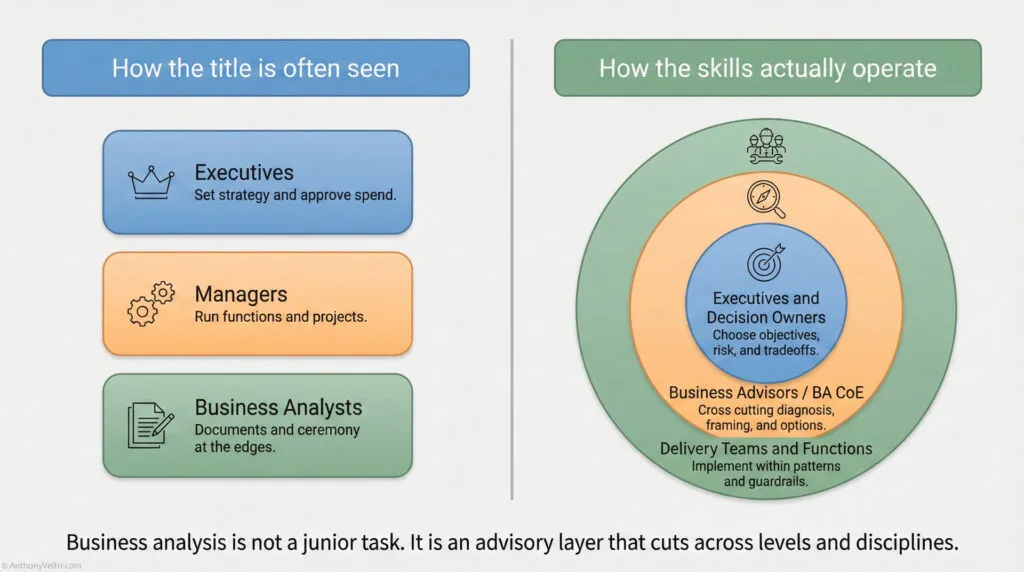
Leadership in complex systems is not about authority or personality.
It is about:
- clarity
- altitude
- trust
- constraints
- alignment
The purpose of this doctrine is to codify the patterns that allow leaders to:
- distribute decisions without losing control
- maintain tempo without creating chaos
- stabilize interfaces without micromanaging
- reduce drag without centralizing authority
- create autonomy without losing coherence
Leadership is the architecture of human behavior.
This annex defines the patterns that make that architecture work.
2. The Ten Patterns of High Tempo Leadership #
These patterns appear repeatedly across mission systems, bureaucratic environments, FRNs, and iCAV. They are universal.
Pattern 1: Intent Over Instruction #
Principle:
Leaders define what must be achieved, not how to do it.
Effect:
Teams move faster because they understand the purpose, not just the steps.
Example:
In FRNs, once leadership clarified the intent of the publication rather than dictating field level details, the workflow stabilized.
Pattern 2: Commitment Over Compliance #
Principle:
Commitment advances the mission. Compliance only avoids mistakes.
Effect:
Teams act with initiative instead of waiting.
Example:
iCAV analysts corrected stale data because they were committed to maintaining truth, not just following a checklist.
Pattern 3: Autonomy Within Boundaries #
Principle:
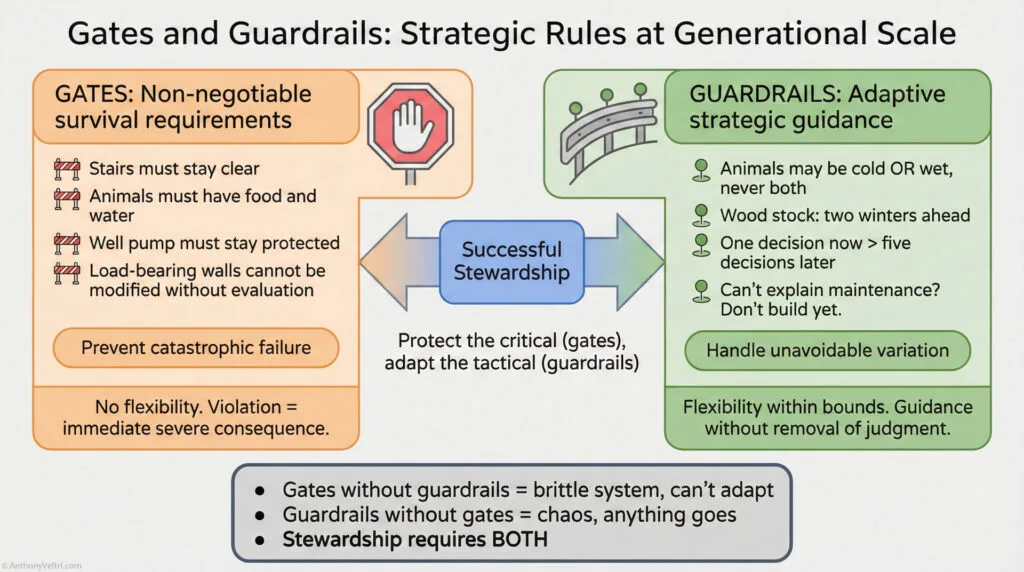
Freedom is safe and effective when boundaries are clear.
Effect:
Operators act quickly without fear of violating intent.
Example:
FRN editors moved faster when rules were clear about what was legally critical and what was preference based.
Pattern 4: Altitude Discipline #
Principle:
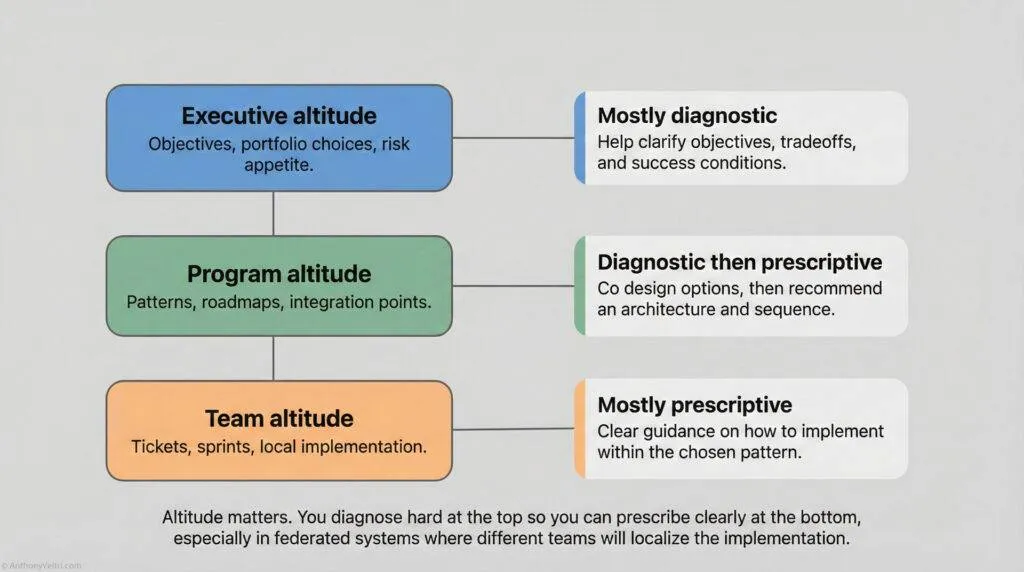
Leaders stay at strategic altitude. They do not micromanage.
Effect:
Managers manage. Operators operate. Architects architect.
Example:
Before altitude discipline, FRN leadership inserted Altitude 1 formatting edits. After discipline, leadership focused on legitimacy and strategic framing.
Pattern 5: Two Lane Leadership #
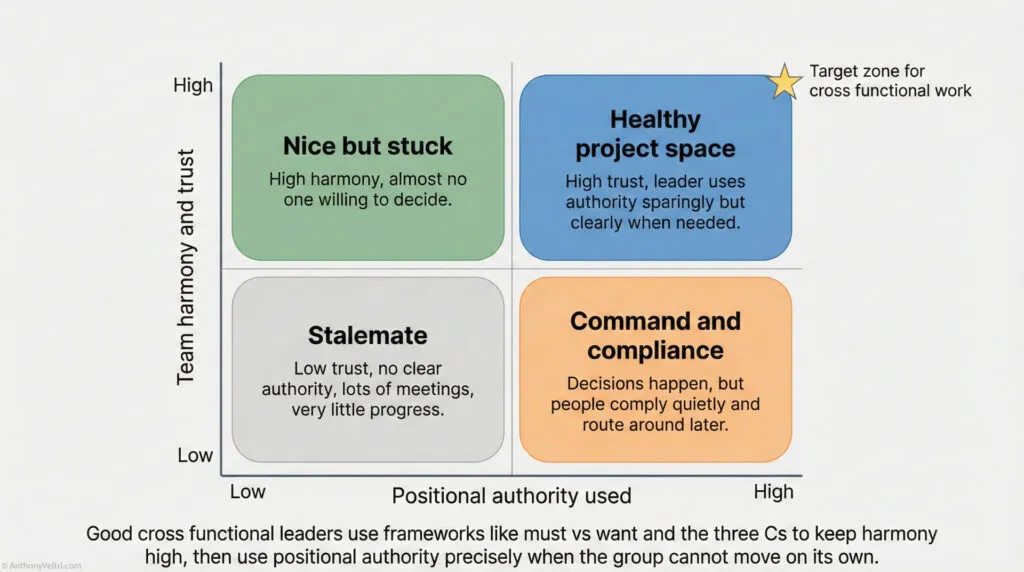
Principle:
High tempo environments require two complementary lanes:
- a federation lane with autonomy
- a central lane with alignment and harmonization
Effect:
Diverse teams stay coordinated without forced uniformity.
Example:
In iCAV, partner systems remained independent while the viewer unified them.
Pattern 6: Distributed Decisions #
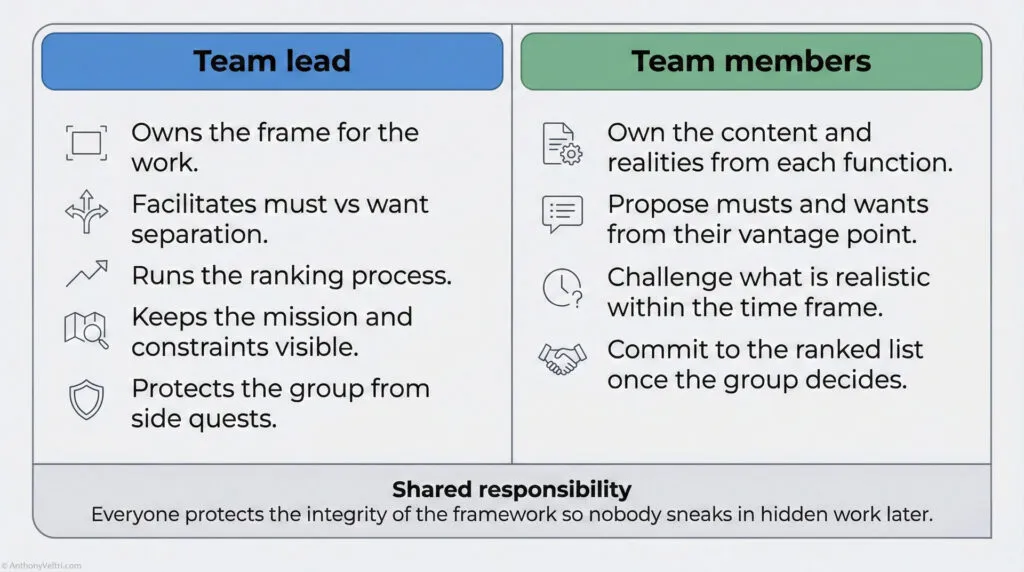
Principle:
Decisions are made at the lowest competent level.
Effect:
Less drag, fewer bottlenecks, more speed.
Example:
Operators in iCAV did not need permission to annotate stale data. They simply did it.
Pattern 7: Clear Ownership of Interfaces #
Principle:
Every interface needs two owners.
Leadership ensures this is true.
Effect:
Boundaries become predictable instead of conflict zones.
Example:
FRN workflows stabilized when each stage had a clearly defined upstream and downstream owner.
Pattern 8: Learn From Drift, Do Not Punish It #
Principle:
Drift is a signal, not a failure.
Effect:
Teams report problems early instead of hiding them.
Example:
iCAV partner drift was expected. The contracts absorbed it. No blame was required.
Pattern 9: Reduce Decision Drag #
Principle:
Leadership actively hunts for and eliminates drag in the system.
Effect:
A single decision becomes one decision, not five.
Example:
In FRNs, leadership-driven field additions multiplied work. Once drag was surfaced, these additions were filtered through proper altitudes.
Pattern 10: Leadership Sets Direction, Architecture Makes It Real #
Principle:
Leaders define the destination.
Architects design the lanes.
Managers maintain flow.
Operators drive.
Effect:
Systems move with coherence, not chaos.
Example:
iCAV succeeded because leadership did not dictate geometry rules or ingest patterns. Architecture did.
3. The Leader’s Four Questions #
Every leader evaluates decisions with four questions:
- What is the mission intent?
- What altitude should this decision live at?
- What boundary or interface is affected?
- What is the cost of waiting?
If any answer is unclear, the leader clarifies before acting.
4. Leadership Failure Modes #
Systems break when leaders fall into these traps:
Failure Mode 1: Micromanagement #
Leadership acts at Altitude 1 and overloads the system.
Failure Mode 2: Over delegation without clarity #
Teams operate without intent and drift into rework.
Failure Mode 3: Over centralization #
Leaders force unnecessary uniformity. Tempo collapses.
Failure Mode 4: Thrash #
Leaders change requirements or add fields without impact review.
This was the core FRN problem.
Failure Mode 5: Fear driven leadership #
Teams hide problems.
Drift becomes catastrophic.
5. Leadership Success Modes #
Systems thrive when leaders:
- articulate intent in one sentence
- set boundaries without suffocating autonomy
- empower architecture to shape the system
- protect teams from unnecessary visibility or scrutiny
- eliminate drag at the seams
- stabilize interfaces before scaling
- reinforce clear decision altitudes
- accept that drift is inevitable and plan for it
- trust operators to act immediately
- trust managers to shape flow
- trust architects to harmonize the whole
This is the leadership environment that produces Quadrant 1 systems.
6. Leadership Examples From Your Experience #
FRN Example: Stabilizing a politically sensitive workflow #
Before leadership doctrine:
- leadership requests arrived at the wrong altitude
- small changes created cascading revisions
- operators were trapped in reactive mode
- the system slowed under scrutiny
After leadership doctrine was applied:
- leadership limited themselves to defining the legitimacy and purpose of the notice
- managers handled workflow, timing, and review
- editors owned correctness and format
- legal owned compliance
- architecture shaped templates and contracts
Tempo increased.
Stress decreased.
Quality improved.
Visibility remained high without destabilizing the system.
iCAV Example: Leadership protecting architectural coherence #
Strong leadership behaviors:
- allowed architects to define federation
- empowered analysts to act without waiting
- resisted the urge to dictate ingest rules
- shielded teams from political noise during activations
- kept strategic focus on mission value
These leadership behaviors enabled:
- degraded mode to function
- federation to scale
- autonomy to flourish
- partner diversity to be an asset rather than a problem
Leadership protected the architecture.
The architecture protected the mission.
7. Leadership Operating Template (Paste Ready) #
Leadership Decision Template
Intent:
Describe what must be true.
Altitude:
4, 3, 2, or 1
(Leadership should be at 4 unless shaping guidance.)
Boundaries:
What is allowed.
What is not allowed.
Ownership:
Who owns the upstream.
Who owns the downstream.
Impact:
Local, cross team, architectural, or strategic.
Risks:
Drift, delay, conflict, visibility pressure.
Tempo:
What is the cost of waiting?
Actions:
Define direction.
Delegate the rest.
8. Cross Links #
Leadership Doctrine reinforces:
- Principle 16: Distributed decisions
- Principle 17: Clear intent
- Principle 18: Preventive vs contingent action
- Principle 19: Commitment vs compliance
- Principle 20: Leadership vs management vs supervision
- Annex A: Human Contracts
- Annex C: Interface Ownership
- Annex D: Decision Altitudes
- Annex E: Prevention–Contingency Matrix
Leadership is the human architecture that makes the technical architecture possible.
9. For Reflection: #
Ask yourself:
Where am I operating at the wrong altitude?
Where am I creating drag?
Where am I protecting clarity?
Where am I protecting the system?
Leadership is not a role.
It is a pattern.
Use the pattern deliberately.
Last Updated on December 5, 2025