Why systems must perform under partial failure, partial truth, and partial coordination #
The goal here is to visualize that “Degraded” does not mean “Broken. ” It means “Operating in a different mode.”
This page is a Doctrine Guide. It shows how to apply one principle from the Doctrine in real systems and real constraints. Use it as a reference when you are making decisions, designing workflows, or repairing things that broke under pressure.
The world almost never behaves at full fidelity. Your system should not require it. #
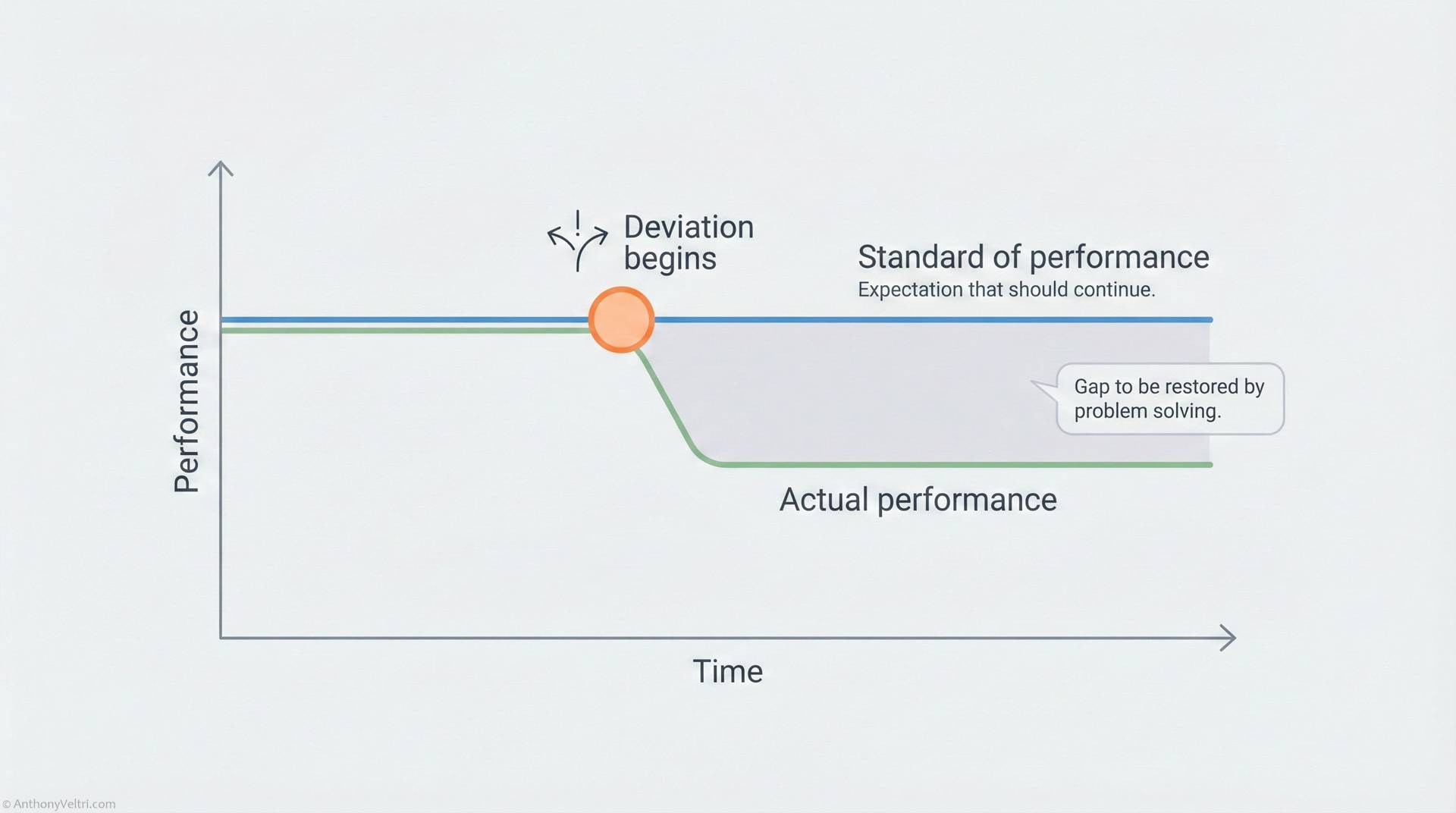
Most organizations design systems for:
- stable networks
- synchronized updates
- full data availability
- clean inputs
- predictable partners
- ideal staffing
- smooth approvals
But real mission environments are:
- noisy
- partial
- delayed
- uneven
- unpredictable
- degraded
If your system only works when everything else is perfect, your system does not work.
Lived Example: The activation where every feed degraded at once #
During a severe weather activation, we saw:
- a major partner’s feed lag by six hours
- another partner’s service drop intermittently
- timestamps that drifted
- mismatched projections
- incomplete geometry
- a field team unable to upload updates
- authentication tokens expiring mid cycle
- regional latency spikes that broke retries
- satellite imagery delayed due to cloud cover
If the system required all feeds to be current and aligned, the operational picture would have gone dark.
Instead, because we had designed for degradation:
- stale layers still displayed with markers
- cached layers filled temporary gaps
- partial updates merged cleanly
- fallback modes activated
- analysts worked with partial truth instead of no truth
- decision makers never lost situational awareness
Degradation is not a failure.
Degradation is the environment.
Business Terms: Why degraded operations matter #
Degraded operations are the normal mode because:
- partners do not update at the same speed
- resources are uneven
- networks degrade under load
- crises disrupt normal behavior
- authorities shift
- priorities collide
- information lags behind reality
If teams must wait for perfect inputs:
- operations stall
- decisions drift
- rework skyrockets
- coordination collapses
- confidence erodes
Your system must provide useful truth, not perfect truth, under pressure.
System Terms: What degraded operation actually means #
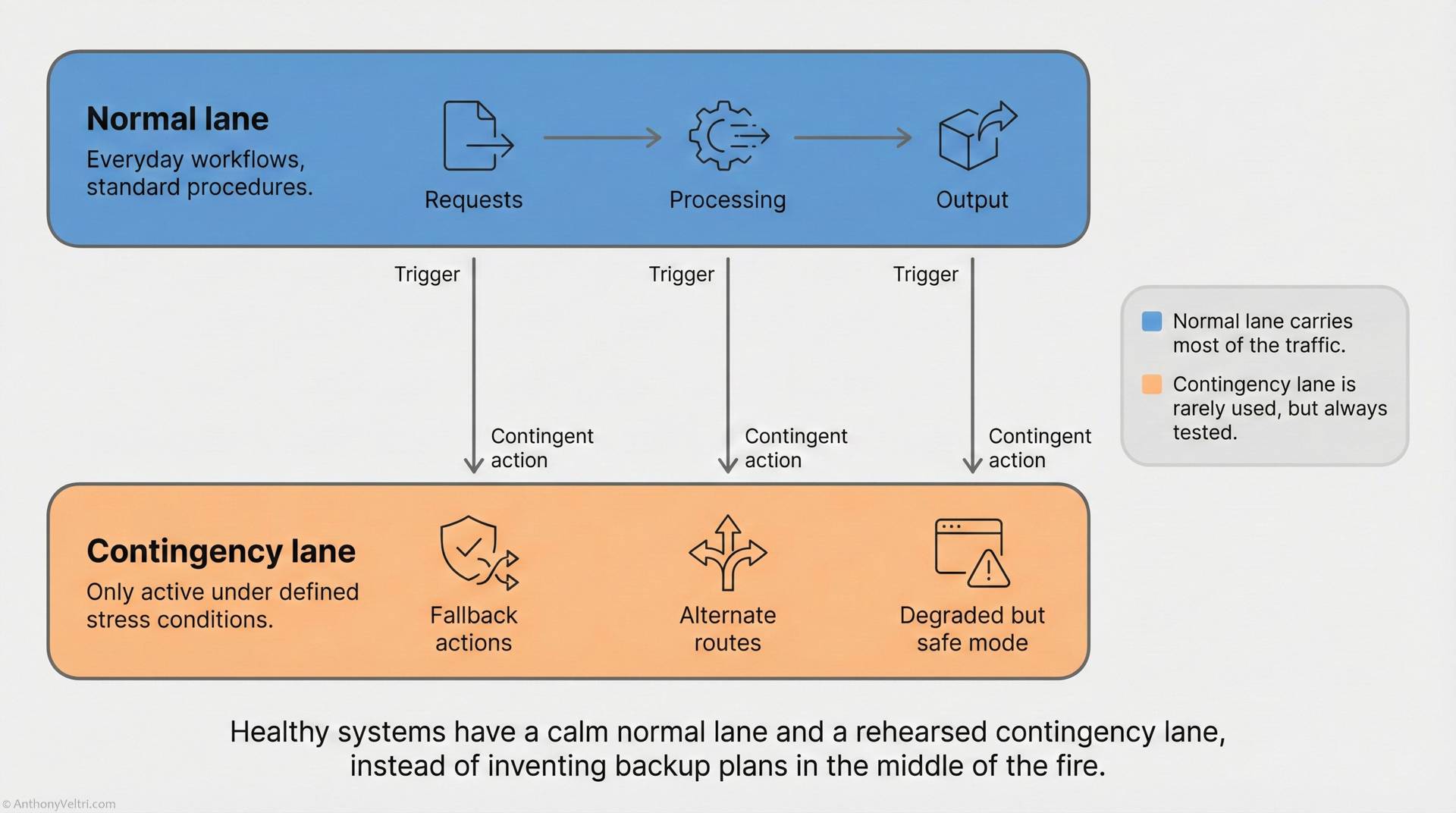
A degraded operations architecture expects:
- stale data
- partial data
- inconsistent data
- asynchronous data
- missing attributes
- variable projections
- unpredictable partner behavior
- partial connectivity
- high latency
- resource exhaustion
So it includes:
- caching
- confidence scoring
- fallback behavior
- tolerant parsing
- schema mapping
- partial rendering
- asynchronous ingest
- retry backoff
- minimum viable publication rules
A degraded mode system is one that:
- does not require uniformity
- does not collapse when inputs drift
- does not crash when partners lag
- does not block when upstream is unavailable
- does not hide information when confidence is low
It presents something, not nothing.
Why Systems Fail When They Expect Perfection #
Business perspective #
Systems fail because leaders assume:
- partners will update reliably
- information will be fresh
- resources will be available
- staffing will be stable
- everyone will follow the plan
- outages are rare
- coordination will be tight
These assumptions hold during tabletop exercises.
They collapse during real missions.
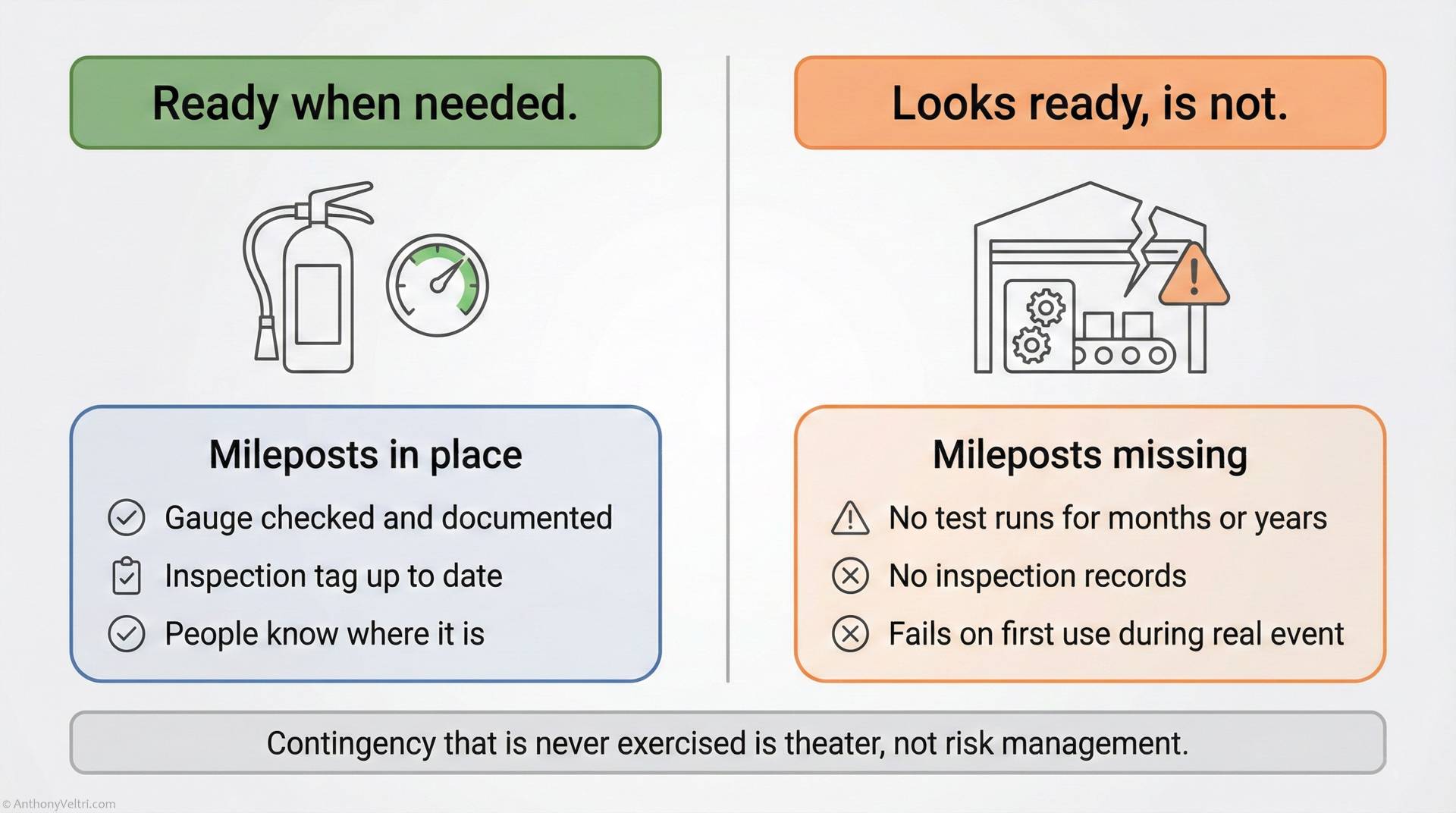
When a system assumes perfection, a single degradation becomes a full stop.
System perspective #
Systems fail technically because:
- synchronization requires stable conditions
- version locks break under drift
- strict ingest breaks on malformed data
- no fallback exists
- error states cascade
- tight coupling amplifies small failures
- central nodes become overload points
A perfect mode system fails under almost any real world disruption.
Why Degraded Mode Is a Strategic Advantage #
Business perspective #
A degraded capable system:
- preserves mission tempo
- supports better decisions
- handles partner diversity
- lowers anxiety in the chain
- increases trust
- prevents escalation
- reduces workload during crises
- keeps stakeholders aligned
Leaders remain operational even when truth is partial.
System perspective #
A degraded capable system:
- maintains partial functionality
- isolates failures
- prioritizes critical pathways
- provides graceful fallback
- preserves the last known good state
- conveys uncertainty without collapsing
- treats degradation as data, not error
Resilience emerges naturally when degradation is expected, not feared.
Business Example: The “minimum viable picture” that saved three hours #
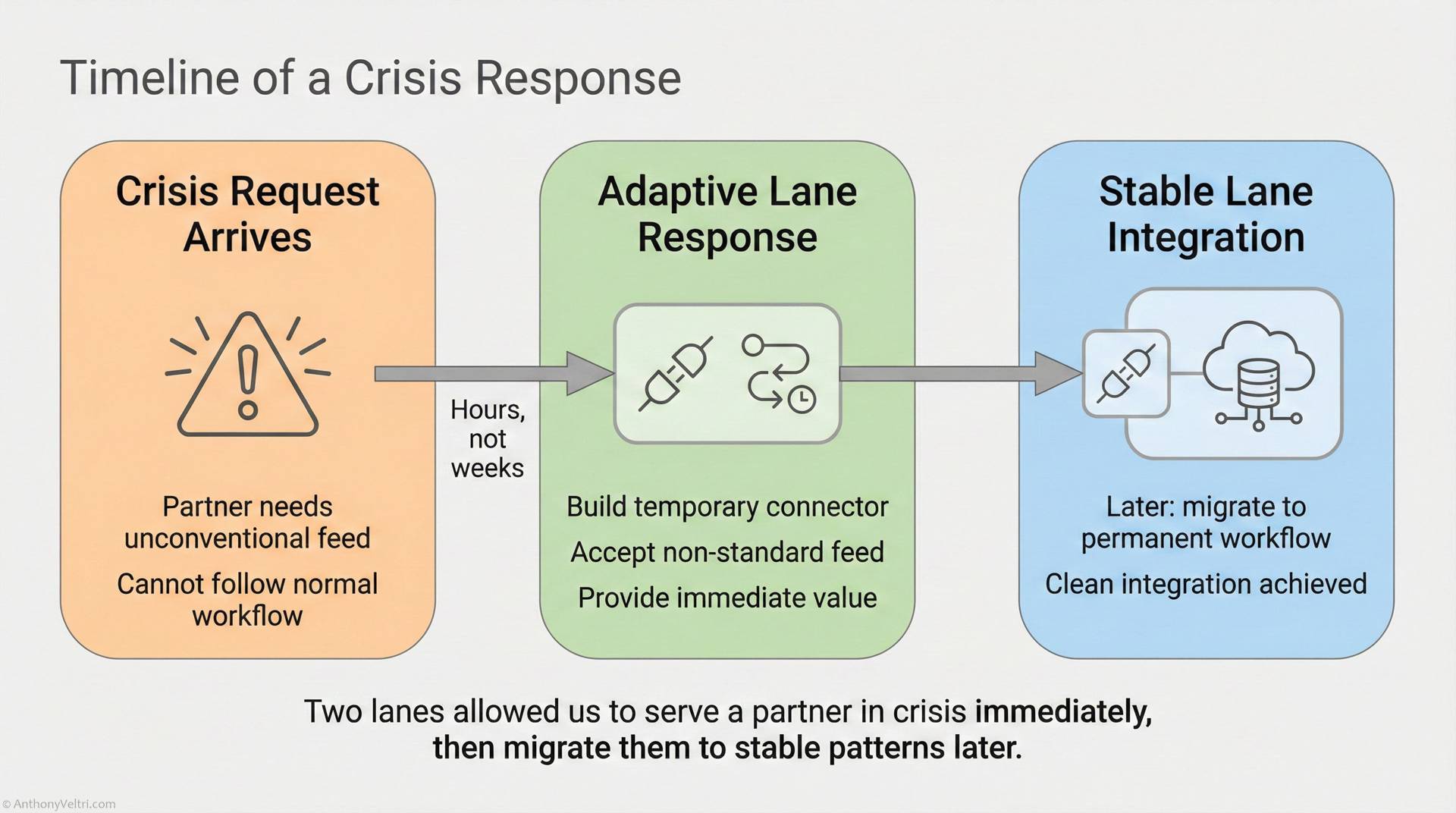
During a flood response, a key partner feed dropped completely.
Leadership asked for status.
Instead of replying “we are waiting for the feed,” we produced:
- cached layers
- partial overlays
- estimated extents
- human-reported updates
- annotated gaps
- confidence indicators
This minimum viable picture enabled:
- emergency routing
- evacuation adjustments
- logistics realignment
Three hours of mission tempo were preserved.
Waiting for perfect data would have cost valuable time.
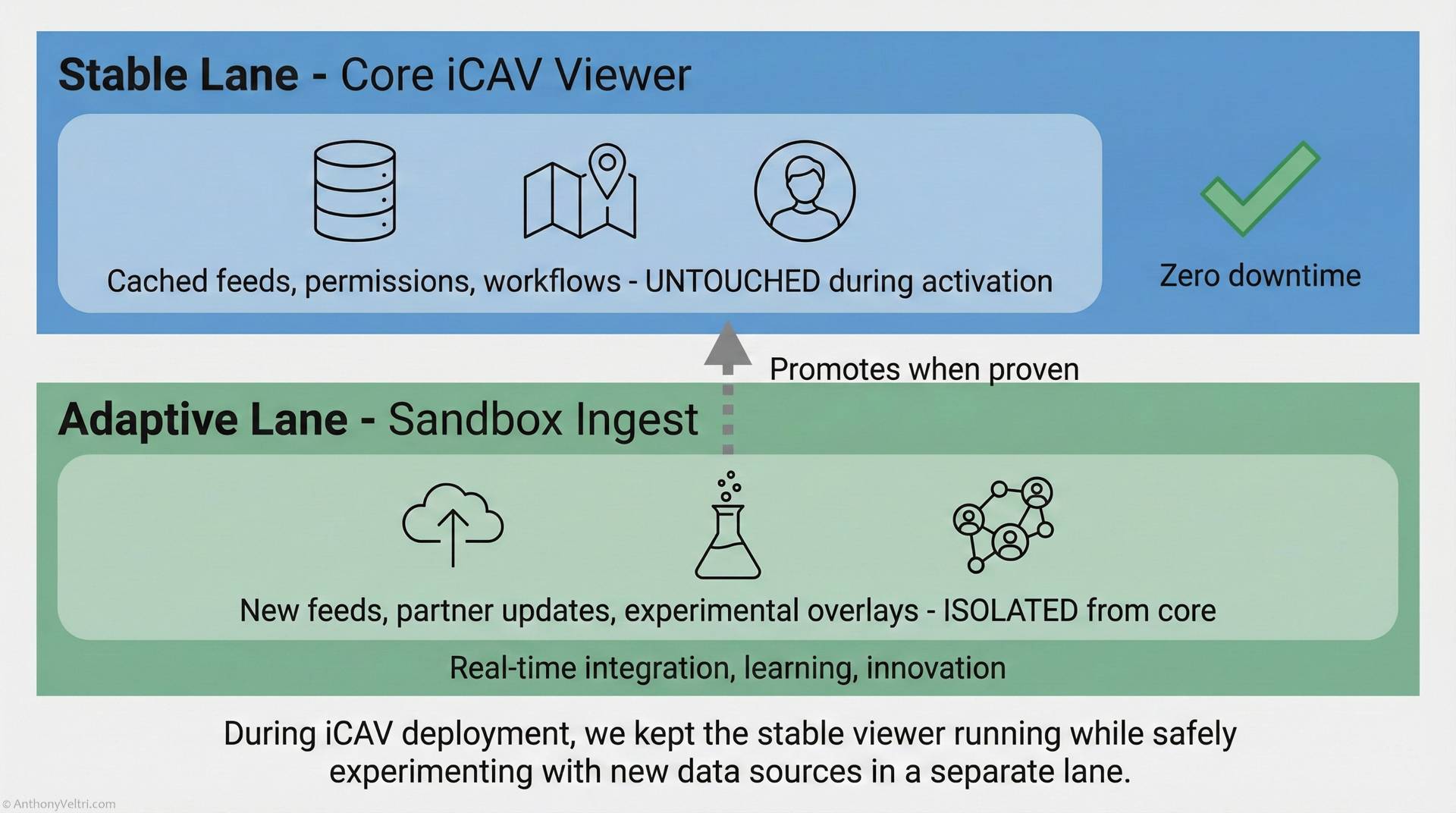
System Example: iCAV’s degraded mode saved decision makers repeatedly #
In iCAV:
- stale layers were highlighted, not removed
- partial geometry still rendered
- absent attributes were tolerated
- outdated feeds were cached
- asynchronous partners were accepted
- multi day lags were annotated
- missing updates did not break the viewer
The system handled true conditions.
Not the conditions leadership wished existed.
This kept the mission picture alive even when upstream sources degraded.
Architect Level Principle #
As an architect, I build systems that operate under partial truth, partial failure, and partial connectivity.
Degraded operations are not the exception.
They are the environment.
Twenty Second Takeaway #
“Mission environments do not operate at full fidelity. Networks fail. Partners lag. Data comes in late or incomplete. I design systems for degraded operations so that decision makers always have a useful picture, even when conditions are imperfect.”
Cross Links to Other Principles #
Degraded operations are foundational to:
- Useful interoperability
- Federation
- Emergent resilience
- Two lane systems
- Architecture accelerates
- Distributed decisions
- Interfaces and ownership
- Decision drag
- Preventive and contingent action
Doctrine Diagnostic – For Reflection: #
Ask yourself:
Does your system require ideal conditions to function?
If so, it will fail.
Not maybe.
Not sometimes.
It will fail.
Design for degraded operations now, while you still have time.
Last Updated on February 22, 2026