Why planning for the expected and structuring for the unexpected creates systems that survive real conditions #
This Doctrine guide is the manifesto for Defense in Depth. It argues that you cannot stop all failures (Prevention), so you must also plan for survival (Contingency).
This page is a Doctrine Guide. It shows how to apply one principle from the Doctrine in real systems and real constraints. Use it as a reference when you are making decisions, designing workflows, or repairing things that broke under pressure.
A system built only for prevention will fail under surprise. A system built only for contingency will drown in chaos. #
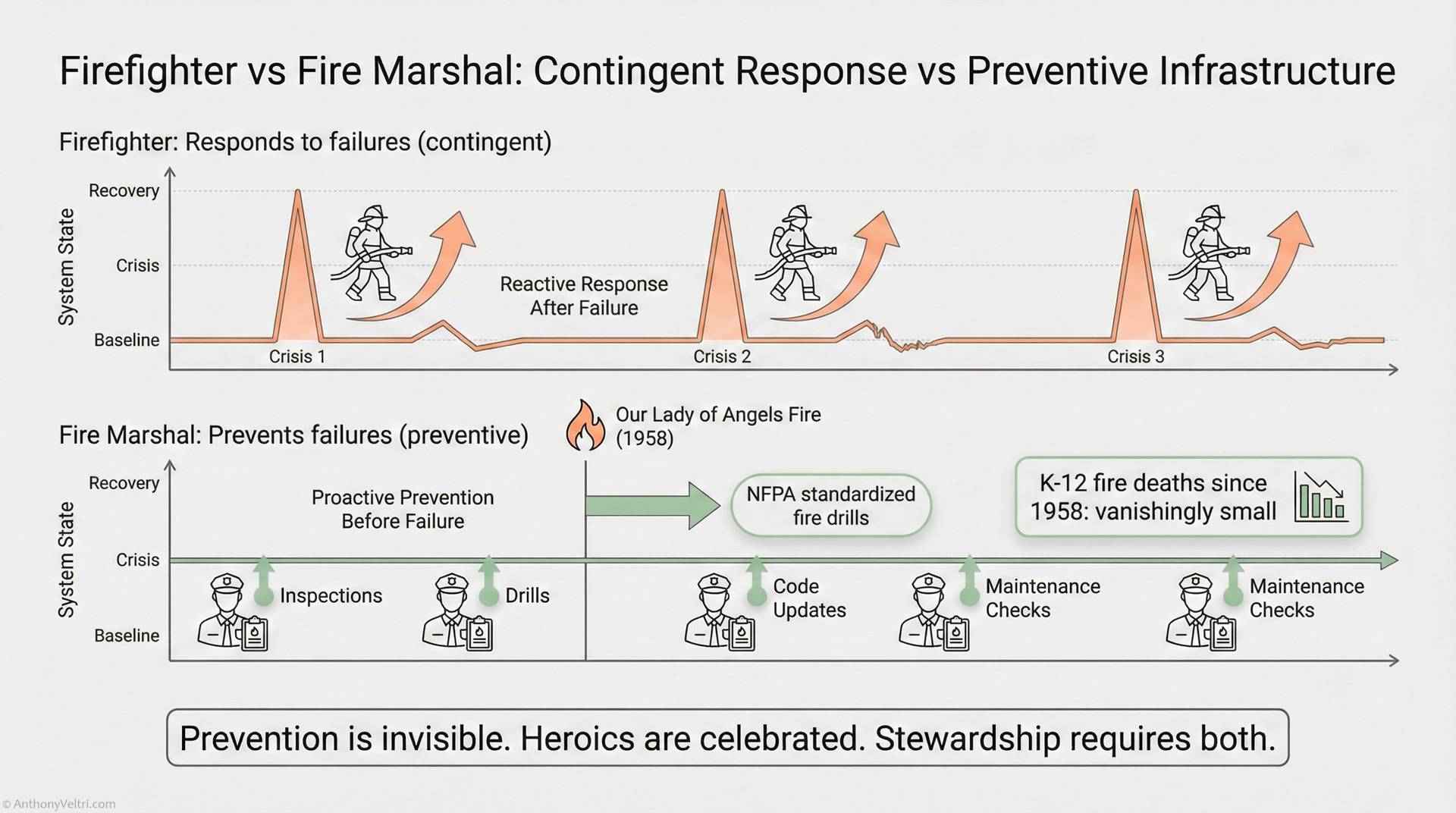
Most organizations fall into one of two traps:
Trap one: They optimize everything for prevention.
This creates brittle systems that collapse under stress.
Trap two: They rely entirely on contingency.
This creates reactive chaos and waste.
Resilient systems blend both:
- preventive scaffolding that blocks avoidable failures
- contingent scaffolding that handles unavoidable ones
You cannot choose one.
You must design for both.
Lived Example: The ingest pipeline that survived the partner outage #
During an activation:
- a major partner feed died
- another partner feed drifted by four hours
- timestamps became inconsistent
- geometry changed without notice
Prevention alone would have failed because:
- no prevention can stop partners from failing
Contingency alone would have failed because:
- without preventive scaffolding, fallback behavior would have been chaotic
Because we had both:
- preventive alignment kept errors isolated
- contingent fallback filled gaps
- cached layers preserved situational awareness
- annotations explained uncertainty
- analysts continued making correct decisions
Prevention reduced avoidable chaos.
Contingency absorbed unavoidable chaos.
The system survived because both layers were intentional.
Business Terms: Prevention and contingency serve different purposes #
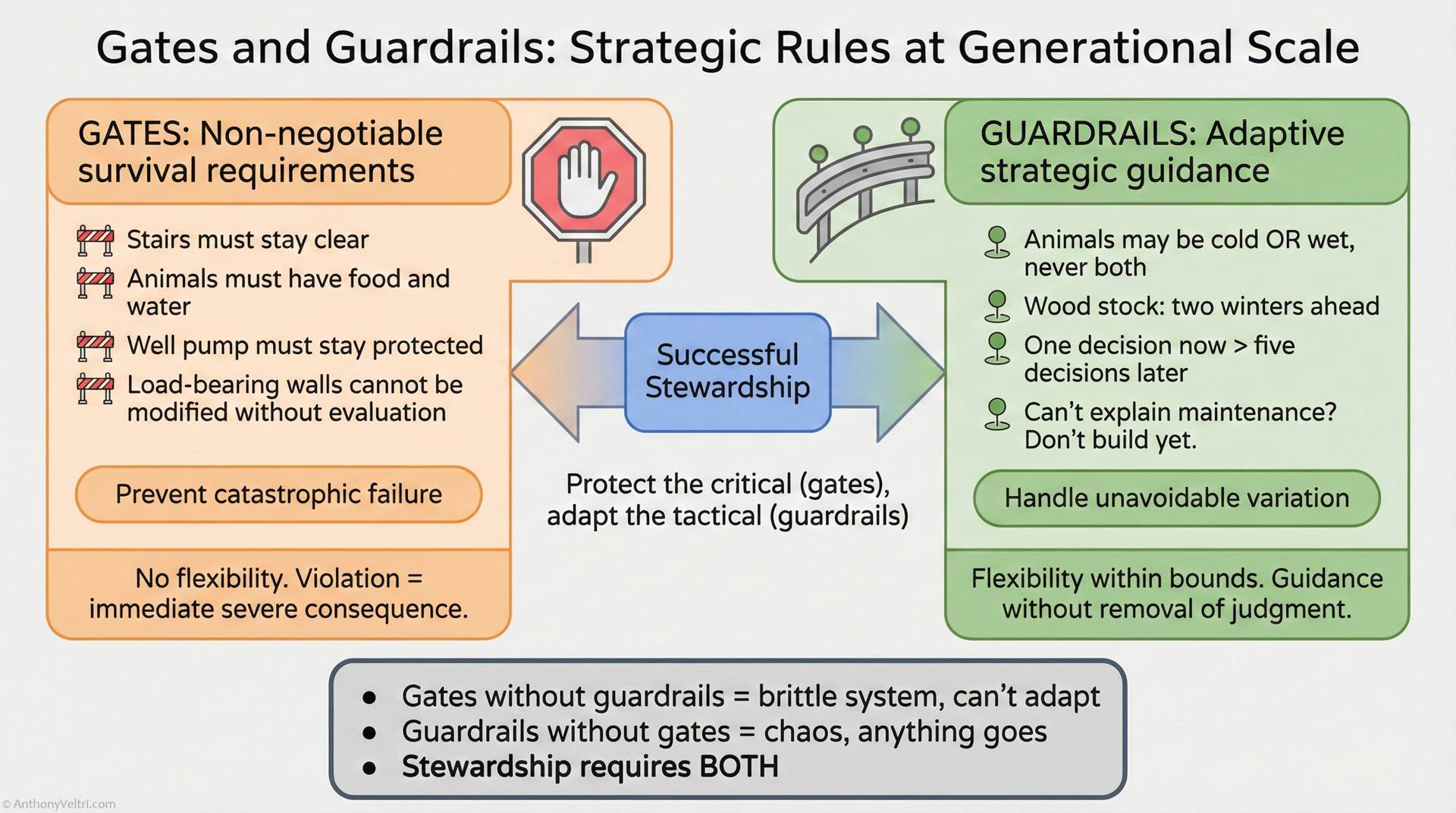
Preventive actions reduce error probability by:
- clarifying intent
- defining contracts
- setting boundaries
- stabilizing interfaces
- reducing ambiguity
- improving alignment
- removing confusion
- designing constraints
Contingent actions reduce error impact by:
- defining fallback behavior
- preserving partial truth
- isolating failures
- enabling local correction
- tolerating drift
- absorbing outliers
- providing escape hatches
Prevention avoids unnecessary problems.
Contingency handles unavoidable problems.
Without prevention:
Teams drown in noise.
Without contingency:
Teams fail under surprise.
System Terms: Prevention and contingency as architectural patterns #
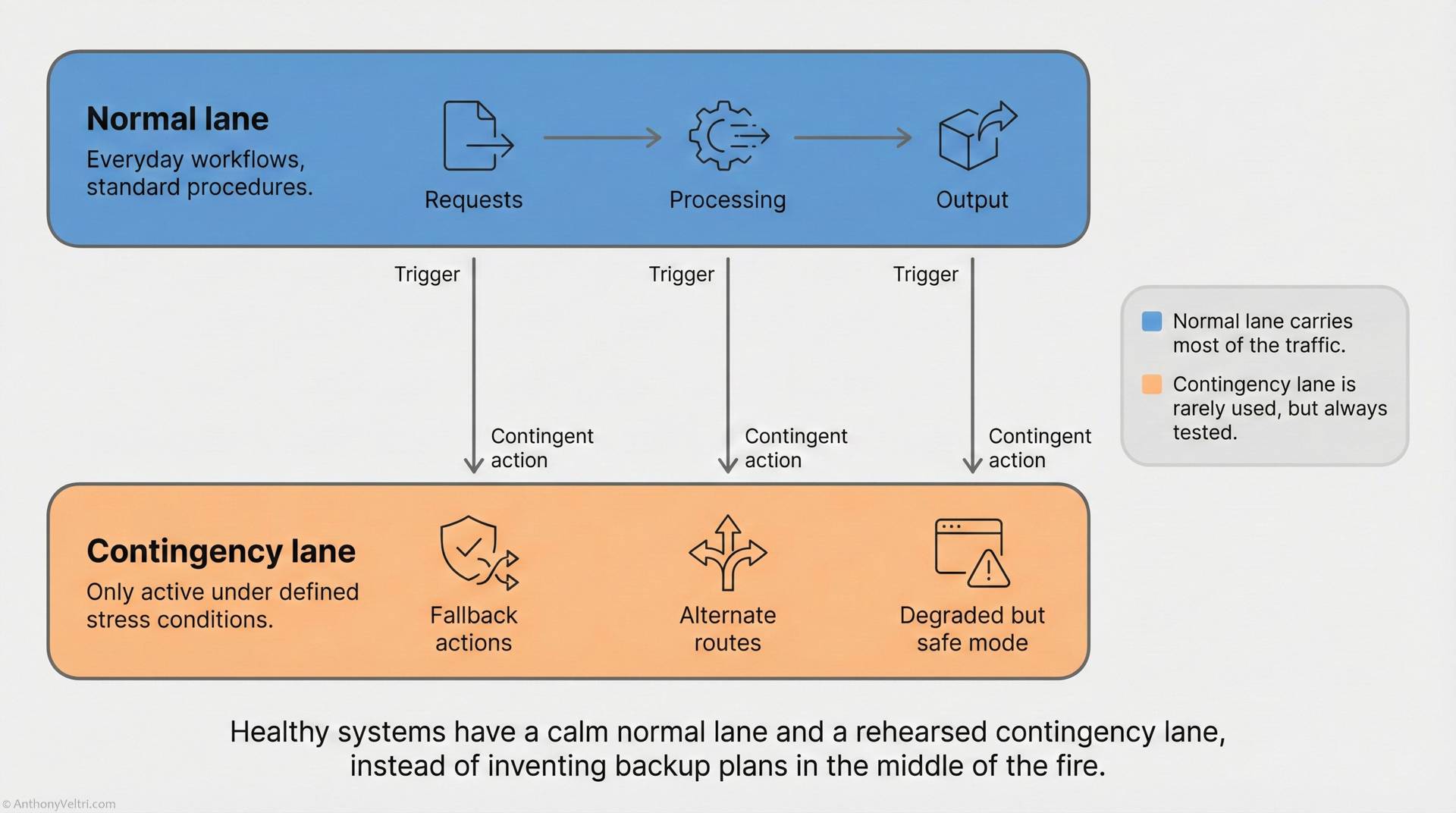
Preventive architecture includes:
- invariants
- low coupling
- clear interfaces
- stable lanes
- known constraints
- schema contracts
- versioning plans
- explicit decision altitudes
- intent articulation
Contingent architecture includes:
- fallback modes
- tolerant ingest
- degraded operations
- caching
- last known good state
- asynchronous updates
- partial rendering
- local autonomy
A balanced architecture uses both.
Why Prevention Alone Fails #
Business perspective #
Prevention alone:
- assumes compliance
- assumes stability
- assumes predictability
- assumes partner maturity
- assumes all conditions can be controlled
But real missions:
- involve diversity
- involve drift
- involve failure
- involve political constraints
- involve degraded conditions
A prevention only approach collapses under real variation.
System perspective #
Prevention alone:
- over couples the system
- creates global brittleness
- requires synchronized correctness
- magnifies partner failures
- removes local flexibility
- makes every deviation catastrophic
Preventive systems without contingent scaffolding are doomed.
Why Contingency Alone Fails #
Business perspective #
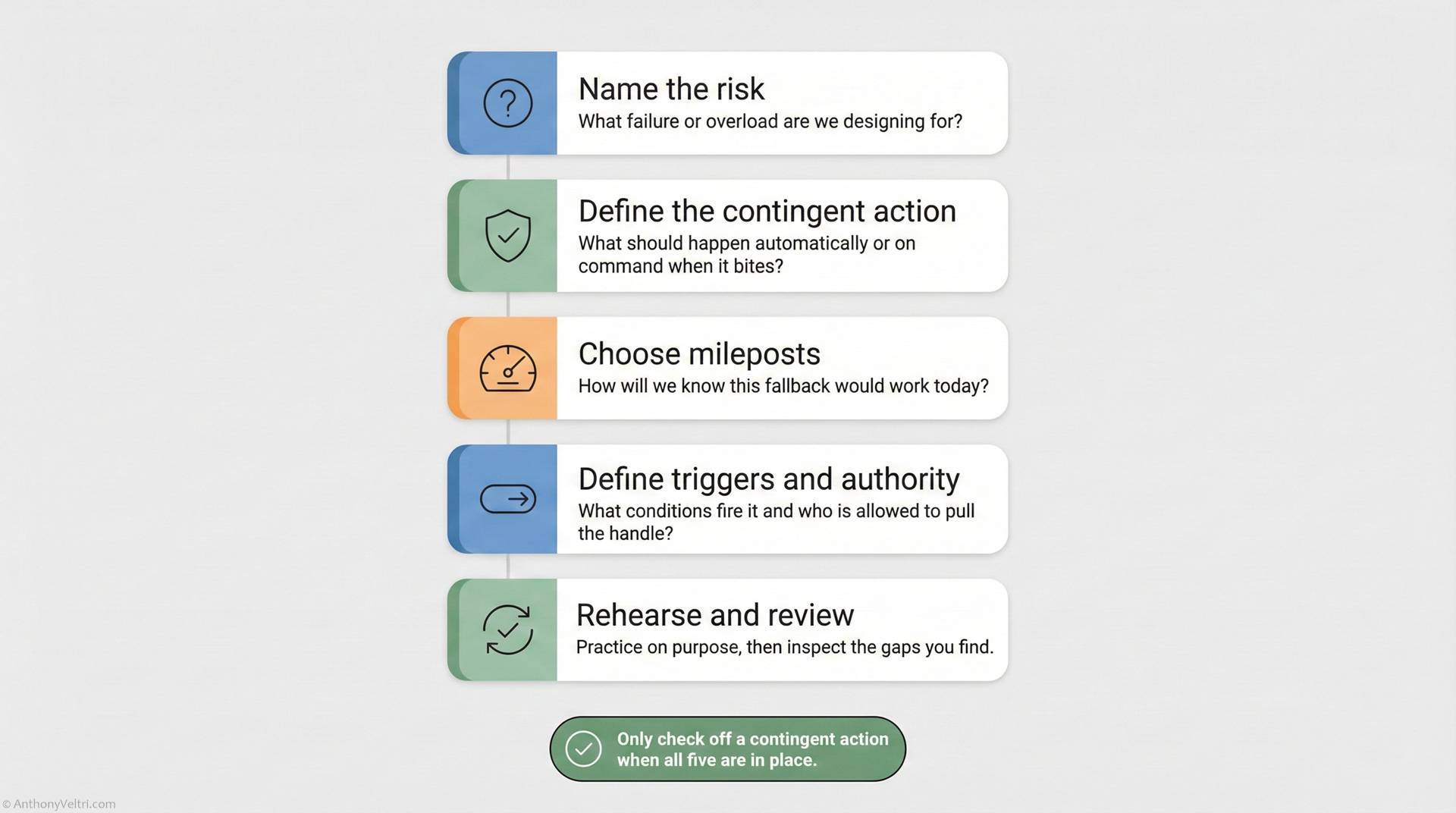
Contingency without prevention:
- turns every day into firefighting
- normalizes reactivity
- overloads teams
- causes misalignment
- increases political heat
- increases fatigue
- hides structural flaws
Contingency without prevention becomes chaos.
System perspective #
Contingency alone:
- increases entropy
- encourages inconsistent behavior
- breaks alignment
- makes drift unmanageable
- causes unpredictable outcomes
- undermines trust
- increases cognitive load
Contingent systems without preventive structure deteriorate rapidly.
The Prevention–Contingency Matrix (You Must Include This) #
This becomes a powerful visual and conceptual tool for your doctrine.
1. Strong prevention, strong contingency #
Best case.
Systems are resilient and stable.
2. Strong prevention, weak contingency #
Rigid.
Fails under surprise.
3. Weak prevention, strong contingency #
Chaotic.
Survives but at high cost.
4. Weak prevention, weak contingency #
Catastrophic.
System collapses under minor stress.
You design for box one.
Business Example: The team that prevented dozens of failures through clarity #
A cross agency team once struggled with constant emergencies.
Every week felt like a crisis.
When we introduced preventive clarity:
- defined invariants
- clarified intent
- defined boundaries
- set expectations
- created simple contracts
Emergencies dropped dramatically.
Then we introduced contingent scaffolding:
- fallback behavior
- degraded mode behavior
- tolerant ingest
- cached layers
Crises no longer derailed operations.
Prevention reduced the number of crises.
Contingency reduced the impact of the remaining ones.
System Example: iCAV succeeded because it used both layers #
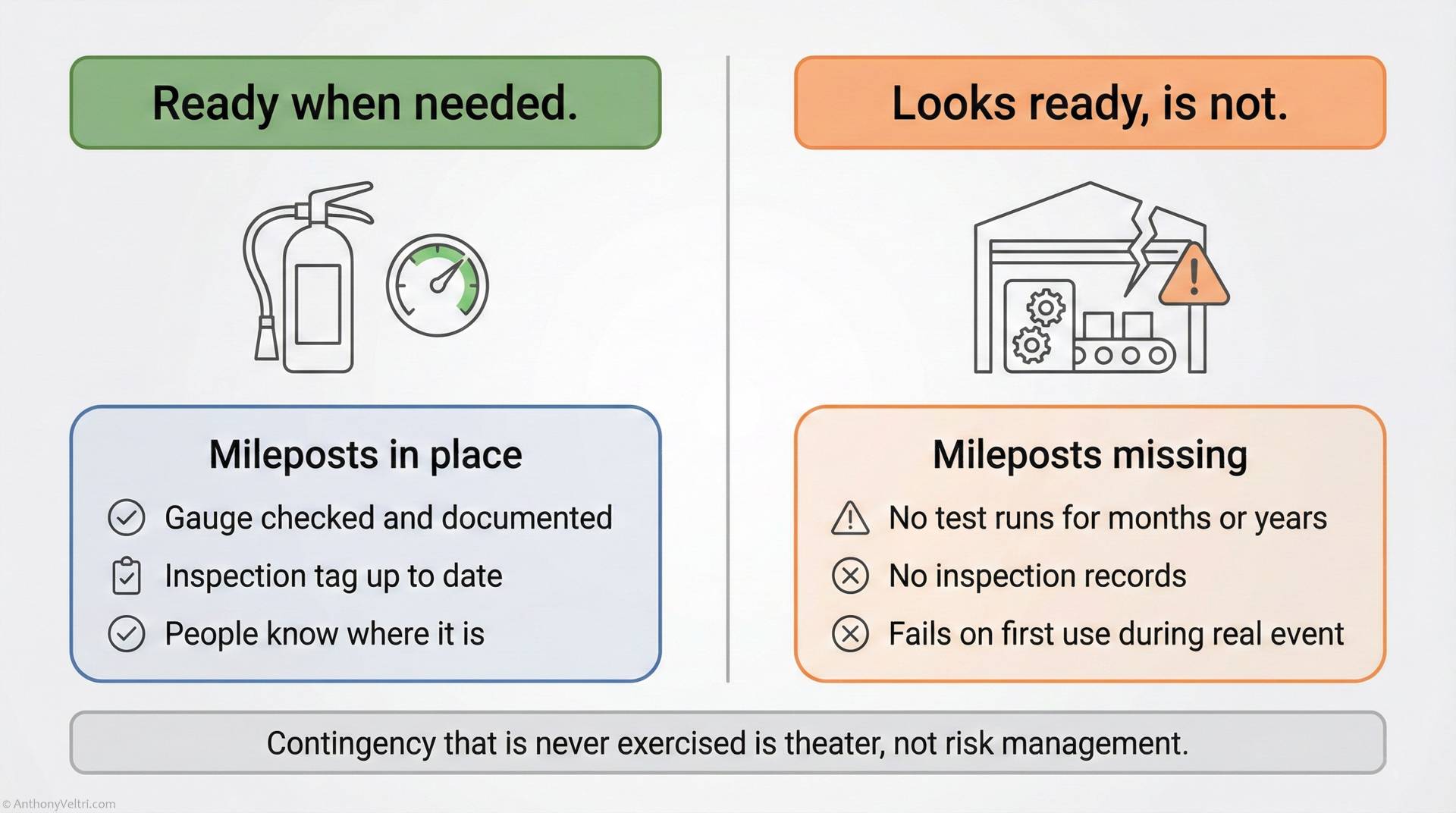
iCAV’s preventive design:
- stable ingest patterns
- clear schemas
- known connectors
- predictable behavior
- interface boundaries
iCAV’s contingent design:
- caching
- degraded mode
- tolerant parsing
- fallback logic
- asynchronous ingest
- partial rendering
This combination made iCAV reliable under chaos, not despite chaos.
Architect-Level Principle #
As an architect, I design both preventive and contingent scaffolding.
Prevention avoids the avoidable.
Contingency absorbs the unavoidable.
Resilience requires both.
Twenty-Second Takeaway: #
“Mission systems need preventive clarity and contingent fallback. Prevention avoids avoidable problems. Contingency absorbs unavoidable ones. I design both so the system works during normal conditions and during surprise.”
Cross Links to Other Principles #
This principle integrates deeply with:
- Degraded operations
- Emergent resilience
- Federation
- Useful interoperability
- Distributed decisions
- Clear intent
- Architecture accelerates
- Decision drag
- Portfolio thinking
Prevention and contingency are the backbone of resilient architecture.
Doctrine Diagnostic – For Reflection: #
Ask yourself:
Does your system prevent avoidable problems?
Does it survive unavoidable ones?
If the answer to either is no, your system is incomplete.
Design both layers now.
Field notes and examples #
Last Updated on February 22, 2026