Why systems collapse when these roles blur, and why high-performing mission environments keep them distinct #
This guide distinguishes the Three Altitudes of people management.
This page is a Doctrine Guide. It shows how to apply one principle from the Doctrine in real systems and real constraints. Use it as a reference when you are making decisions, designing workflows, or repairing things that broke under pressure.
When you confuse supervision, management, and leadership, you create drag, conflict, and failure. #
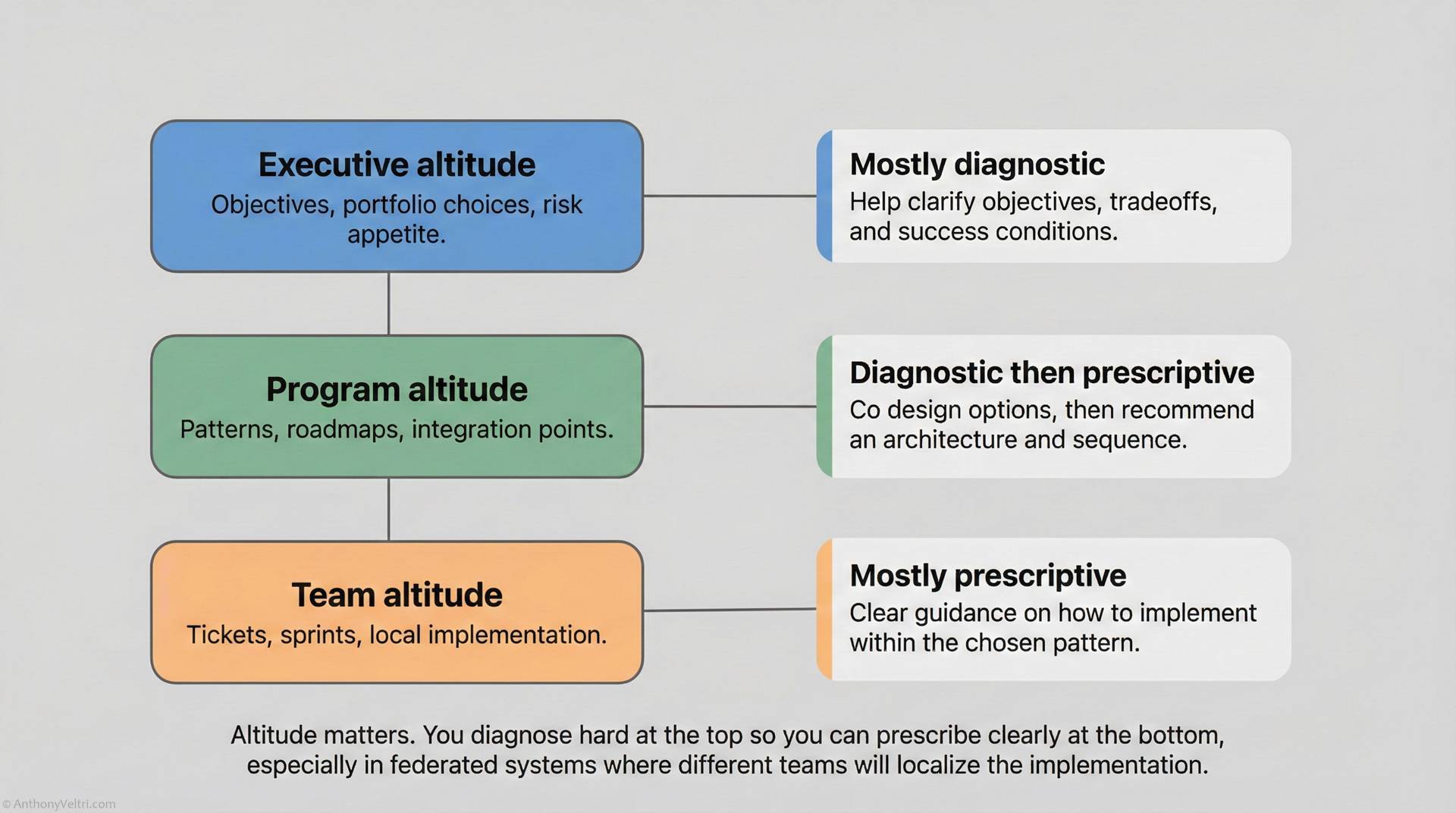
Most organizations collapse these three jobs into one fuzzy blob.
But they are different:
- Supervision is oversight. (local)
- Management is improvement (process).
- Leadership is direction.
If you ask a supervisor to lead, they will punish.
If you ask a manager to lead, they will optimize.
If you ask a leader to supervise, they will suffocate innovation.
When roles blur, systems break.
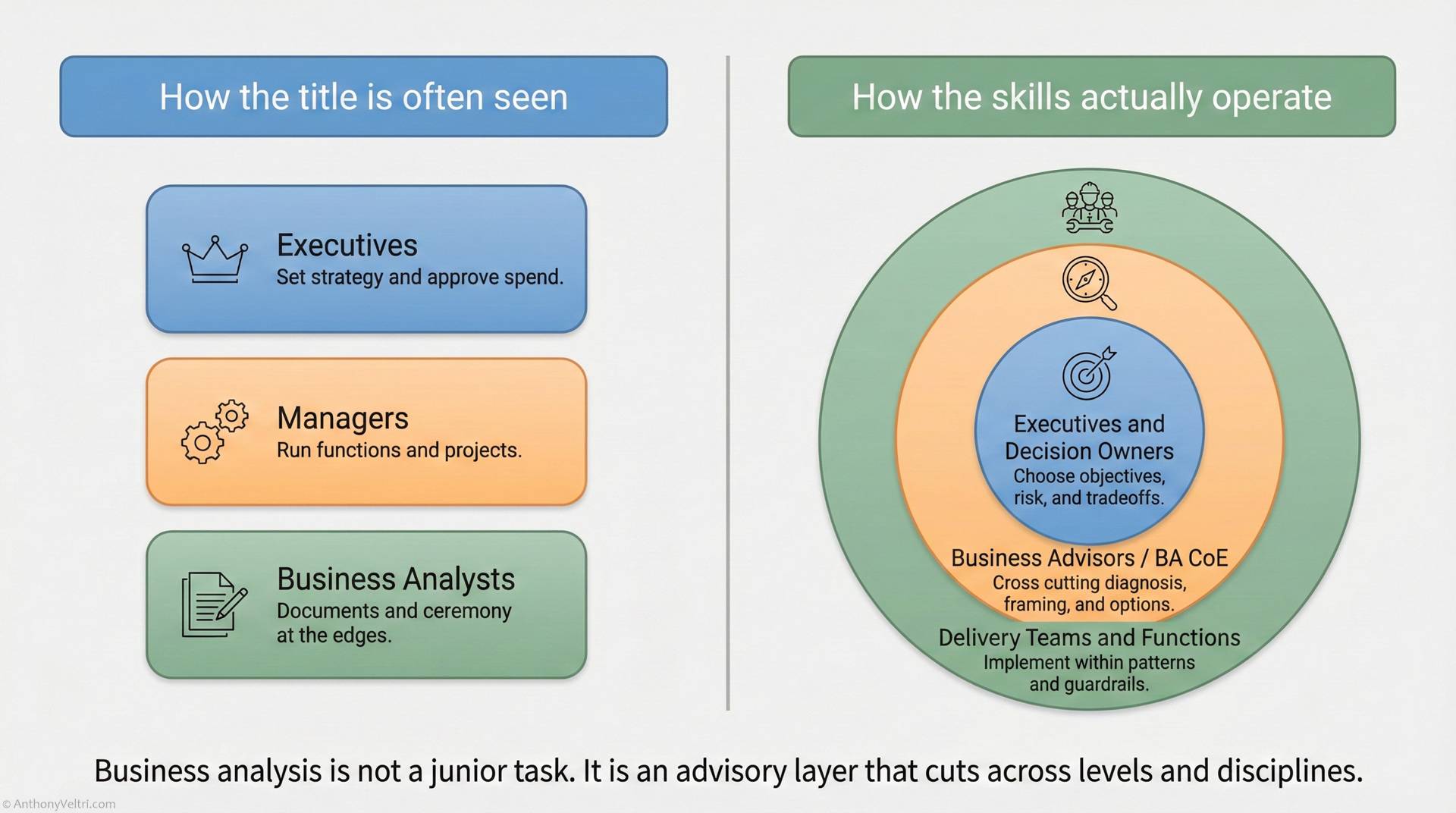
Lived Example: The manager who tried to lead and stalled the team #
During a modernization cycle, a mid-level manager began:
- reshaping strategy
- redirecting priorities
- changing long-term plans
- redefining architectural intent
The problem:
He did not own strategic direction.
He owned team throughput and workflow health.
By taking on leadership functions without authority:
- misalignment grew
- teams waited
- escalation increased
- supervisors became confused
- the system drifted
He was a good manager doing the wrong job.
Once leadership restated roles:
- leadership set direction
- management improved execution
- supervision handled day-to-day oversight
The system aligned again.
Business Terms: The three jobs in plain language #
Supervision #
- ensures people are present
- ensures tasks are completed
- ensures procedures are followed
- resolves small conflicts
- maintains safety and order
- handles performance issues
Supervision protects the local environment.
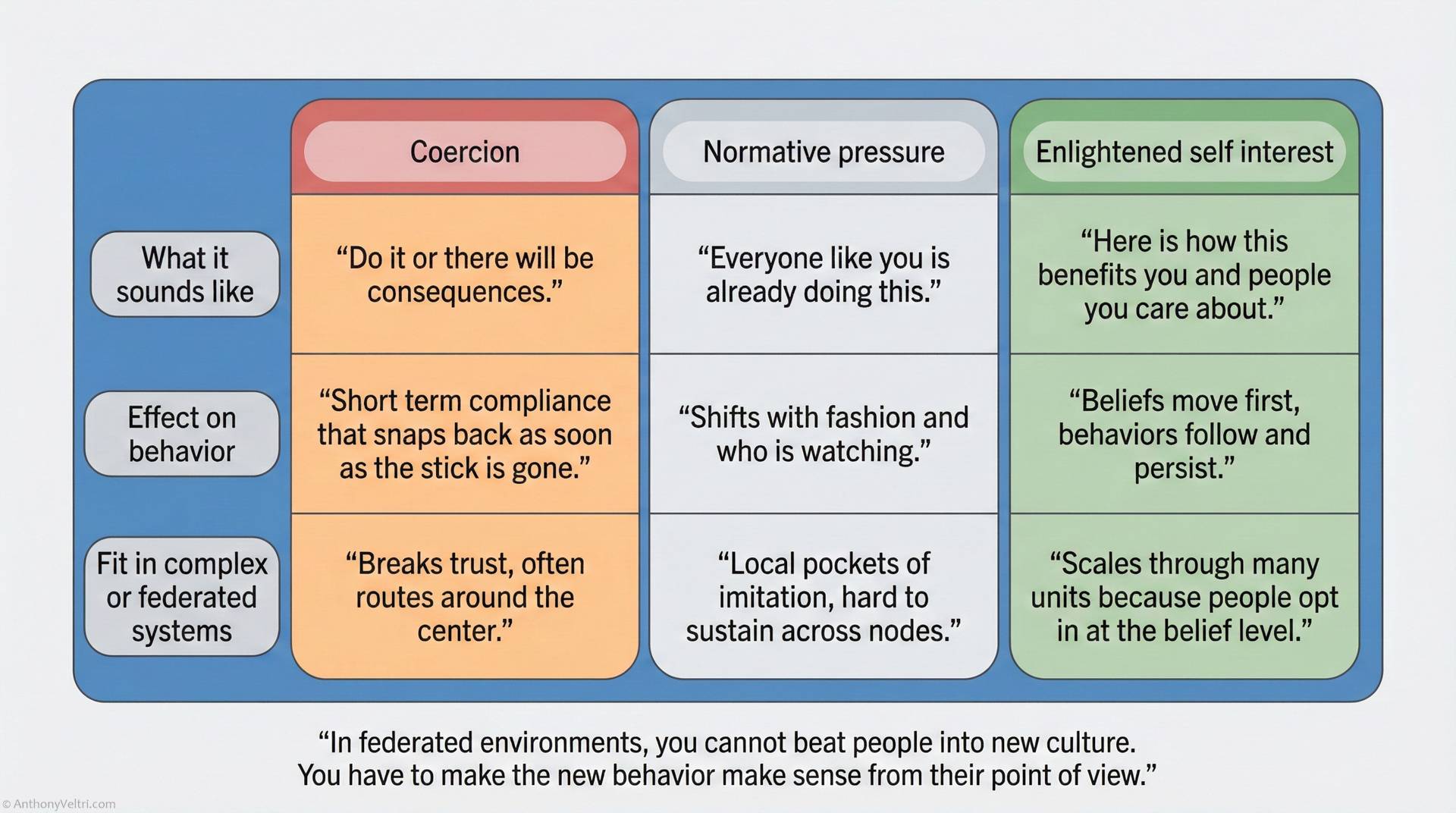
Management #
- improves processes
- allocates resources
- optimizes workflows
- removes bottlenecks
- develops staff
- balances demand
Management makes the system more effective.
Leadership #
- defines intent
- sets direction
- handles strategy
- defines boundaries
- makes tradeoffs
- communicates purpose
Leadership aligns the system to outcomes.
When each stays in its lane, systems flow.
When they blur, systems grind.
System Terms: The three roles as system layers #
In system language:
Supervision is a local control loop. #
Fast feedback.
Small radius of action.
Management is a process shaping layer. #
Medium feedback.
Cross-functional radius.
Leadership is a structural and directional layer. #
Slow feedback.
Strategic radius of action.
Terrain:
- Supervision = the ground
- Management = the route
- Leadership = the destination
If these layers misalign, the system loses coherence.
Why Confusion Breaks Systems #
Business perspective #
Confusion causes:
- supervisors trying to set strategy
- leaders trying to micromanage
- managers policing behavior
- operators receiving contradictory signals
- escalation of trivial issues
- unresolved structural issues
- widespread frustration
- slow mission tempo
People operate at the wrong altitude.
Everything gets harder.
System perspective #
Confusion causes:
- decisions to flow to the wrong level
- misaligned incentives
- unclear boundaries
- brittle processes
- structural drift
- coupling between the wrong layers
- collapse of autonomy
- increased decision drag
Without altitude clarity, the system becomes tangled.
Why Distinction Strengthens Systems #
Business perspective #
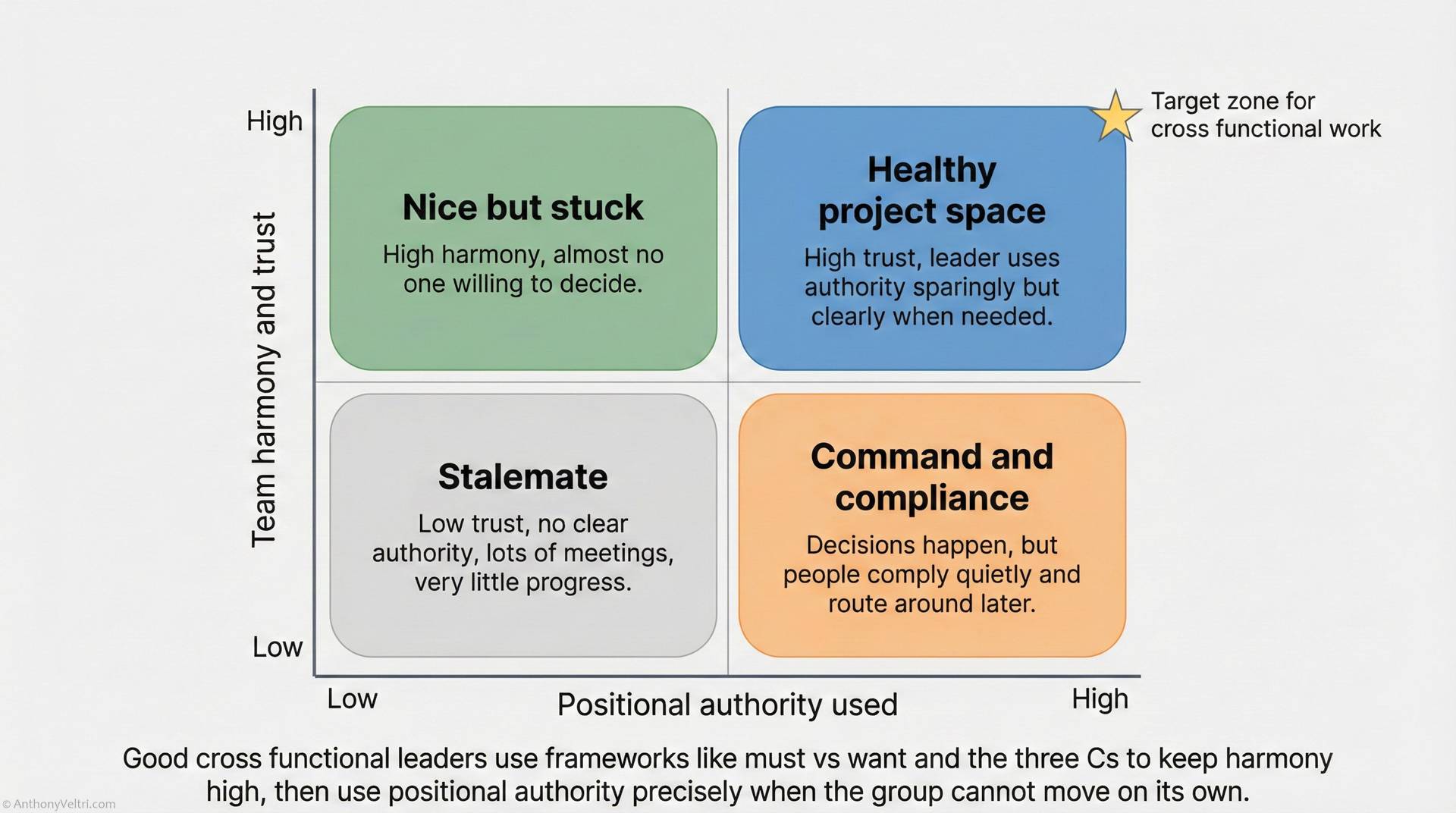
When supervision, management, and leadership are distinct:
- supervisors maintain order
- managers improve flow
- leaders shape direction
- operators know who decides what
- decisions are made at the right altitude
- conflict decreases
- clarity increases
- initiative increases
Everyone works inside the right frame.
System perspective #
Clarity produces:
- stable control loops
- predictable escalation paths
- clean decision altitudes
- reduced drag
- improved autonomy
- reduced rework
- strong alignment across teams
The architecture breathes correctly when altitudes are respected.
The Three Altitudes Model (Pair This With Decision Altitudes) #
Altitude 1: Supervision (Local Control) #
“Are we doing the work safely and correctly?”
Altitude 2: Management (System Improvement) #
“How do we do the work better?”
Altitude 3: Leadership (Strategic Direction) #
“What work actually matters and why?”
People fail when asked to operate at the wrong altitude.
Teams thrive when altitudes align.
Business Example: The supervisor who tried to manage #
A supervisor tried to redesign the workflow instead of focusing on:
- oversight
- safety
- clarity
- coaching
As a result:
- work slowed
- confusion increased
- managers felt undermined
- operators received contradictory instructions
Once roles were clarified:
- managers redesigned the workflow
- the supervisor maintained discipline and clarity
- leadership reinforced direction
Alignment returned instantly.
System Example: iCAV succeeded because altitudes were respected #
In iCAV:
- Supervision ensured analysts published correctly and safely
- Management ensured ingest workflows improved over time
- Leadership set strategic priorities such as degraded mode and federation
- Architecture aligned these layers so the system behaved coherently
The system worked because no layer tried to be another.
Supervisors did not set strategy.
Managers did not redesign architecture.
Leaders did not micromanage ingest pipelines.
Altitude discipline created coherence.
Architect-Level Principle #
As an architect, I ensure supervision, management, and leadership remain distinct.
Clarity of altitude increases speed, reduces conflict, and strengthens resilience.
Confusion creates drag.
Alignment creates flow.
Twenty-Second Takeaway: #
“Supervision, management, and leadership are three different jobs. Supervision ensures correctness, management improves systems, and leadership sets direction. When these blur, teams slow down and conflict increases. I keep them distinct so the system flows.”
Cross Links to Other Principles #
This principle reinforces:
- Distributed decisions
- Clear intent
- Decision altitudes
- Architecture accelerates
- Commitment vs compliance
- Portfolio thinking
- Federated operations
- Interfaces and ownership
- Emergent resilience
Altitude clarity is leadership architecture.
Doctrine Diagnostic – For Reflection: #
Ask yourself:
Are supervisors trying to lead?
Are leaders trying to supervise?
Are managers stuck in the middle?
If so, the system is already drifting.
Clarify altitudes.
Restore flow.
Last Updated on February 22, 2026