Why accumulated debt reveals decision environments, not developer shortcomings #
This Doctrine guide redefines Technical Debt as Institutional Pressure, not (just) bad code.
This page is a Doctrine Guide. It shows how to apply one principle from the Doctrine in real systems and real constraints. Use it as a reference when you are making decisions, designing workflows, or repairing things that broke under pressure.
Technical debt is not a mistake. It is a message. #
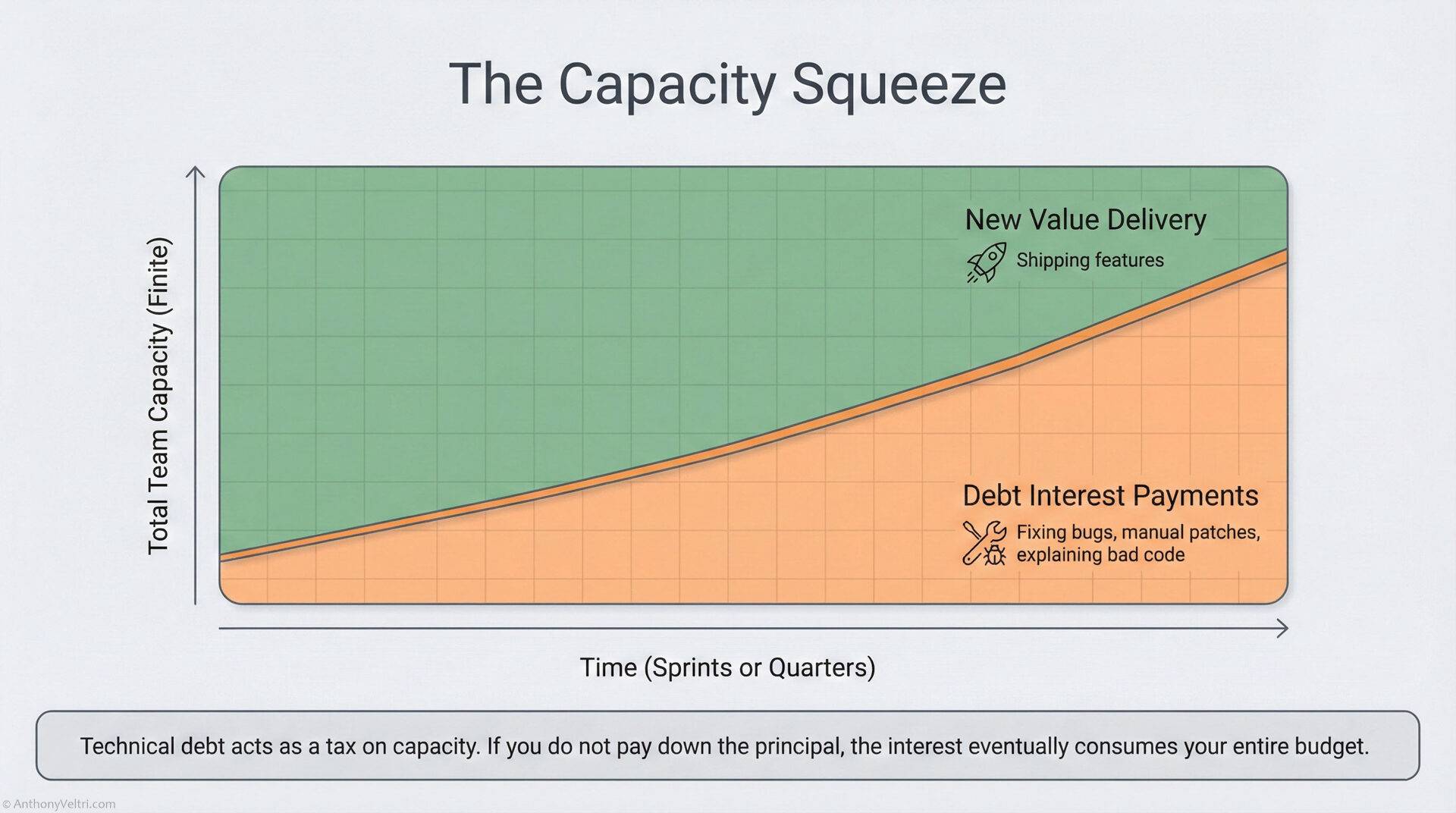
When leaders see technical debt, they often look for the engineer who “did it wrong.”
This is the wrong instinct.
Technical debt is rarely created by:
- incompetence
- laziness
- poor engineering
Technical debt is usually created by:
- unclear intent
- shifting priorities
- rapid timelines
- political pressure
- under staffing
- under scoping
- leadership indecision
- architecture not protecting the team
- forced compliance over commitment
Debt is not a coding artifact.
Debt is a leadership artifact.
Lived Example: The rushed connector that became permanent #
During one activation, we created a temporary connector to support a partner whose feed was unreliable.
The connector was:
- brittle
- barely documented
- built in a hurry
- intended to last forty-eight hours
But leadership:
- saw it working
- adopted it as permanent
- never funded a replacement
- never approved downtime
- never created a migration window
Months later, this “temporary” solution became a major source of outages.
The engineering team did not fail.
Leadership failed to create the conditions for replacement.
Debt became embedded because the system rewarded short-term wins over long-term stability.
Technical debt signals leadership behavior.
Business Terms: What technical debt actually reveals #
Technical debt reveals:
- the real priorities of the organization
- the gap between stated timelines and real timelines
- the pressure leaders put on teams
- where ambiguity exists
- where incentives conflict
- where documentation is sacrificed
- where short term gains are needed
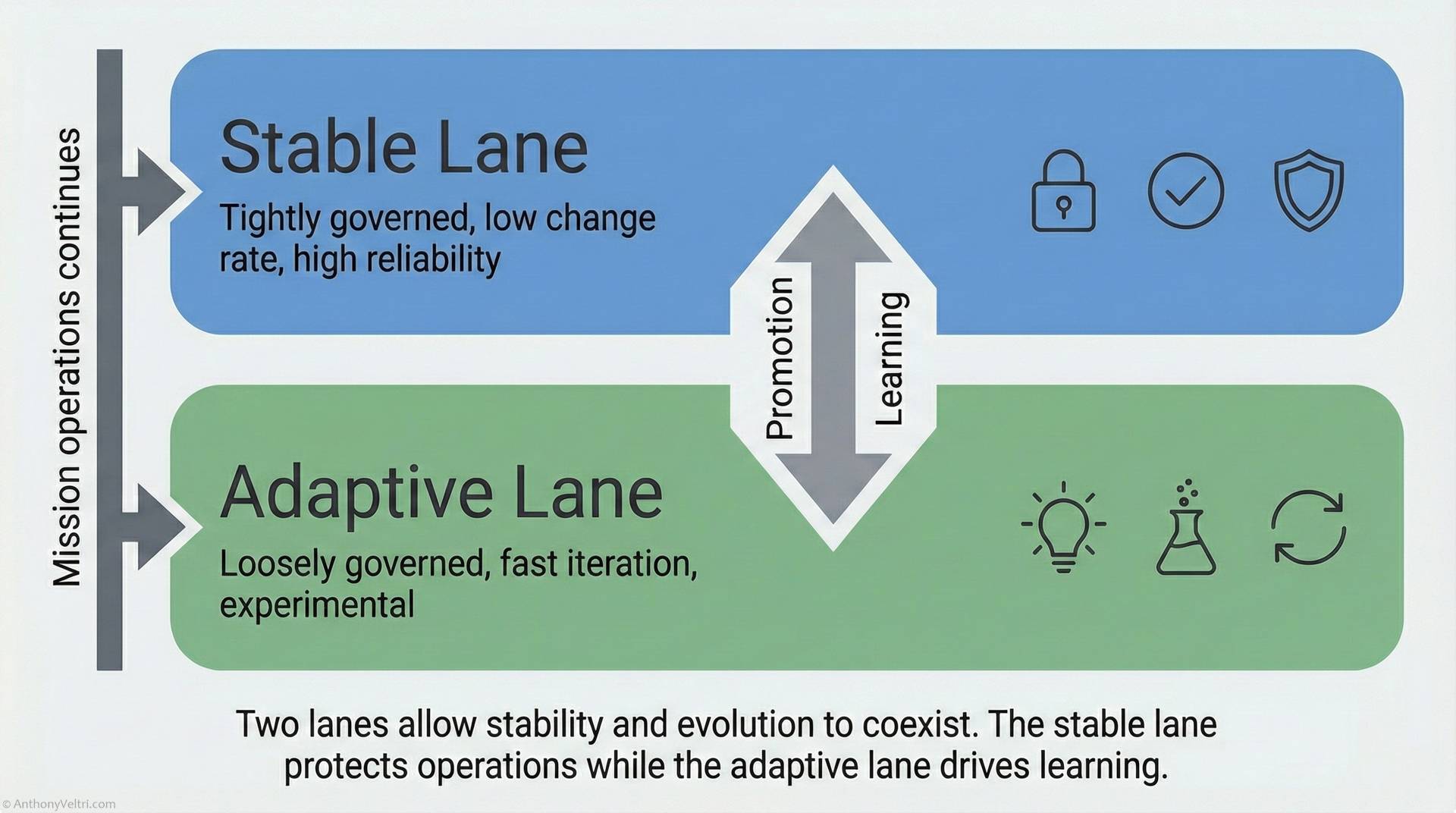
- where the stable lane is under protected
- where innovation is happening without guardrails
Debt is not technical.
Debt is informational.
It tells you what leadership had to trade off.
System Terms: Technical debt as structural imbalance #
In system language, technical debt is:
- structural pressure
- accumulated coupling
- hidden complexity
- postponed alignment
- acquired brittleness
- a signal that the system’s rate of change exceeded its rate of consolidation
Technical debt is not a bug.
It is a snapshot of the system’s evolution under constraints.
Why Technical Debt Is Misunderstood #
Business perspective #
Leaders often misunderstand technical debt as:
- sloppy engineering
- incomplete documentation
- poor workmanship
- “fix it when you have time” problems
This leads to:
- blame
- distrust
- morale issues
- friction
- micromanagement
- tension between leadership and engineering
When technical debt becomes personal, the culture collapses.
System perspective #
Technical debt is misunderstood because:
- systems evolve faster than governance
- interfaces drift
- roadmaps are aspirational
- crises force shortcuts
- funding is episodic
- incentives reward delivery over consolidation
Debt is not misbehavior.
Debt is the price of speed and survival.
Why Technical Debt Is a Leadership Signal #
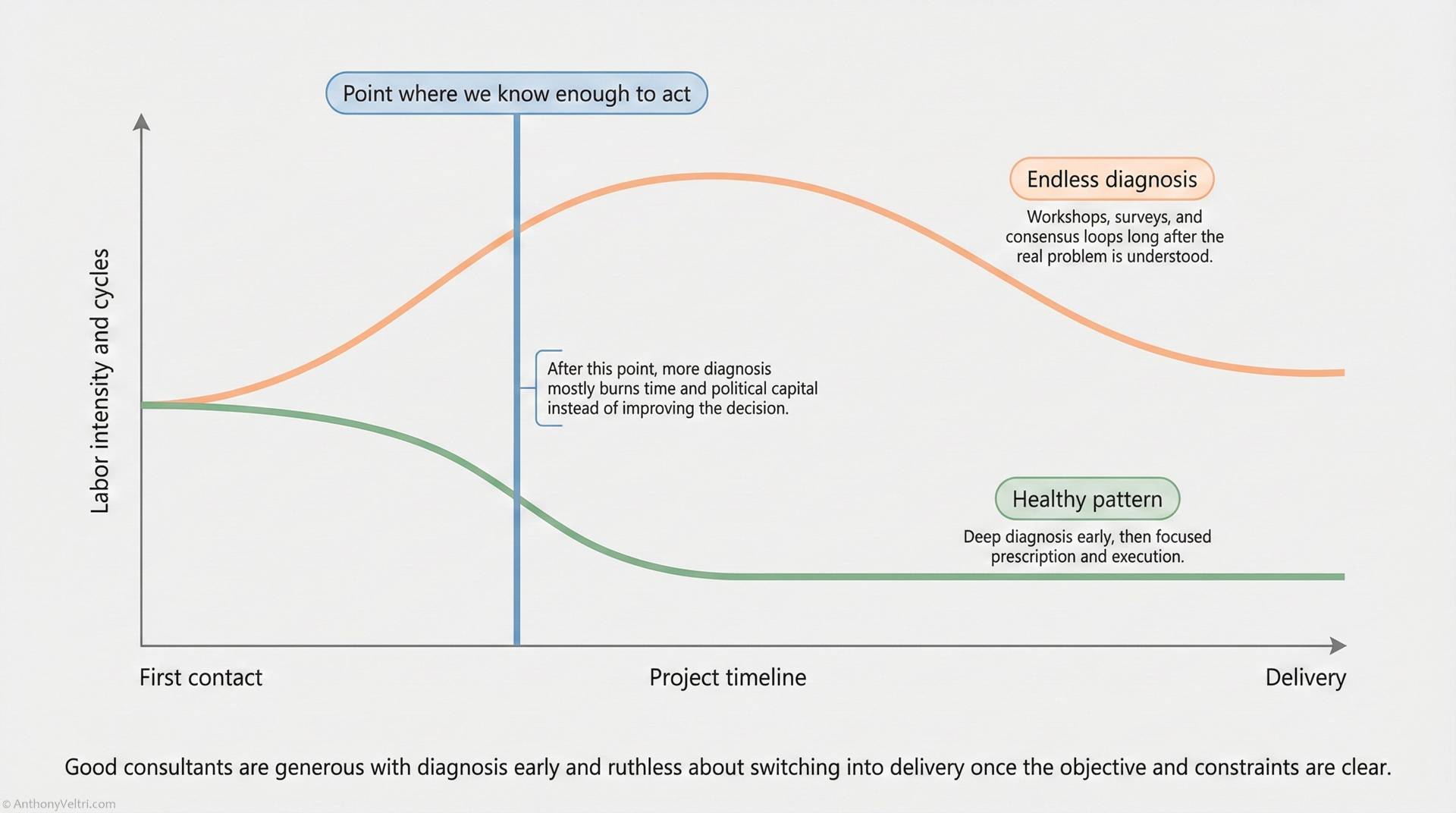
Technical debt tells you:
- where leadership made trade-offs
- where intent was unclear
- where priorities shifted without time to align
- where engineering was forced to deliver prematurely
- where teams operate under chronic overload
- where approvals bottlenecked
- where decision drag forced last minute action
- where architects were not empowered
- where the stable lane was compromised
- where governance is underdeveloped
Debt is a symptom of leadership environment, not individual capacity.
Business Example: The team that accumulated debt because leadership changed direction five times #
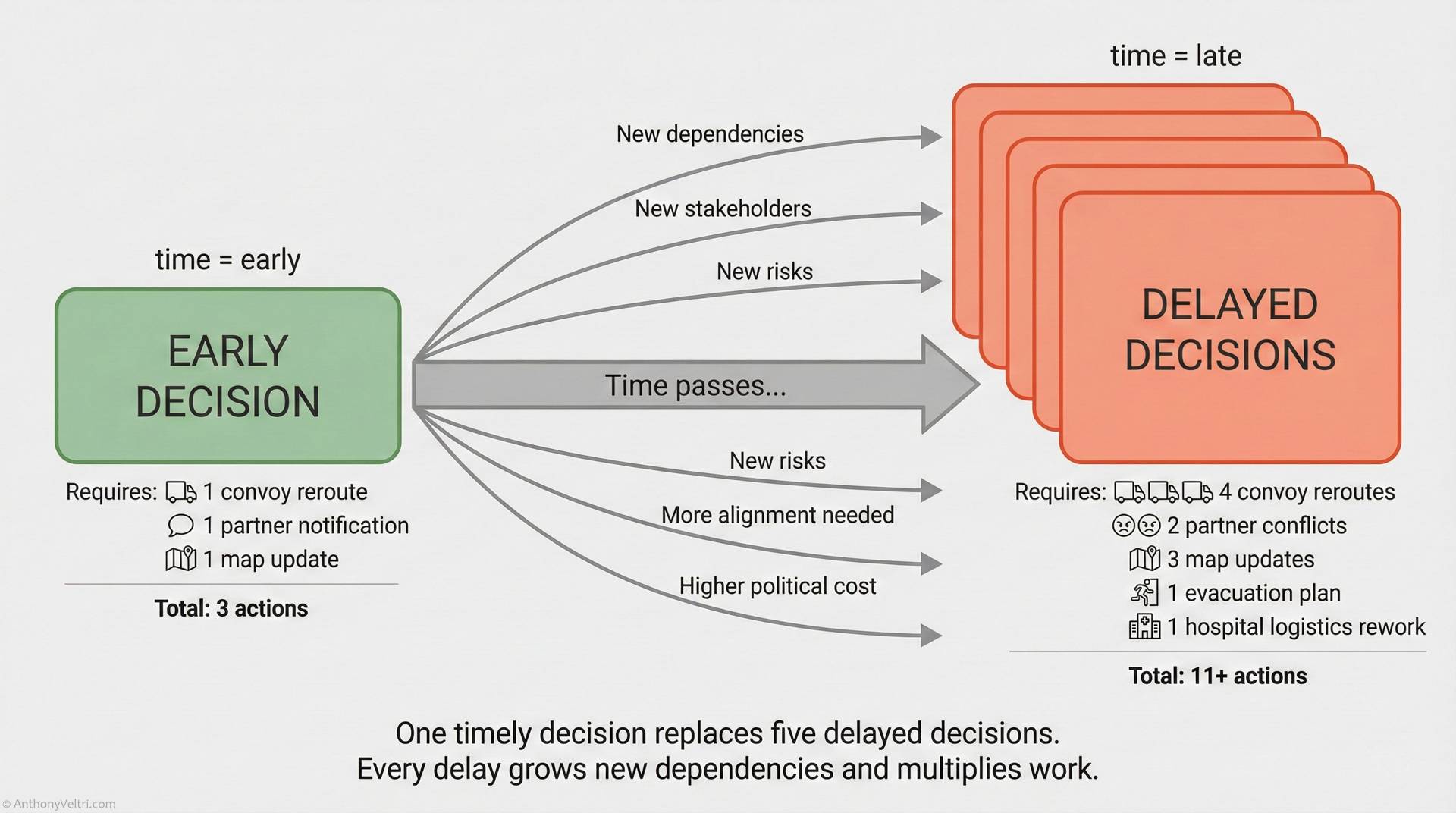
During one modernization cycle, leadership changed priorities repeatedly:
- new direction
- new partner
- new interface
- new timeline
- new prototype
Each shift was reasonable in isolation.
Cumulatively, they created:
- rushed work
- partial implementations
- deferred decisions
- incomplete documentation
- hurried integration
By the end, the debt was not a record of engineering failure.
It was a record of leadership uncertainty.
System Example: The cascading debt inside the ingest pipeline #
In one ingest subsystem, we found:
- three unused transformation routines
- two deprecated schemas
- one fallback method no one understood
- four partial implementations
- two undocumented exceptions
- mismatched versioning patterns
This was not because engineers were careless.
This was because:
- partner schemas changed
- political pressure accelerated timelines
- requirements were unclear
- leadership shifted priorities mid sprint
- testing windows were constrained
- ingest was forced into the stable lane during activations
The debt recorded the organization’s history.
Debt is a narrative of decisions.
Architect Level Principle #
As an architect, I treat technical debt as a leadership signal.
It reveals where priorities, constraints, and pressures shaped the system.
My job is to understand the story and redesign the environment so debt accumulates in predictable, manageable ways.
Twenty Second Takeaway: #
“Technical debt is not caused by bad coding. It is caused by leadership pressure, unclear intent, shifting priorities, and real-world constraints. I use debt as a diagnostic tool to understand what the system had to survive. Then I design guardrails so future debt accumulates in healthier ways.”
Cross Links to Other Principles #
Technical debt links naturally to:
- Two-lane systems
- Interfaces and ownership
- Useful interoperability
- Federation
- Decision drag
- Portfolio thinking
- Emergent resilience
- Clear intent
- Architect as translator
Debt always reveals upstream failures or pressures from these principles.
Doctrine Diagnostic – For Reflection: #
Ask yourself:
When you see technical debt, what do you assume?
Do you assume failure?
Or do you assume a signal?
If you assume a signal, you will discover the truth faster.
Use debt as a diagnostic.
Not as a weapon.
Last Updated on February 22, 2026