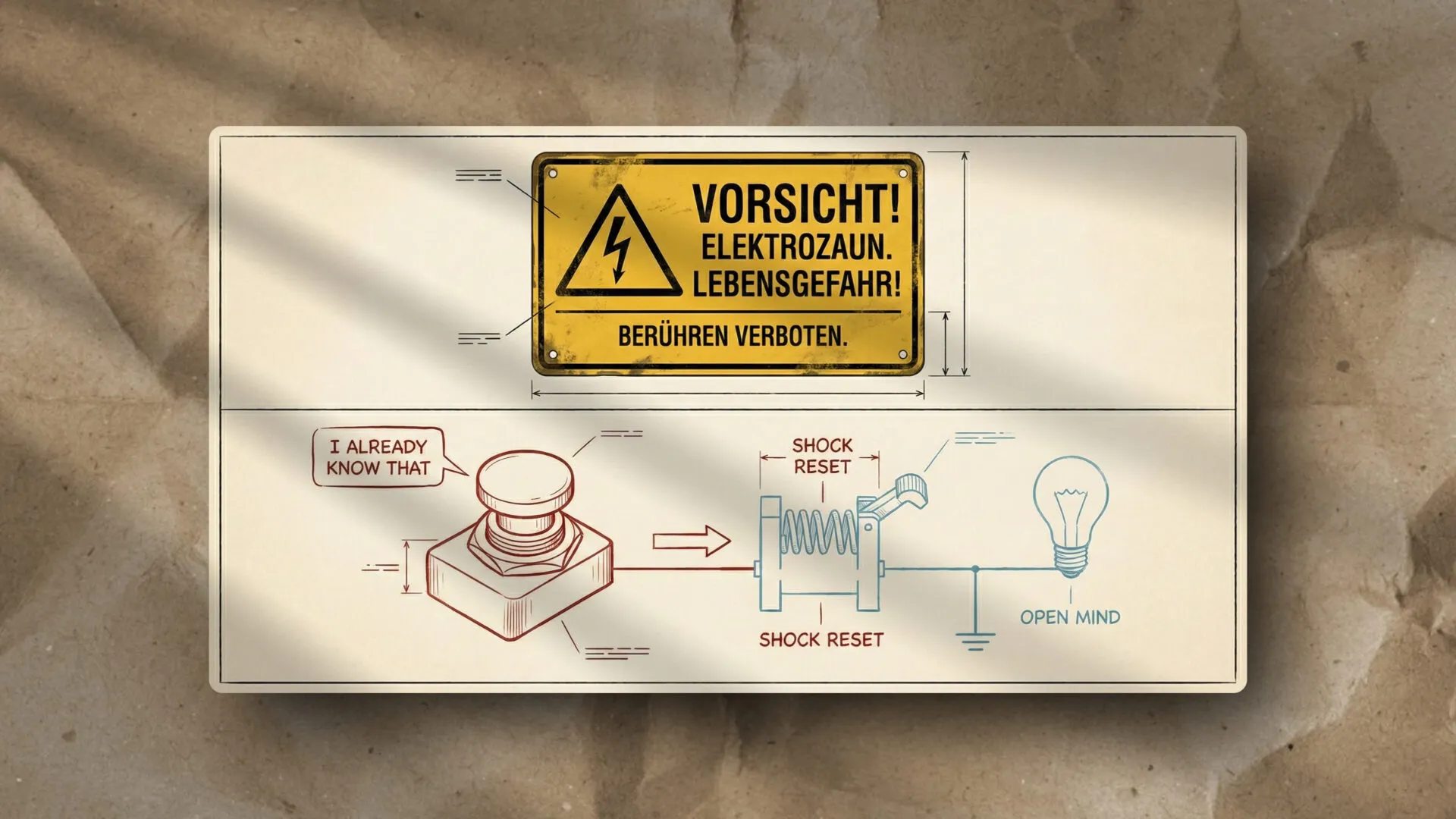
Field Note: “I already know that” and “I disagree” are learning kill switches
Scene
I am watching capable adults in a room full of useful information. These are not beginners. They are smart, experienced people who can execute under pressure. And yet, the learning stops cold on two phrases that sound harmless:
“I already know that.” “I disagree.”
Both are socially acceptable ways to end a conversation without looking like you ended the conversation.
The moment those phrases land, the cognitive buffer shuts down. The input buffer flushes. The brain moves from observation to defense.
No more cognitive load. No more holding the idea long enough to let it reshape anything. No more contact with the possibility that you might be wrong, incomplete, or out of date. If you want a single tell that someone is not learning, it is not ignorance. It is premature closure.
Question
What is the real objective in this moment?
Is it:
- to be right and stay coherent inside your existing identity, or
- to get better results in the real world?
Most training fails because it quietly rewards the first goal.
Schema
Here is the template that makes these moments actionable.
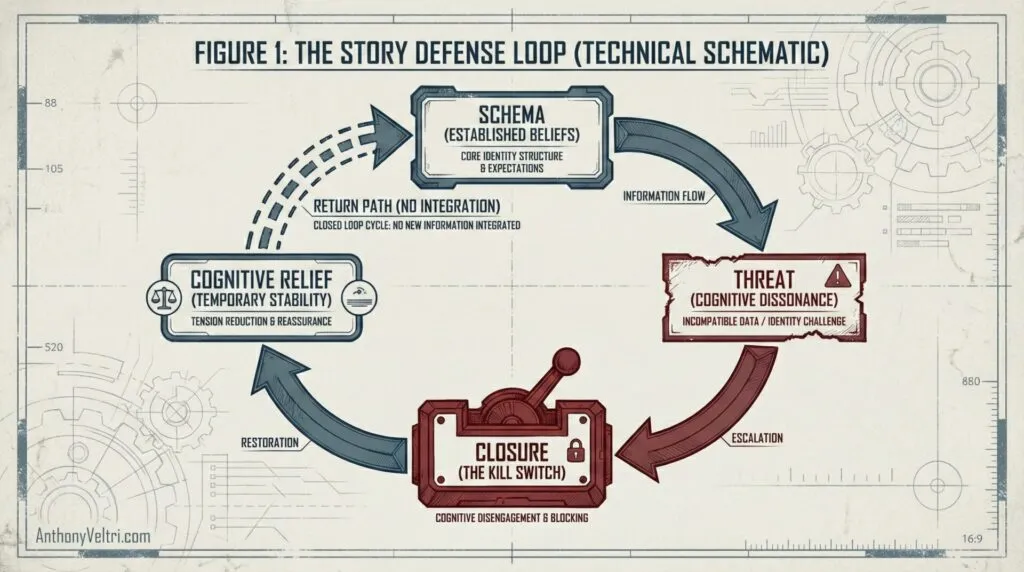
The Story Defense Loop
- Schema: I already have a framework for how this works.
- Threat: New information would force me to update the framework (a Stage 2 Revelation).
- Closure: I end the input early using a socially valid exit line.
- Relief: Cognitive load drops. Identity stays intact.
- Cost: Results do not improve, but the person feels “done.”
(Note: For a canonical breakdown of why we defend these frameworks, see the Doctrine 11 Companion: The Four Stages of Competence).
The Two Kill Switches and their counters
- “I already know that” is countered by Implementation and Results.
- “I disagree” is countered by Prediction and Test.
If you cannot move the conversation to implementation, results, prediction, or test, you are stuck in vibes and status.
Procedure
Use this sequence when you hear the phrase. Keep it calm. Keep it tight.
When someone says: “I already know that.”
- “Cool. Are you implementing it consistently?”
- If yes: “Then are you getting the results this principle promises?”
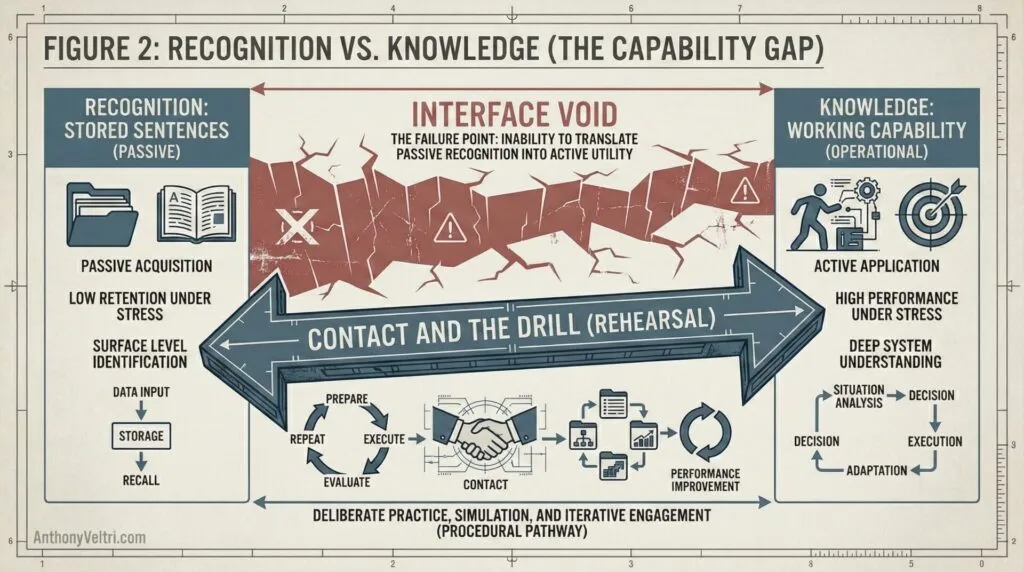
- If no: “Then you do not know it in any operational sense. You recognize it.”
That is not a moral judgment. That is the difference between a stored sentence and a working capability.
When someone says: “I disagree.”
- “What would we expect to observe if your view is correct?”
- “What would we expect to observe if my view is correct?”
- “What is the smallest test we can run in 72 hours?”
Disagreement that cannot make a prediction is not disagreement. It is identity protection. It is a defense mechanism designed to prevent a Stage 2 Revelation.
The Internal Audit (Training the Ear)
The most dangerous kill switch is the one you trigger inside your own head. You must train your ear to hear the internal “click” of premature closure. I have to do this consciously. It still takes effort.
When you feel the urge to say “I already know that,” perform an immediate internal triage:
- Is this a stored sentence? (I can recite the fact or recognize the concept).
- Is this a working capability? (I am currently producing the promised results using this principle).
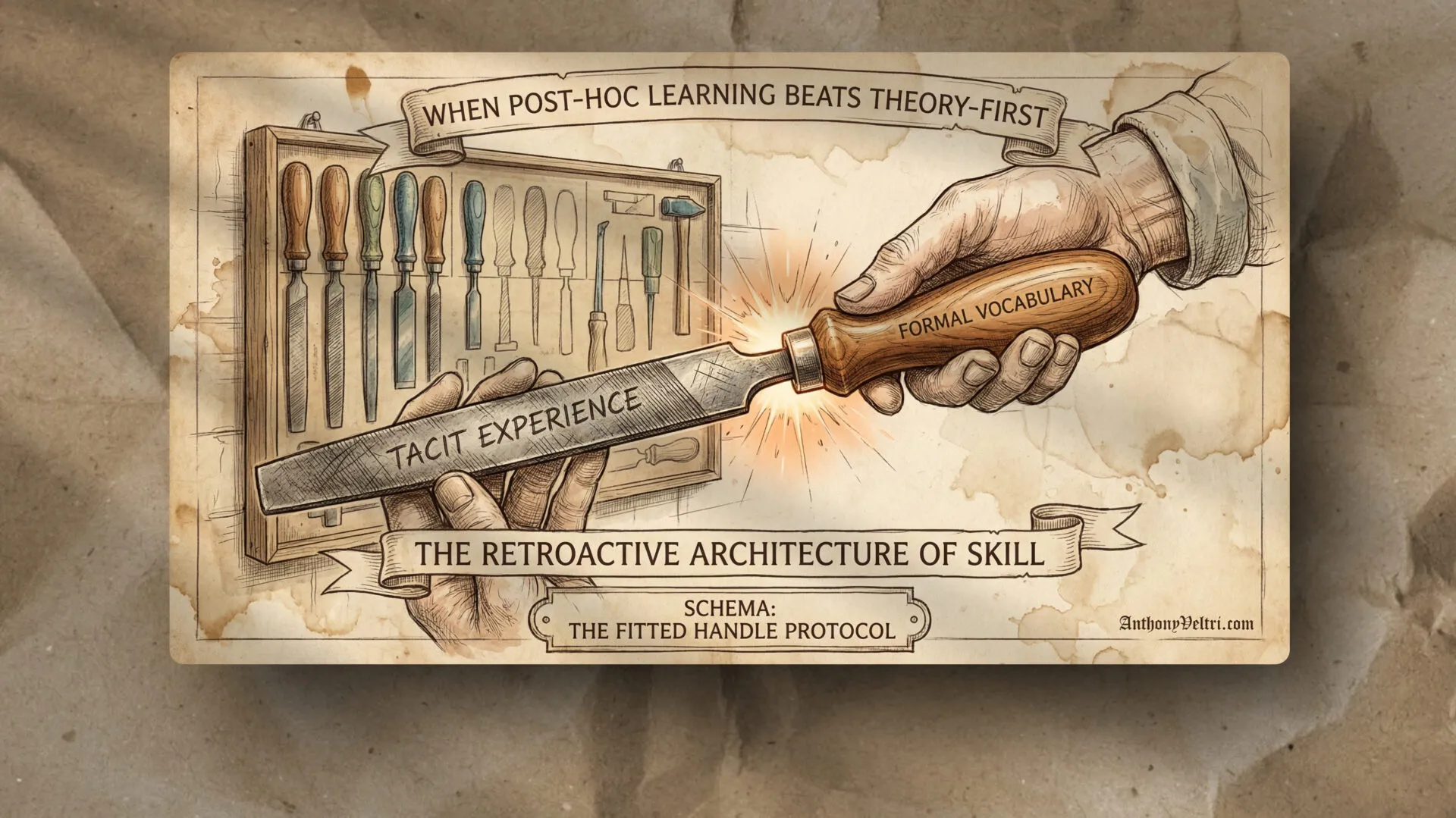
If it is only a stored sentence, you are still in the Interface Void. You recognize the terrain, but you are not yet operating on it.
Turn
The upgrade is realizing this is not about facts.
It is about schemas.
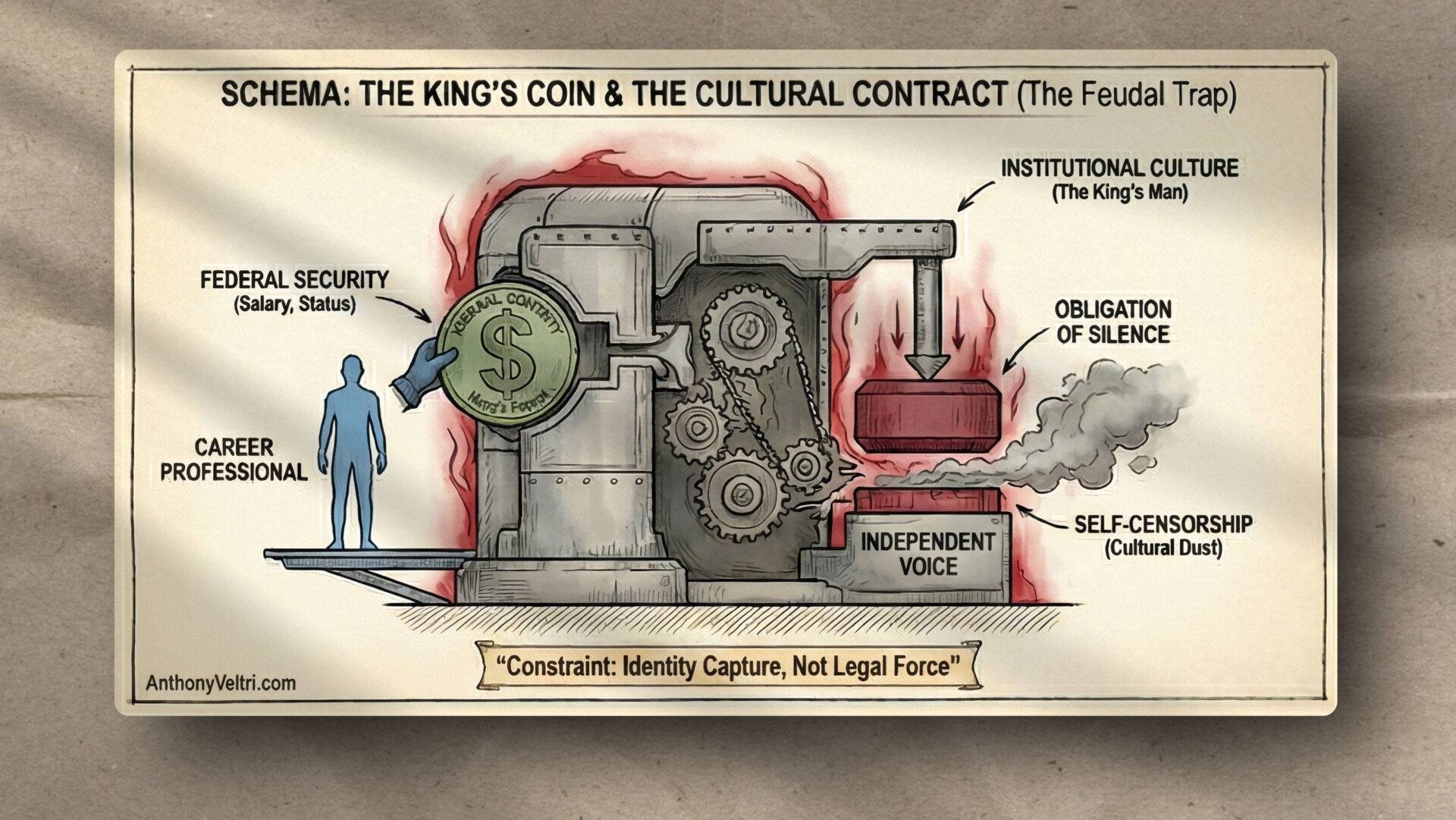
People learn through frameworks. They defend frameworks by filtering evidence. So the moment you introduce an idea that implies, “your current frame is incomplete,” you trigger defense. That defense shows up as premature closure.
Those two phrases are not statements. They are doors closing.
Return
If you want your field notes to actually change behavior, bake this into your writing:
- Name the kill switch (without shaming).
- Move to the counter:
- implementation and results, or
- prediction and test.
- Give a smallest next action that forces contact with reality.
If you want a one-line check-in prompt to put in every field note, use this:
“What would change in my behavior this week if I actually believed this?”
If the answer is “nothing,” the reader is collecting ideas, not building capability.
Objections
- “But sometimes I really do already know it.”
- “Disagreement is healthy. I should be allowed to challenge ideas.”
- “This sounds confrontational and could shut people down.”
Reframes
- Yes, you might already know it. The point is not whether you can recite it. The point is whether it is reliably producing results under your constraints.
- Disagreement is healthy when it cashes out into predictions and tests. Otherwise it is just a way to stay parked.
- This only becomes confrontational if you make it personal. Keep it procedural: implementation, results, prediction, test. Reality is the referee.
Last Updated on December 24, 2025