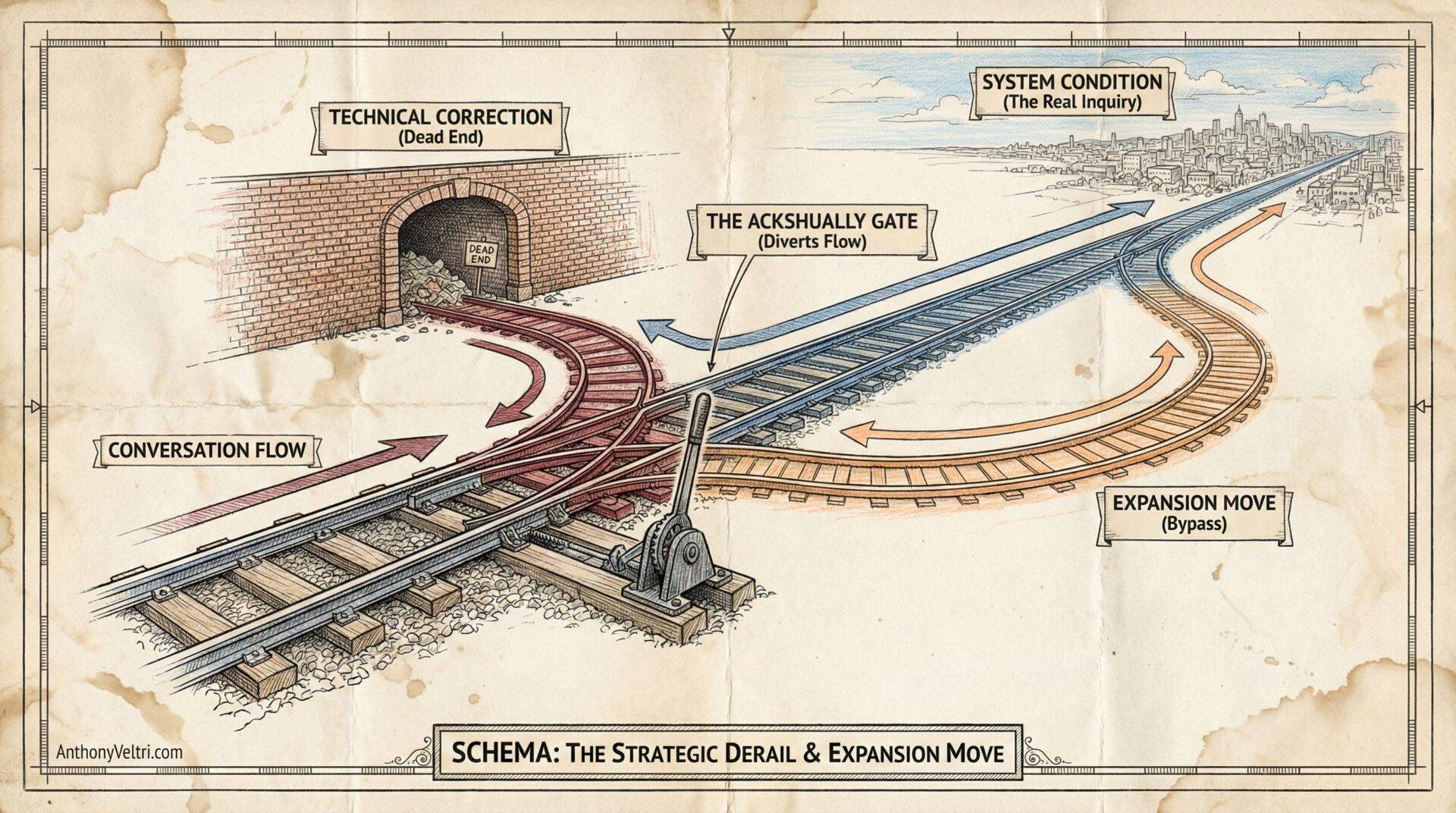
The Ackshually Gate is the moment a conversation gets diverted from the real question to a technically correct but strategically useless correction.
It is not necessarily lying. It is not necessarily bad faith. It is a conversational choke point that reliably prevents people from reaching the higher-resolution model they actually need.
It shows up everywhere: economics, medicine, policy, risk, and governance.
The term “ackshually” comes from internet culture, particularly Reddit, mocking the reflexive correction instinct. The pattern predates the label, but the label captures something real: the moment precision becomes a weapon instead of a tool.
The intended conversation #
A: “People can’t pay their bills. The economy is not okay.”
B: “Let’s figure out what’s driving that.”
The conversation is about household reality and system conditions.
The gate #
A: “Unemployment is low but people are struggling.”
B: “Ackshually, what you’re describing isn’t unemployment.”
The correction might be true.
But it often smuggles in a second claim:
“Because your label was imprecise, your observation is invalid.”
That is the derail.
Why this feels like gaslighting to normal humans #
Most people are not trying to win a definitions contest. They are trying to answer:
- Can I pay my minimum monthly bills?
- Is my household stable?
- Is my job trajectory improving or degrading?
- Is the system getting safer or more dangerous?
So when they hear:
“You’re employed, therefore the unemployment number is fine,”
they correctly interpret:
“Your lived reality is being dismissed on a technicality.”
That is the function of the gate.
The two versions of Ackshually Gate #
Good-faith Ackshually (accidental derail) #
This is the “Reddit professor” (The Semantics Cop) instinct: a person cannot resist cleaning up terminology.
It happens because:
- Technical people want precision
- Precision is rewarded socially
- Definitions feel safer than messy systems
- It is easier to correct a noun than confront a structure
They think they are helping.
They are changing the subject.
Bad-faith Ackshually (strategic derail) #
A bad-faith actor uses the correction as an exit ramp:
“You used the wrong term.”
“Therefore you are wrong.”
“Therefore we don’t need to discuss your underlying point.”
Conversation over.
Bad faith is not required for harm. But bad faith loves this pattern because it stops inquiry cleanly without needing to argue substance.
Institutional Ackshually (structural derail) #
There is a third version that is neither personal accident nor personal strategy. It is institutional self-protection.
The gate is not executed by a person trying to dominate a conversation. The gate is baked into how institutions define what they measure.
Example:
“We measure U-3 because changing the measure would reveal problems we’re not resourced to solve.”
This is different from personal derail. The institution is not being malicious. It is being constrained. But the effect is the same: narrow definitions prevent diagnosis of the actual system condition.
This is the most dangerous form because it is invisible. No one is “doing” the gating. The gate is structural. It survives personnel changes, leadership transitions, and reform efforts because it is written into the measurement infrastructure. Narrow definitions are also jurisdictional firewalls. They allow the institution to say ‘That problem is real, but it is not my problem.’
The canonical example: U-3 vs U-6 #
What the public hears #
“Unemployment is 4.4%.” (U-3 headline)
What many people mean #
“Labor is unstable, underpaid, and insecure in ways that threaten solvency.”
The gate response #
“Ackshually, underemployment and wage cuts aren’t unemployment.”
Technically correct. Strategically useless.
What a bridge looks like #
“Correct. U-3 is narrow. The closest broad official gauge is U-6, which includes involuntary part-time and marginal attachment. Then we still need earnings and essential costs to answer the bill-paying question.”
That is the difference between:
Precision as a weapon
and
Precision as a bridge
Why Ackshually Gate is structurally dangerous #
It does not just derail one conversation. It trains a population to stop asking.
If every attempt to describe reality gets met with a definitional slap, people learn:
“I’m not allowed to talk about this unless I have expert vocabulary.”
That produces two predictable outcomes:
- People shut up
- People retreat into sources that validate them but may be sloppy or extreme
Either way, shared sensemaking collapses.
Ackshually Gate does not just “win an argument.” It destroys the conditions for collective diagnosis.
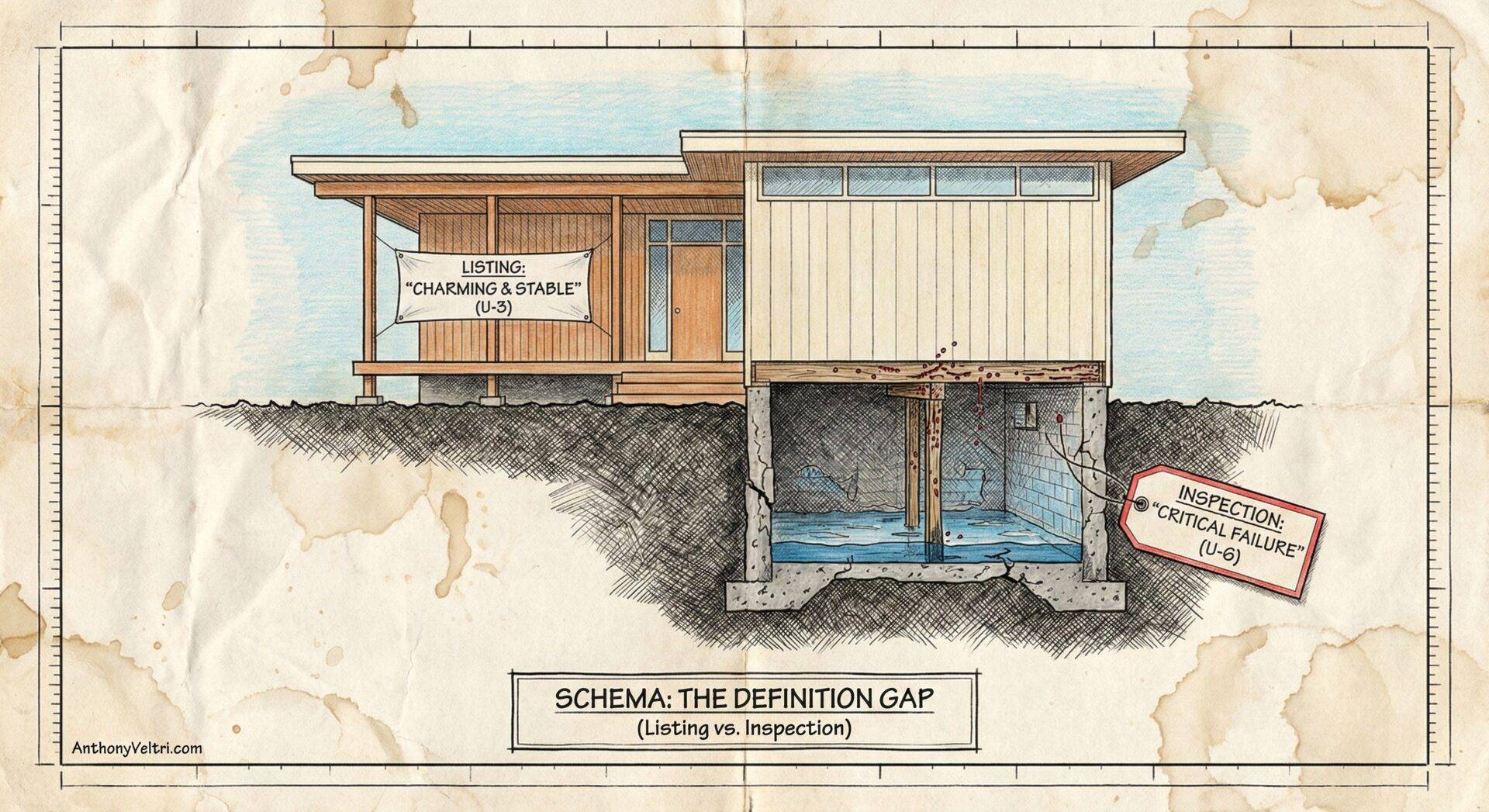
Listing vs inspection #
Ackshually Gate is what happens when someone mistakes listing copy for an inspection report.
Listing: “Charming mid-century ranch.”
Inspection: foundation settling, outdated wiring, roof end-of-life.
If you say, “This house is going to cost a fortune,” and someone replies:
“Ackshually, the listing says it’s charming,”
they are not helping. They are defending the wrong artifact.
U-3 is listing copy. It is not fraudulent. It is incomplete. It becomes misleading when treated as the whole.
The connection to the Pretentious Twit Check #
Ackshually Gate is how the pretentious twit operates in conversation.
The pretentious twit fails by optimizing for appearing smart over being useful. Ackshually Gate is the conversational mechanism that executes that failure: using precision to dominate rather than to diagnose.
Your pretentious twit check is about self-diagnosis: Am I being useful or just appearing smart?
Ackshually Gate is about recognizing when others are executing that failure pattern on you. And it gives you the counter-move.
The pretentious twit can shut people down unless they have tools to be countered. The Expansion Move is that tool.
The Expansion Move #
The Expansion Move is how you accept precision without accepting dismissal: agree with the correction, name the underlying condition, demand the adjacent measure, and return to the decision question.
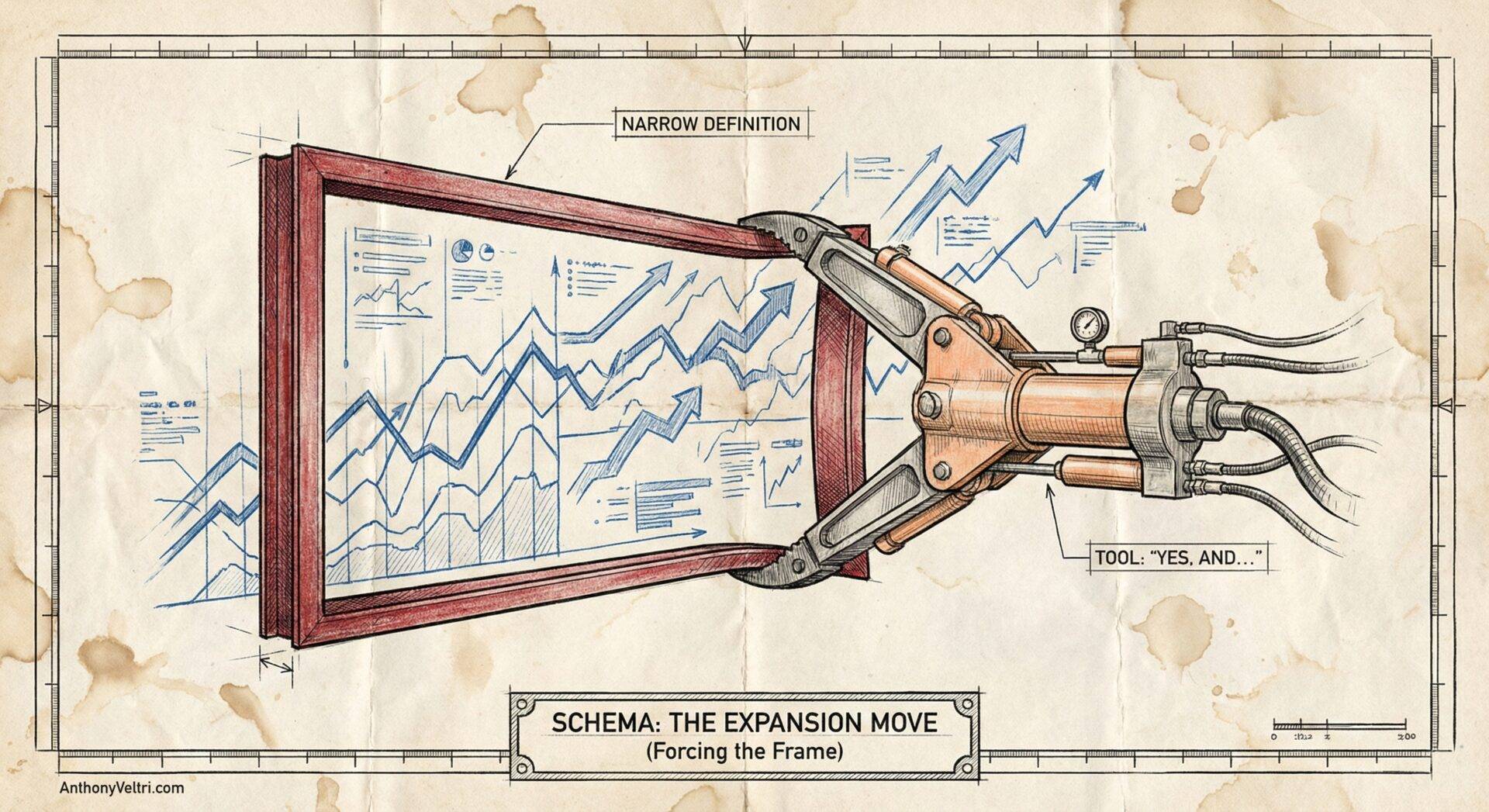
How to accept precision without accepting dismissal #
You do not beat Ackshually Gate by rejecting the correction.
You beat it by accepting the correction and refusing the shutdown.
The core script #
Use this verbatim:
“Correct, that term is narrow. My claim is not about the label. My claim is about the underlying condition. What is the correct broader measure that captures what I’m pointing at?” Or, a variation for hostile actors: “I am not asking for a definition check. I am asking for a system status. Do you have that data, or just the dictionary?”
This does three things:
- It defuses the correction
- It blocks the dismissal
- It forces the model to expand
The four rules of the Expansion Move #
Rule 1: Agree with the correction
Say: “Yes.”
Do not fight the definitional point. Fighting it feeds the derail.
Rule 2: Name the underlying condition
Say: “The condition is bill-paying stability, not a category label.”
Rule 3: Demand the adjacent measure
Say: “What measure captures what I meant?”
Rule 4: Return to the decision question
Say: “So what is the state of the economy for households, not just for a narrow metric?”
Green, yellow, red: how to spot whether someone is gating you #
Green flag: correction plus expansion #
They correct you and immediately widen the frame:
“Yes, and here’s the metric that captures what you mean.”
Yellow flag: correction only #
They correct you but do not expand:
“That’s not unemployment.”
Often accidental. Still harmful.
Red flag: correction used as dismissal #
They correct you and declare victory:
“So your claim is wrong.”
That is the gate in pure form.
Medical analogy: LDL vs ApoB vs CAC #
This is the same failure mode.
Patient reality #
“I’m worried about heart disease.”
Screening response #
“Your LDL is high. Statin.”
Higher-resolution context #
“My ApoB is low and my CAC is zero.”
Gate version #
“Ackshually, LDL is the standard.”
Expansion version #
“LDL is one lens. ApoB and CAC change the risk profile. Let’s integrate the full picture and decide based on your actual risk.”
A life-changing recommendation made from a screening panel without confirmatory context is not necessarily wrong. It is lower resolution than the decision deserves.
Why Ackshually Gate gets rewarded #
Because it feels like:
- intelligence
- rigor
- competence
- dominance
It is a status move. It lets someone “win” without taking responsibility for synthesis.
That is why it thrives in commentary cultures: it provides the appearance of sophistication while avoiding the messy work of integration.
But there is a deeper structural reason Ackshually Gate gets rewarded, particularly in institutions:
It is cheaper to correct than to integrate.
Correcting a definition requires narrow expertise and takes seconds. Integrating multiple measures, acknowledging uncertainty, and synthesizing a decision-grade picture requires cross-domain knowledge, political risk, and resource commitment.
Organizations reward what they can afford. If an institution is not resourced for synthesis, it will reward people who stop inquiry at the correction phase. Not because those people are malicious, but because the institution cannot operationalize what comes after the correction.
This creates a perverse selection pressure: the people who rise are the ones who are good at stopping conversations cleanly, not the ones who are good at widening them productively.
This is how you get technically competent organizations that are structurally incapable of diagnosis.
When precision actually matters #
The Expansion Move is not a shield against all technical correction. Sometimes the definition fight IS the substance.
You need to know when to accept the expansion versus when the definition actually determines the decision.
When precision determines the decision #
Use the narrow definition when:
- Legal or regulatory compliance depends on the exact boundary
Example: Is this person an employee or contractor? The definition determines legal obligations. - The measurement is the intervention
Example: Blood pressure thresholds for medication. The cutoff is not describing reality, it is creating a decision rule. - Resource allocation depends on category membership
Example: Disaster declarations. Being “in” or “out” of the affected zone determines aid eligibility.
In these cases, fighting for definition clarity is not a derail. It is the work.
When precision is a derail #
Use the Expansion Move when:
- The person is trying to describe a system condition, not win a category contest
Example: “People are struggling” does not need to be unemployment to be real. - The narrow measure is a proxy for something broader
Example: LDL is a proxy for cardiovascular risk. If better measures exist, use them. - The correction stops inquiry without improving the decision
Example: “That’s not technically a recession” when the question is whether households are stable.
The test: Does correcting the definition change what you would do next?
If yes, fight for precision.
If no, expand the frame.
The deeper claim #
Ackshually Gate is not about facts. It is about control of the frame.
Whoever controls the definition controls:
- what counts as evidence
- what counts as reality
- what is admissible in the conversation
A narrow definition can be technically correct and still function as a gate that prevents people from describing the actual system.
That is how a population can be “accurately informed” and still profoundly misled.
Anti-gate phrases you can keep in your pocket #
When someone tries to gate the conversation, use one of these:
- “Great. What measure captures what I meant?”
- “Yes. Now expand it to household reality.”
- “I accept the definition. What is the broader dashboard?”
- “We can rename it. The question remains: can people pay their bills?”
- “Are you correcting my label, or correcting my claim?”
- “Do you want to be right, or do you want to be useful?”
These deny the derail without rejecting precision.
Field notes and examples #
Last Updated on February 22, 2026