Interpreter Kit – Safe, Easy, and Useful Introductions
Make warm introductions without explaining my entire background
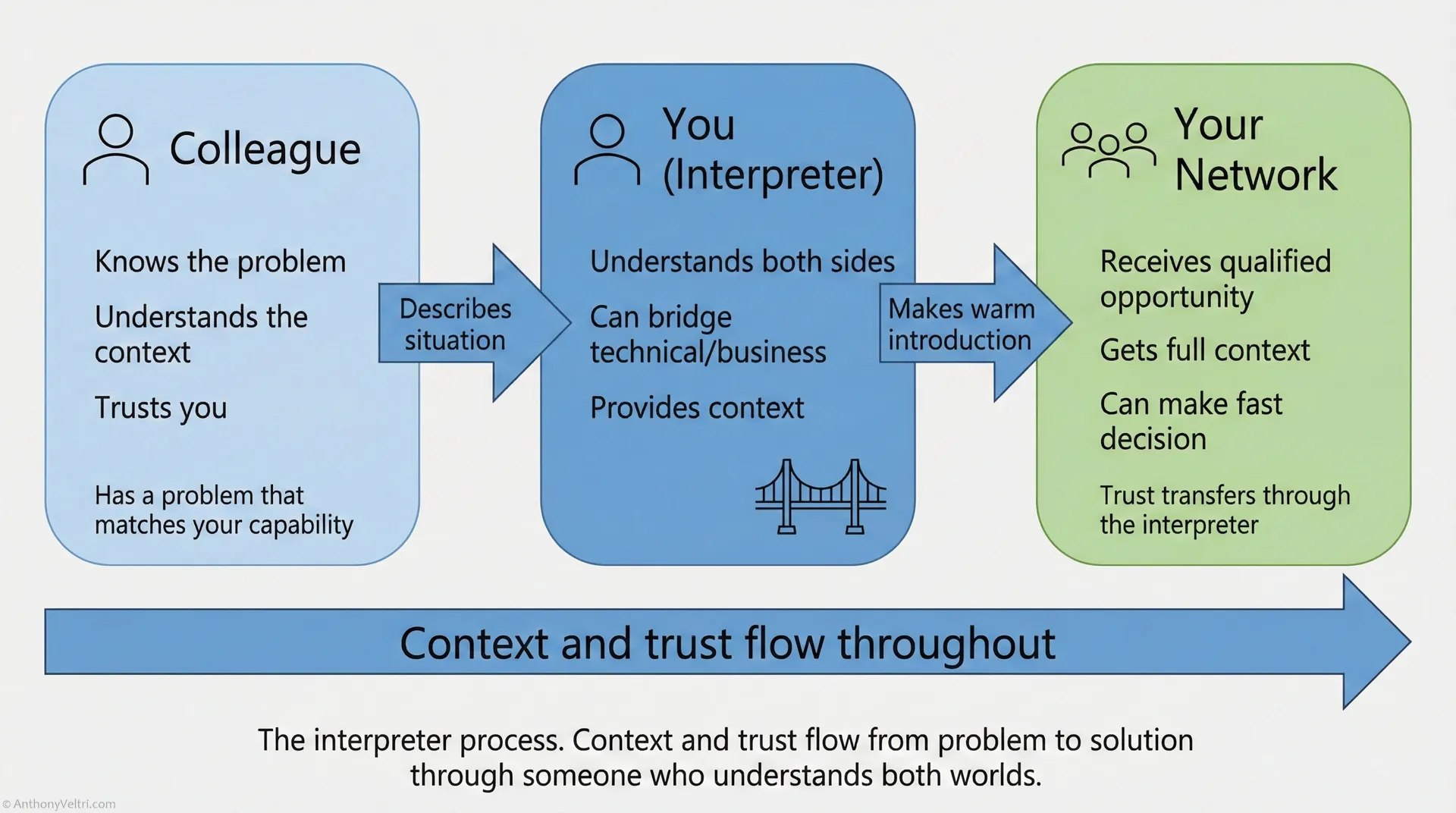
You are the interpreter. I am the system builder and mission architect. You translate the problem. I build the system that solves it.
This page gives you everything you need to introduce me with zero friction and no sales energy.
Use it when someone in your world says some version of:
“We have a real system or portfolio problem, and nobody has time to babysit a consultant.”
My background runs from wildland fire and Hurricane Katrina deployments, to federal GIS and mission systems, to internal government media and web work. On paper it can look like three different careers in one person.
The Interpreter Kit exists so you do not have to explain all of that.
Your job is simply to match the right kind of problem to the right kind of outcome, then connect us.
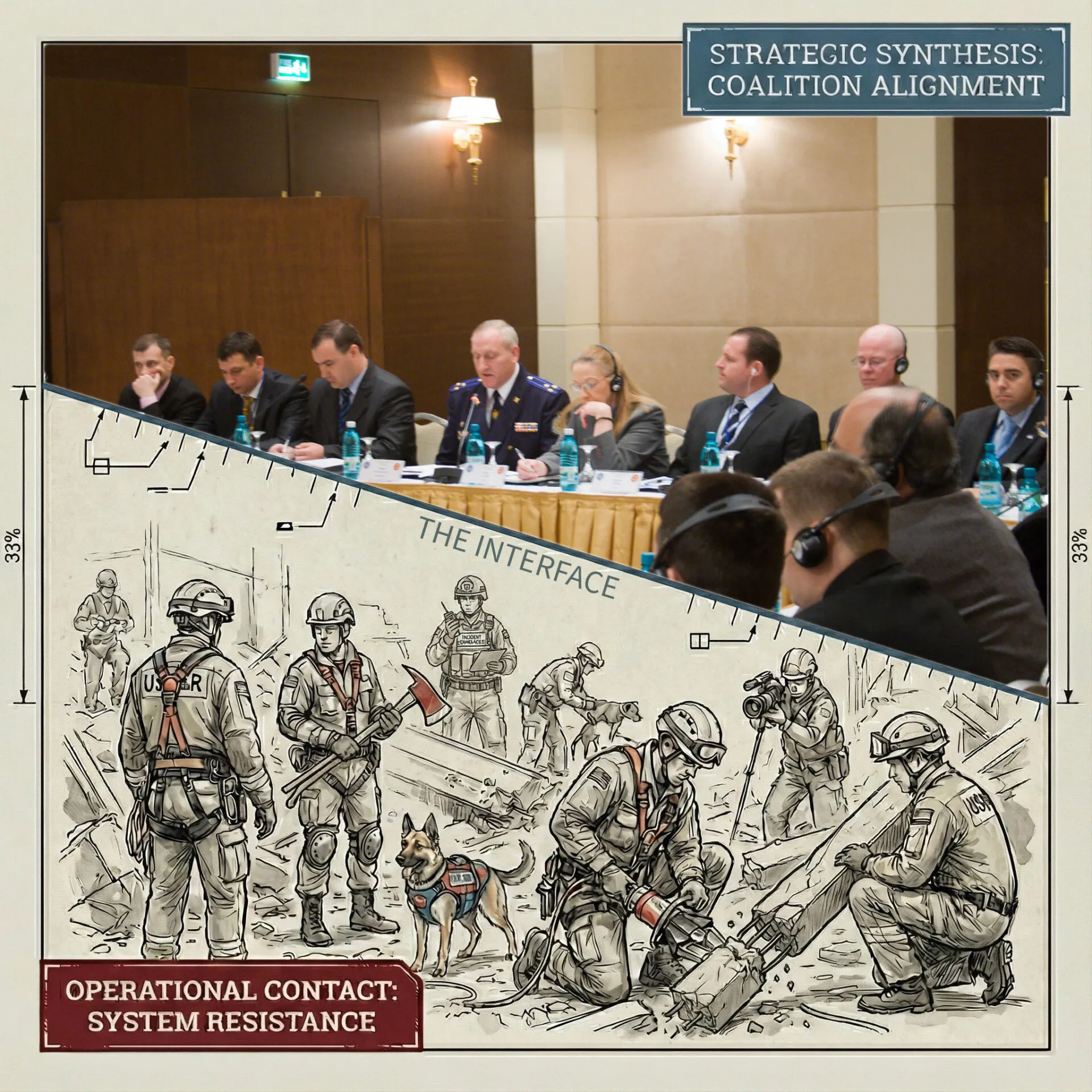
HR Algorithms want a vertical line. Complex problems require a spider web.
For the hiring manager, a non-linear career looks like a risk. For the Director dealing with a crisis, it looks like a solution. This briefing explains how to position the “Full-Stack Architect” to stakeholders who are used to buying single-function roles.
Not Sure Where To Start?
Tell me about the person you’re thinking of introducing and I’ll help you:
- Determine if they’re likely a fit
- Identify which outcome to name in your intro
- Point you to the right section of this kit
Why Interpreter-Led Helps Your Person
Why your introduction matters:
- Speed. You collapse the “who should I talk to” loop so they do not wander around looking for the right specialist.
- Signal. You anchor a single outcome, so our first conversation is focused, not a fishing expedition.
- Safety. They know in advance that if this is not a fit, I will say so quickly and respectfully.
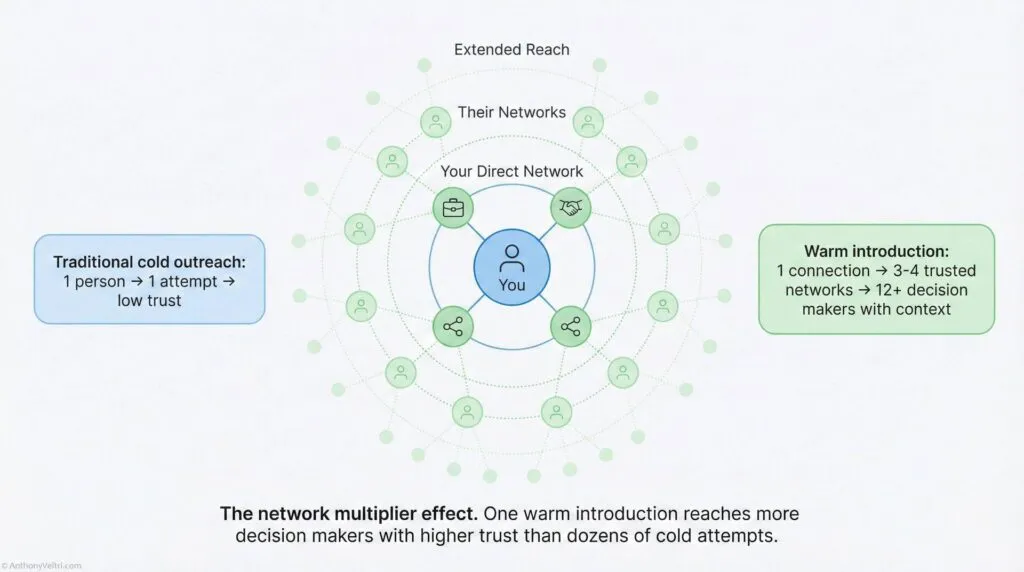
- Trust transfer. Your introduction carries weight that cold applications can’t. You’re vouching, which means I don’t have to prove myself from zero.
Most of my best work has started with someone like you who already knows the situation and can say: “I think Anthony is the right kind of strange for this.”
Copy-Paste Ready Intro
Your 30-Second Intro Script
You can copy and paste this directly into an email or message.
Quick intro. {Name}, meet Anthony. He is a mission architect who has worked in forward deployed environments and high tempo systems. The outcome I think you need is {one sentence outcome}. If it is a fit, he will reply with next steps. If not, he will say no fast.”
If you are not sure what outcome to name, you can use:
“One clear next step and an honest picture of the situation.”
That is enough to start (and usually more than most consultants deliver in three meetings).
When to introduce me (and when not to)
When to Introduce Me:
Introduce me when the person:
Runs or depends on high tempo systems
Is buried in status decks or broken reporting
Owns a site or funnel that should be working and is not
Needs someone who can move from doctrine to delivery without drama
Typical fits:
Leaders in federal, defence, or mission systems, including coalition or allied environments, who use Microsoft 365 and are stuck in portfolio or reporting fog
Executives or chiefs of staff who are buried in decks and need an honest, usable picture
Owner operators whose revenue is real, not hypothetical, and who run on WordPress or are willing to migrate
BJJ coaches, gym owners, or notable grapplers with a real story for The Mat Return podcast
When not to introduce me
Please do not introduce me when the person:
Has no budget and no decision authority
Is still in an early hobby phase and is not ready to invest in outcomes
Only wants cheaper [something] or a quick cosmetic refresh
Wants a large agency pitch and a big team in the room
If your person is here, they are not wrong. They are just at a different stage.
In those cases it is usually better to:
Point them to a simpler, low risk option first
Help them clean up basic numbers, commitments, and ownership
Keep this page handy for later, when the problem is clearer and they are ready to act
I would rather you protect your relationship than push an intro that feels forced.
Who I work with and what I actually do
Most people who reach me through an introduction fit into one of three groups (though the boundaries blur when real work starts):
Mission and System Portfolios
Leaders who own high tempo systems and messy portfolios. Examples:
Federal or allied teams trying to make sense of geospatial and mission data
Organizations that need a truthful picture of risk, not just a nicer slide deck
People who want forward-deployed architect-level thinking without adding a full time headcount.
This is where the mobile mapping unit and wildland fire work live. I once designed and built a 26 foot mobile GIS and RF lab used it in the Gulf Coast after Hurricane Katrina. It gave a urban search and rescue task force capabilities they did not have on paper.
Since then I have kept doing quieter versions of that work, helping teams make practical, forward deployed systems when the normal procurement path does not exist or is too slow.
Narrative and Testimonial Infrastructure
Teams who need their work to be visible and understood without turning everything into empty marketing.
Programs that want better stories from the field
Leaders who need video or testimonial evidence that matches reality
Groups that need a simple way to collect “what did we learn” without burying people in forms.
This is where the Hurricane Katrina book, the internal Government Video Guide, and the Video Testimonial Guide come in.
I help teams turn messy deployments into honest narrative assets that stand up to scrutiny, so they can defend funding and explain their impact to non technical audiences.
Web, Stack, and Delivery Layer
Owner operators and teams whose work rides on WordPress, Microsoft 365, and a tangle of tools.
- A site or membership that should be converting and is not
- Reporting and automations that are half built and fragile
- Operations where “the tech person” has quietly become a single point of failure
Here I am not trying to be a full service agency. I stabilize and rebuild the critical parts so the system can breathe again, then leave behind clear ownership and simple paths for whoever runs it next.
You do not need to describe all of this in your introduction. The point is that if someone lands on this page and reads further, the unusual parts of my background will make sense instead of sounding random.
How it Works After the Intro
Connector makes the intro.
One message with the script above and a clear one sentence goal.
We choose the lightest fit. Usually one of:
A short triage call to define the real problem and options
A focused portfolio triage or decision brief
A one week rescue for a site, funnel, or reporting chain that needs to be stabilized
We ship one clear step.
The outcome of the first engagement is a written decision, named owner, and date. No vague “we should talk again sometime.”
If the fit is wrong, I will say so and, when possible, suggest a better path.
What Your Person Gets, What You Get:
For the person you introduce:
They can expect:
A clear picture of the situation, not just more slides
One page of decisions and deadlines, written in plain language
A specific next step, with an owner and a date
No buffet of services. No bait and switch. Just enough work to move from noise to action.
For you as the Interpreter:
You can expect:
To be copied on the kickoff and the first shipped artifact, if that is appropriate for the context
To not be treated as unpaid project management
A short update after the first call, for example
“Thanks for the intro. I will update you after the call.”
“Met with {Name}. Outcome, booked or not a fit. Appreciate you.”
Your reputation is on the line when you make an introduction. This kit exists to protect that and to make you look smart for making the connection.
Why Your Person Is In Safe Hands:
I try to keep the work quiet and practical. A few points of context, so you know who you are introducing:
- Trained as a remote sensing and GIS scientist, with early work in wildland fire, emergency response, and high tempo mission systems.
- Forward deployed with Rhode Island Urban Search and Rescue during Hurricane Katrina, where a self funded mobile mapping unit gave the team geospatial capability they did not have on paper.
- Led and supported geospatial, portfolio, and reporting work in the U.S. federal space, and built internal video and testimonial guides that helped programs capture honest, defensible evidence of their impact.
The goal in every engagement is the same: keep the work grounded in reality, protect relationships, and leave the system in better shape than I found it.
Boundaries, examples, and where to send people
Most people who reach me through an introduction fit into one of three groups:
Boundaries
I keep the work narrow and specific, not a sprawling retainer.
I am not a full service agency. I am a mission architect you bring in when there is a real problem, a real owner, and a need to move from theory to working reality (not theory to more theory).
- I use only the tools needed to win the specific cut in front of us.
- If I am not the right fit, I say so quickly and cleanly.
- I am not a full service agency. I am a mission architect you bring in when there is a real problem, a real owner, and a need to move from theory to working reality.
Example Outcomes
You can share these lightly as “things I have heard from people after we worked together.”
- “We cut our weekly reporting time in half.”
- “We killed two bad projects before they burned runway.”
- “We shipped a working site in six days, not six weeks.”
- “We finally have something we can show to leadership without apologizing.”
- “Finally, a system that doesn’t rely on heroics.
Where to Send People Next:
If someone lands here on their own and is curious, you can point them to:
- The Katrina field notes to see how I think about forward deployed systems
- The Government Video Guide field note to see how I handle narrative and testimony
- The home page if they just want the big picture first
From there, when they are ready, a simple message that says “I think we should talk” plus one or two sentences of context is enough to start.
Teaching & Doctrine (or “How I Think About Systems”)
In addition to direct project work, I write doctrine guides that teach reusable patterns from field experience. These help practitioners bridge the gap between hands-on work and formal architecture vocabulary.
Examples:
- Data Modeling and Vocabulary Crosswalks – For practitioners who do data modeling but struggle to explain it in formal architecture terms. Includes vocabulary crosswalk and reusable answer patterns for interviews.
- Systems Built on Heroics Are Brittle – What Hurricane Florence taught me about why systems built on can-do spirit eventually break both people and systems. Why capacity matters more than can-do spirit
- Federation vs Integration – How to choose between federated and integrated architectures, and what failure modes to watch for.
If someone in your network is struggling with these patterns, these guides might help them directly. And if the patterns resonate, that’s a strong signal that a conversation with me would be valuable.
You can share these guides without making a formal introduction. They’re free resources that solve common problems I see across federal, defense, and coalition environments.
Not Ready Yet?
Sometimes the timing is off. The person you have in mind is not wrong, they are just not ready for this kind of work.
That usually sounds like:
“We know the system is fragile, but we do not really know what we want yet.”
“We just need something cheaper for now.”
“I do not have clear ownership or budget, I am only exploring.”
In those cases it is usually better to:
Start with a simpler, low risk tool or vendor.
Clean up basic numbers, responsibilities, and decision authority.
Keep this page handy for later, when the problem is sharper and there is a real owner.
I would rather you protect your relationship than push an introduction that feels premature.
Ready to Introduce Someone?
Your job is simple:
- Share this page with them (if that feels right)
- Use the form below to give me context
- I’ll handle the first touch and let you know how it goes
You make the introduction. I protect your reputation. They get a clear next step or an honest “not a fit.”