Ledger/Visibility Collapse: Why Reciprocal Work Starts Looking One-Sided
Field note on a pattern showing up in geopolitics, consulting, and personal relationships simultaneously
You can find the Companion to this field note here:

Doctrine 03 Companion: Ledger/Visibility Collapse
The realization
I was having a conversation with a colleague about US-Europe alliance tensions when I realized I was describing the exact same pattern I was living through with a client relationship.
The US is saying: “Look at everything we give Europe, what have they done for us?”
My client was saying: “We pay you, what more do you want?”
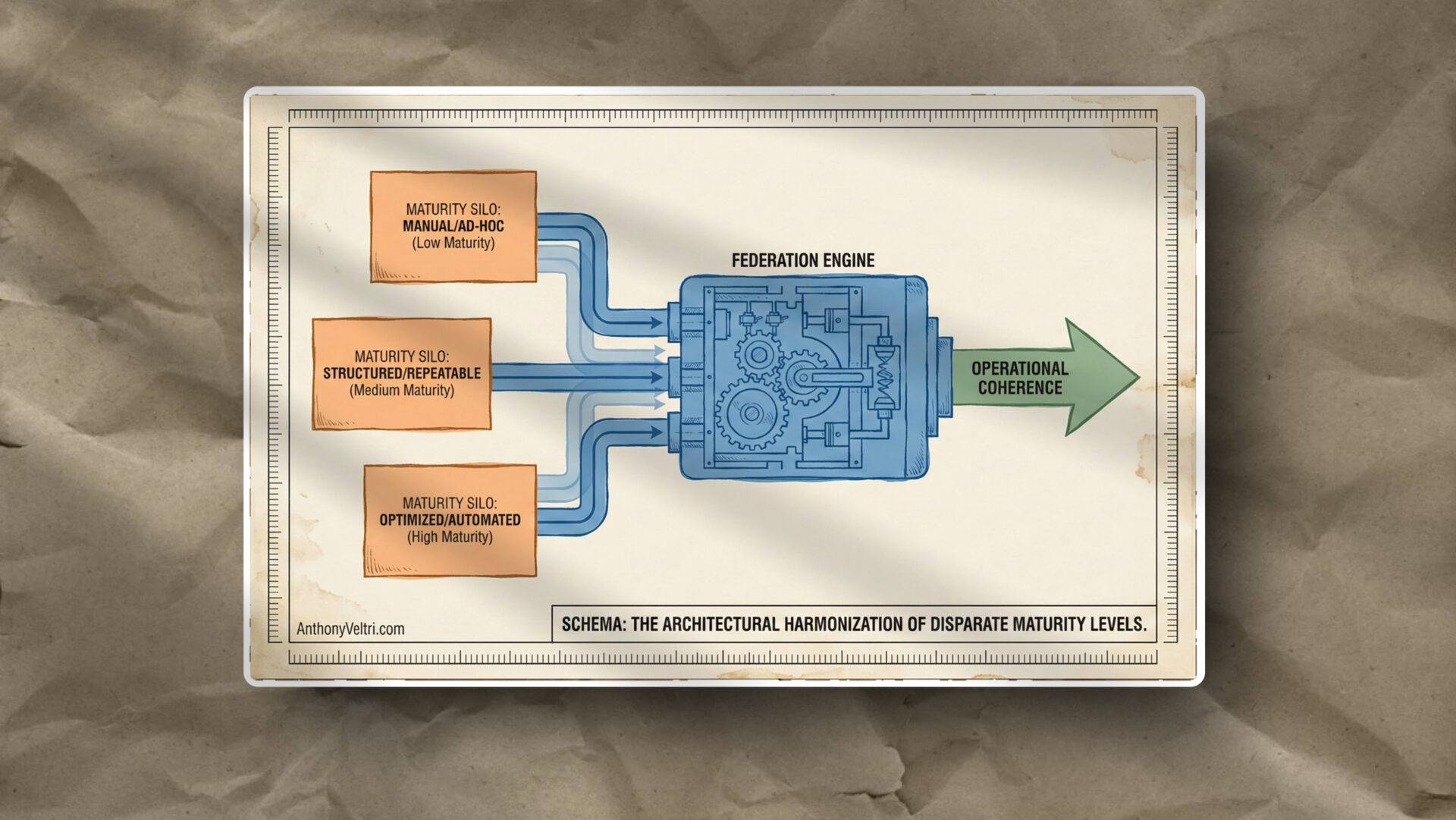
Both conversations had the same structure:
- One party sees their contributions clearly
- The other party’s contributions have become invisible
- Both parties feel exploited
- Nobody can see the full ledger
That is when I realized this is not just a relationship problem. This is a structural pattern that shows up everywhere, and it is particularly visible right now in 2026.
The US-Europe version (The Alliance Dilemma)
The current US strategic posture regarding NATO spending is the perfect example of Ledger/Visibility Collapse in action.
It doesn’t matter who is in the White House; the structural accounting problem remains the same.
What the US ledger counts:
- Defense spending as percent of GDP
- Direct military aid
- Equipment transfers
What the US ledger omits (The Structural Baseline):
- Ramstein Air Base (the logistics heart of US operations in Africa/Middle East)
- Landstuhl Regional Medical Center (the primary survival node for US wounded)
- Naval Station Rota (forward-deployed US naval power)
- Intelligence sharing and airspace access
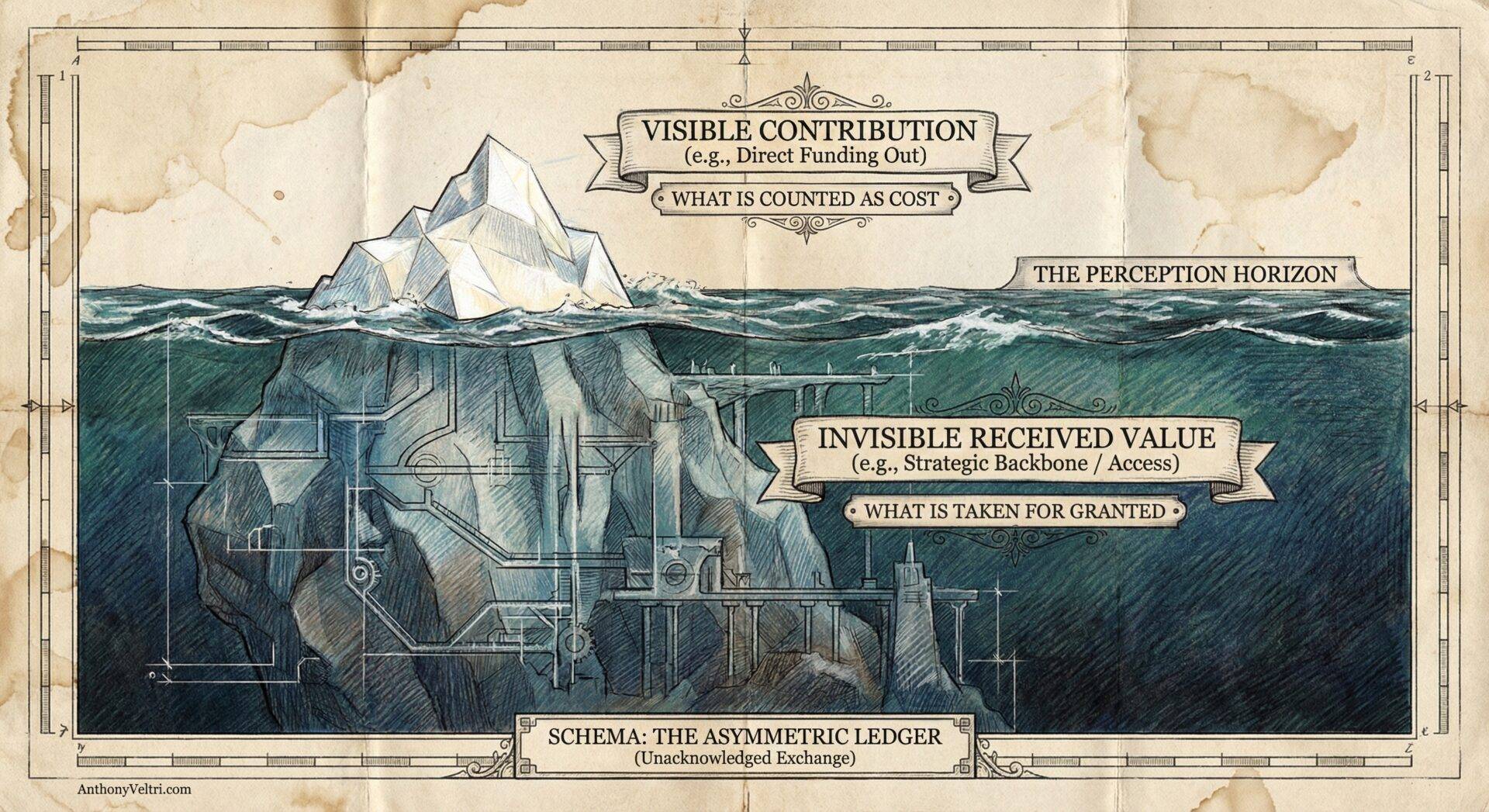
The US political conversation collapses to: “We spend 3.5% of GDP, they spend 2%, the math is unfair.”
The European ledger argues: “We provide the physical platform that makes US global power projection possible.”
Both are true. But because “spending” is a visible line item and “access” is a quiet permission, the relationship can feel one-sided to certain elements of the US contingent (or the media narrative can be shaped to this end).
The consulting version (personal stakes)
At the same time, I was living through the identical pattern with a client.
The setup:
- I was brought in on speculation (no upfront payment, all risk on me)
- Paid as percentage of their sales
- Original scope: maintain existing operations
- Reality: I was doing maintenance plus growth work plus strategy plus network connections
What they saw:
- Percentage of sales goes out every month
- Services get delivered
- That is the deal
What became invisible:
- I built their infrastructure on speculation with zero guaranteed payment
- I absorbed all startup risk
- I carried revenue volatility (their good months, their vacation months, their sometimes underperforming management months)
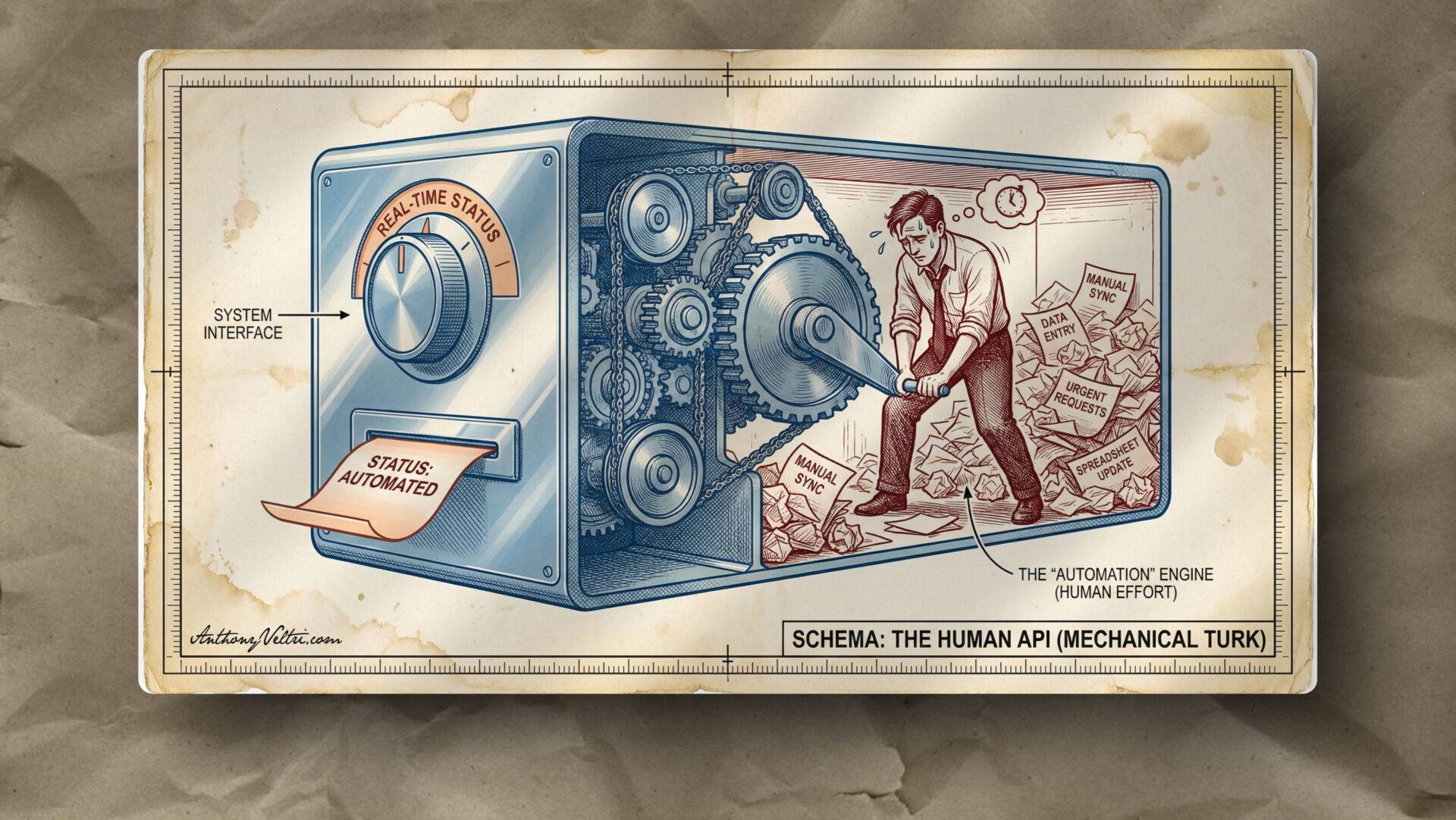
- I provided extensive out-of-scope work to protect outcomes because I needed them to succeed to get paid
The collision:
- High revenue month: “You’re being paid too much” (forgetting the percentage stayed constant and the risk was always mine)
- Low revenue month: “We still need your support” (expecting me to absorb their losses)
- My attempt to rebalance: Met with defensiveness
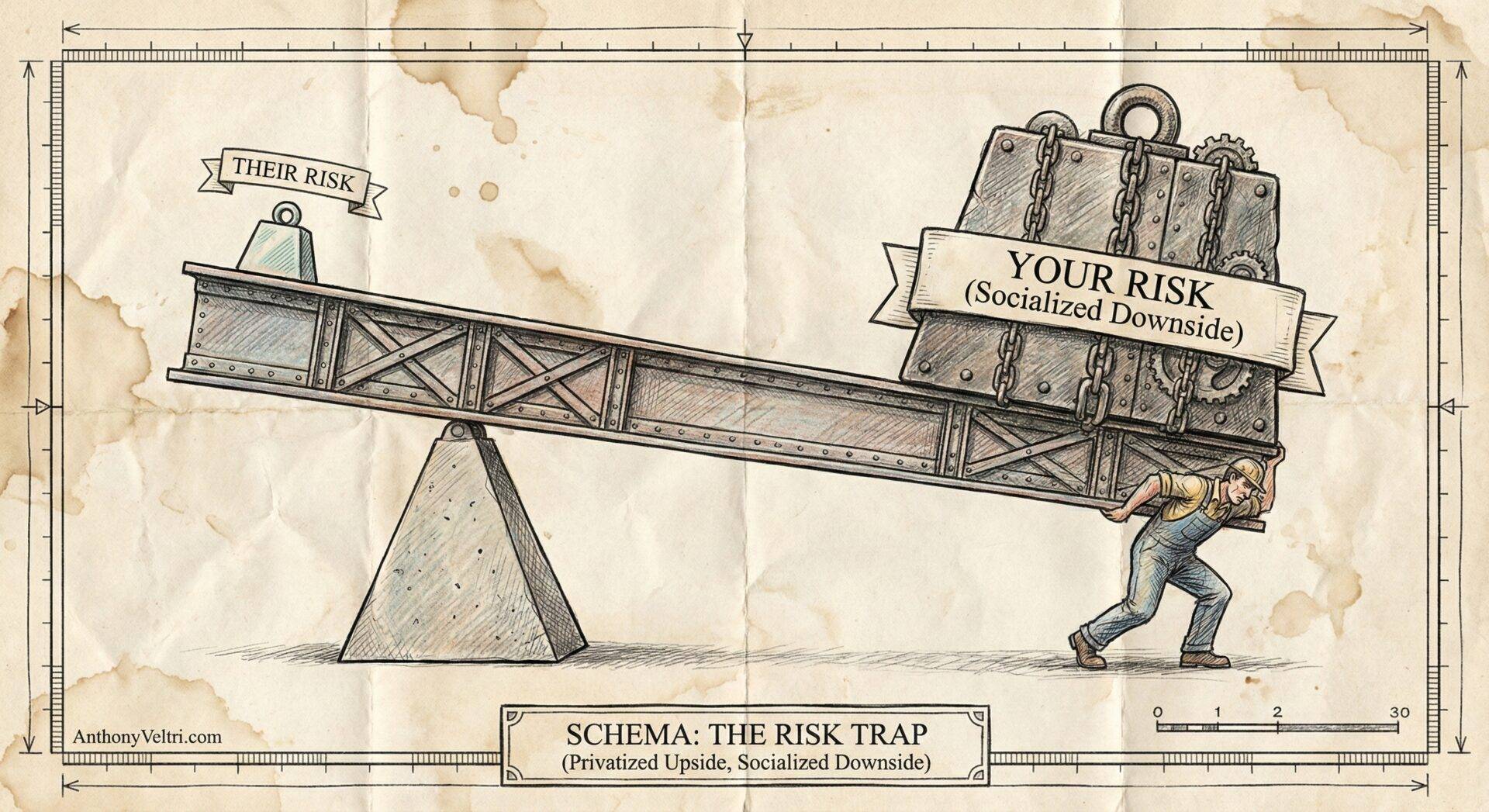
That is Ledger/Visibility Collapse with asymmetric risk distribution. And I realized: maybe this relationship needs to collapse.
Why this pattern is particularly visible right now
Three things are making Ledger/Visibility Collapse show up everywhere in 2026:
1. Outcome-based relationships are increasing
More people are paid on outcomes rather than inputs (percentage of sales, revenue share, commission-based, performance bonuses). This accelerates Ledger/Visibility Collapse because you absorb scope creep to protect outcomes, but the other party never sees the cost.
2. Geopolitical relationships are being renegotiated
Political rhetoric is forcing alliance relationships to surface their full ledgers. For 70 years, certain contributions (basing rights, access, legitimacy) were treated as background. Now they are being questioned. That is making the invisible visible, but it is also revealing how asymmetric the accounting has been.
3. Personal boundaries are being tested post-pandemic
People are reassessing what they are willing to give in relationships (work, personal, family). The pandemic created a boundary reset. A lot of relationships that survived on invisible contributions are now collapsing because people are refusing to keep burning themselves as fuel.
The diagnostic test I am using now
When I feel like someone is not appreciating what I do, I ask three questions:
Question 1: What am I providing that has become invisible because it is reliable?
Question 2: What are they providing that I have stopped counting because it has become baseline?
Question 3: If we both published our full ledgers, would we discover we are both right about being undervalued?
If the answer to Question 3 is yes, that is Ledger/Visibility Collapse.
Then I add the critical fourth question:
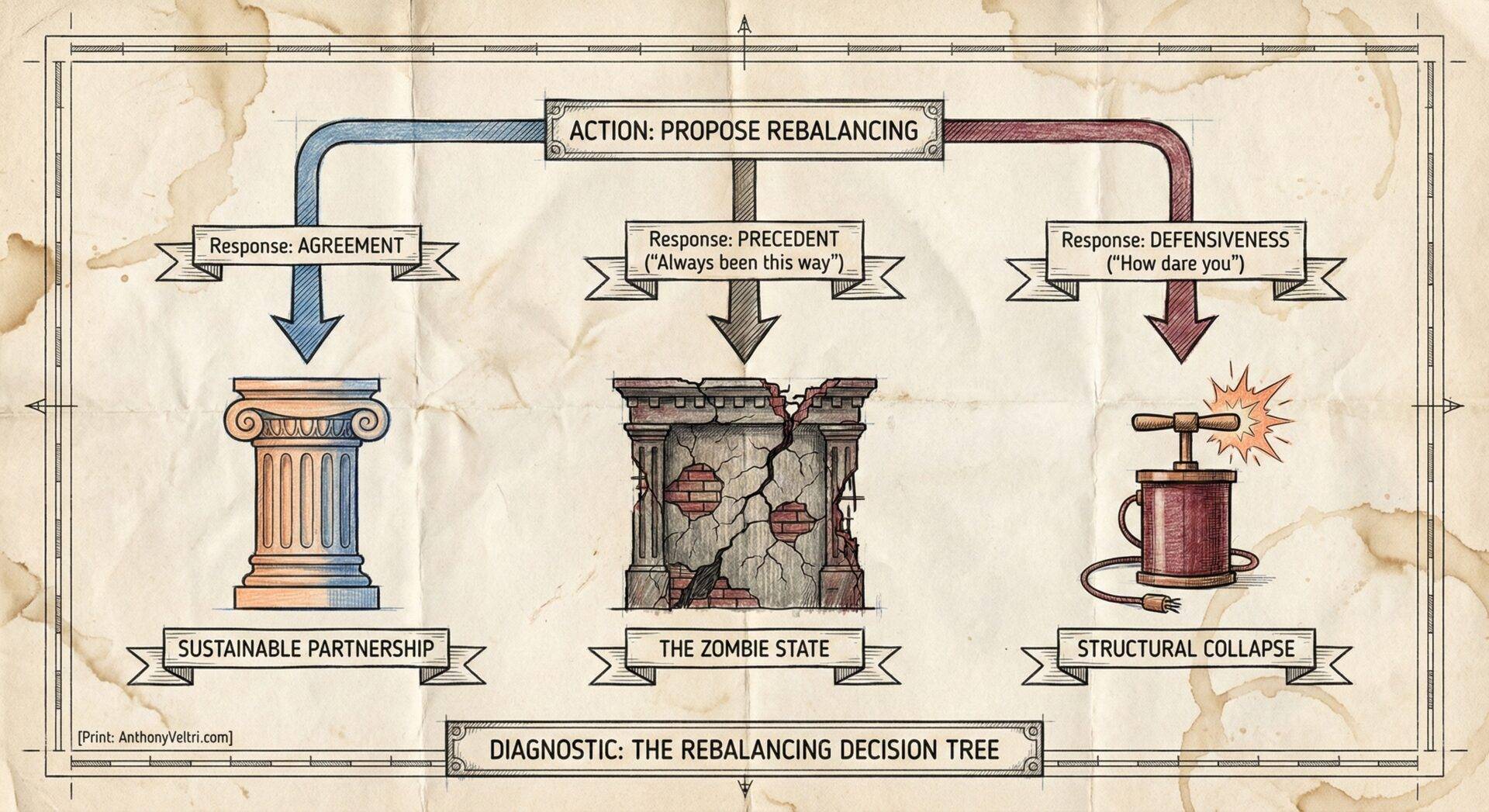
Question 4: If I propose structural rebalancing, do I predict Response 1 (“you’re right, let’s fix this”), Response 2 (“this is how it’s always been”), or Response 3 (“how dare you”)?
If I predict Response 2 or 3, collapse is the right answer. Trying to save the relationship is burning myself as fuel.
What I am seeing in real time
This pattern is showing up everywhere I look:
In geopolitics: US-Europe, but also US-South Korea, US-Japan, US-Philippines. Every alliance relationship is being forced to surface the full ledger. Some will rebalance. Some will collapse.
In consulting: Every outcome-based relationship where scope has drifted. Clients who expect continued extras. Consultants who are realizing they have been absorbing asymmetric risk.
In personal relationships: People reassessing what they give versus what they get. Relationships that survived on one person’s invisible labor are collapsing.
In institutions: Staff who kept things running through “just a bit extra” are stopping. Organizations that budgeted for infrastructure but not operational governance are discovering they cannot function without the invisible extras.
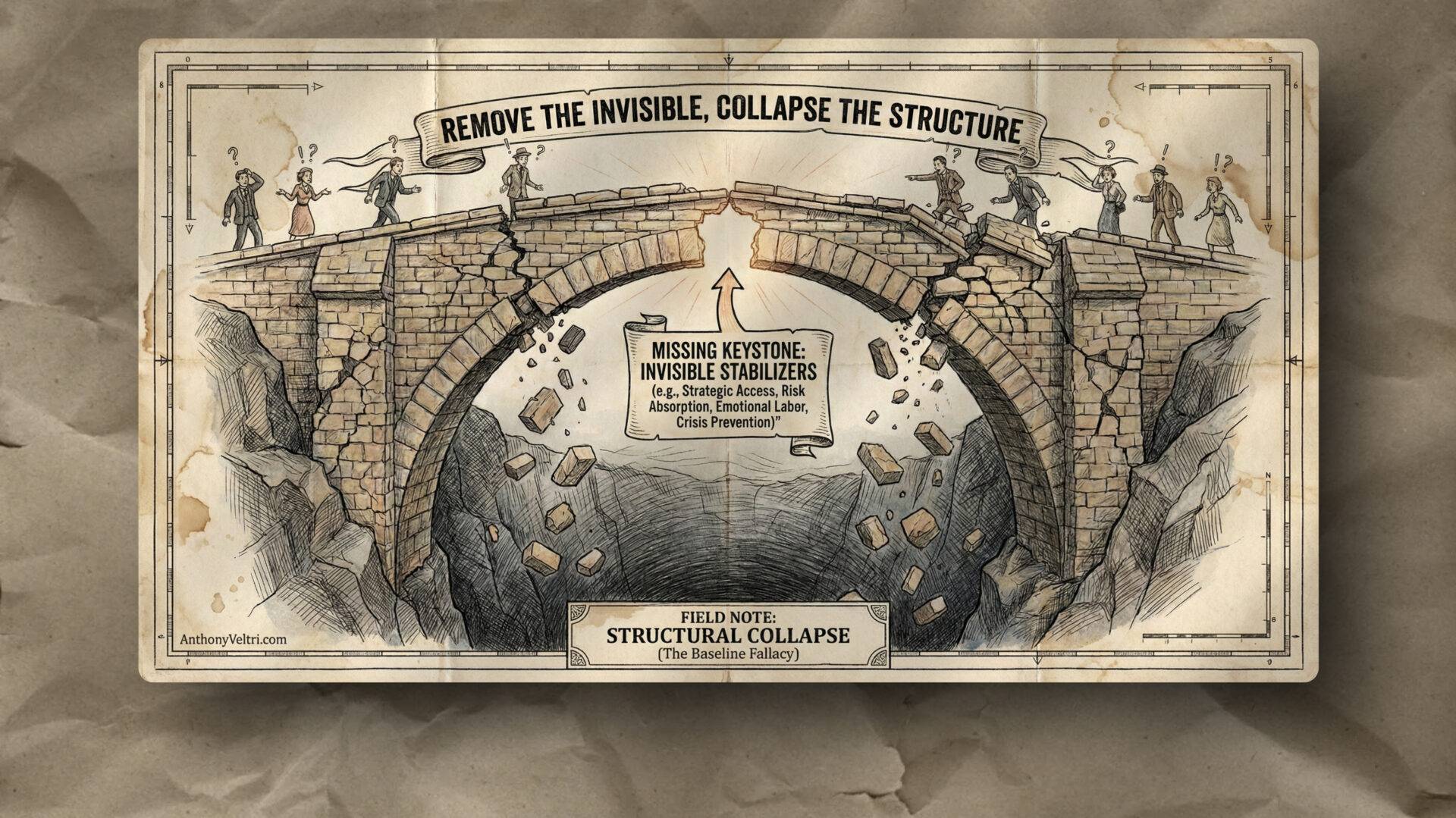
The common thread: reliable contributions become invisible, invisible contributions stop being valued, stopping invisible contributions looks like betrayal.
The hard realization
Making the ledger visible does not always fix the relationship.
Sometimes making the ledger visible reveals: they know the structure is asymmetric, and they prefer it that way.
At that point, collapse is not the failure case. Collapse is the strategic choice.
I am currently executing that strategic choice with my client. I documented the full ledger (not for them, for me, to prevent gaslighting). I announced the rebalancing conversation. I got Response 2 (“this is how it’s always been”). I executed clean withdrawal.
It feels terrible. But it is the right answer.
Because the alternative is continuing to burn myself as fuel to maintain a structure that is fundamentally exploitative.
Why this matters beyond personal experience
If this pattern is showing up everywhere simultaneously (geopolitics, consulting, personal relationships, institutions), that suggests a systemic shift is happening.
Something about the current moment is making invisible contributions suddenly unbearable to the people providing them.
Maybe it is economic stress making people less willing to absorb downside.
Maybe it is information access making asymmetric ledgers easier to see.
Maybe it is cultural shift toward boundary-setting.
Whatever the cause, the pattern is: people who have been providing invisible contributions are stopping, and the people who depended on those contributions are experiencing it as betrayal.
That is going to create a lot of collapsed relationships in 2026. Geopolitical, professional, and personal.
The question is: which collapses are the right answer (structural exploitation), and which are fixable (incomplete ledgers that both parties want to complete)?
The full pattern and counter-moves
This field note captures the current salience and urgency. But the full structural pattern, including the three-stage mechanism, the outcome-based compensation trap, the asymmetric risk trap, and all five counter-moves, is documented in the companion doctrine piece: Ledger/Visibility Collapse (Doctrine 3 companion).
If you are experiencing this pattern, read the full doctrine. It will help you diagnose whether you have incomplete ledgers (fixable) or asymmetric risk distribution (probably needs to collapse).
The one sentence I keep coming back to
Just because you help somebody doesn’t mean they’re going to remember that, especially if you don’t enumerate it.
That is the trap. And the only way out is either making it visible or accepting that collapse is the right answer.
Right now, in 2026, a lot of relationships are facing that choice.
Last Updated on July 12, 2026