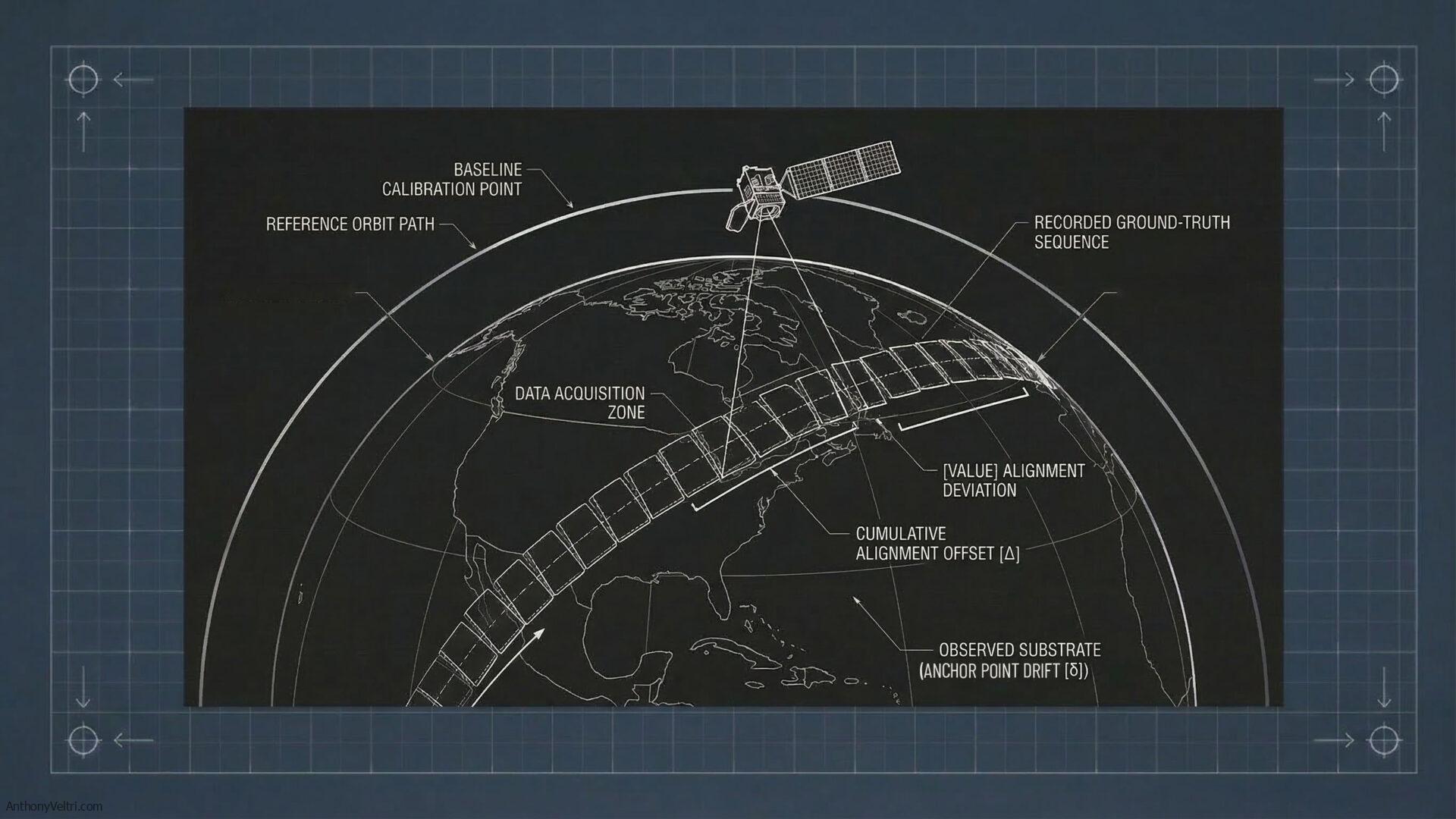
Series Guide: Ground Truth, Federation, and the Anchor Point
Published, and Companion Work from This Series
Federation Cannot Replace Stewardship: Governing the Calibration Chain in Continental-Scale Observation Networks. Bulletin of the American Meteorological Society, Early Online Release, 2026. Peer reviewed.
Plain-language companion: Federation Cannot Replace Stewardship (BAMS, 2026), Explained. A section-by-section explanation of why each example appears in the article and what readers outside its individual technical fields should carry forward.
Governance of Long-Term Scientific Infrastructure: Public Value Does Not Protect Itself. Perspectives of Earth and Space Scientists, 7, e2026CN000346. First published 3 July 2026. Open access commentary. This piece extends the series from maintaining trustworthy observations to protecting the physical archives, monitoring networks, facilities, and human capability that make long-term observation possible.
The Governance Gap Threatening Long-Term Ecological Archives. Eos, American Geophysical Union, 27 May 2026. Editorially reviewed with AGU science adviser input.
Evidence Does Not Implement Itself: Why Science Needs Stewards at the Policy-Implementation Seam. Open-access. This piece extends the Ground Truth series from anchor point integrity into the administrative seam where scientific value must be translated into named authority, accountability, and survivable governance action.
Author’s Note: The essays in this series document the operational realities of maintaining long-term physical observation networks. This series serves as the practitioner’s ledger: it details the structural mechanics of how these systems actually fail in the field and how interface stewards keep them running.”
A series of field notes on what makes earth observation data trustworthy and what happens when it isn’t
There is a question underneath most earth observation work that rarely gets asked directly.
Not whether the sensor is working. Not whether the data is flowing. But whether the thing the sensor is calibrated against still exists in the form the calibration assumed.
This series addresses that question across multiple timescales and operational contexts. Each piece stands alone. Together they make a single argument: that the value of any observation system, from a handheld GPS to a continental satellite network, depends entirely on the integrity of its anchor points, and that anchor point integrity is a governance problem as much as a technical one.
The essays in this series reflect three disciplines that high-consequence observation systems must hold simultaneously.
Scientific continuity is the discipline of protecting reference classes over time. Ground truth classifications drift. Control points that were stable become unreliable without anyone noticing. When the Ground Moves addresses this directly.
Technological evolution is the discipline of trusting the instrument over the inherited classification. When instruments reveal substrate change rather than confirming expected stability, that is the system working. Recognizing it as signal rather than noise is the harder organizational skill.
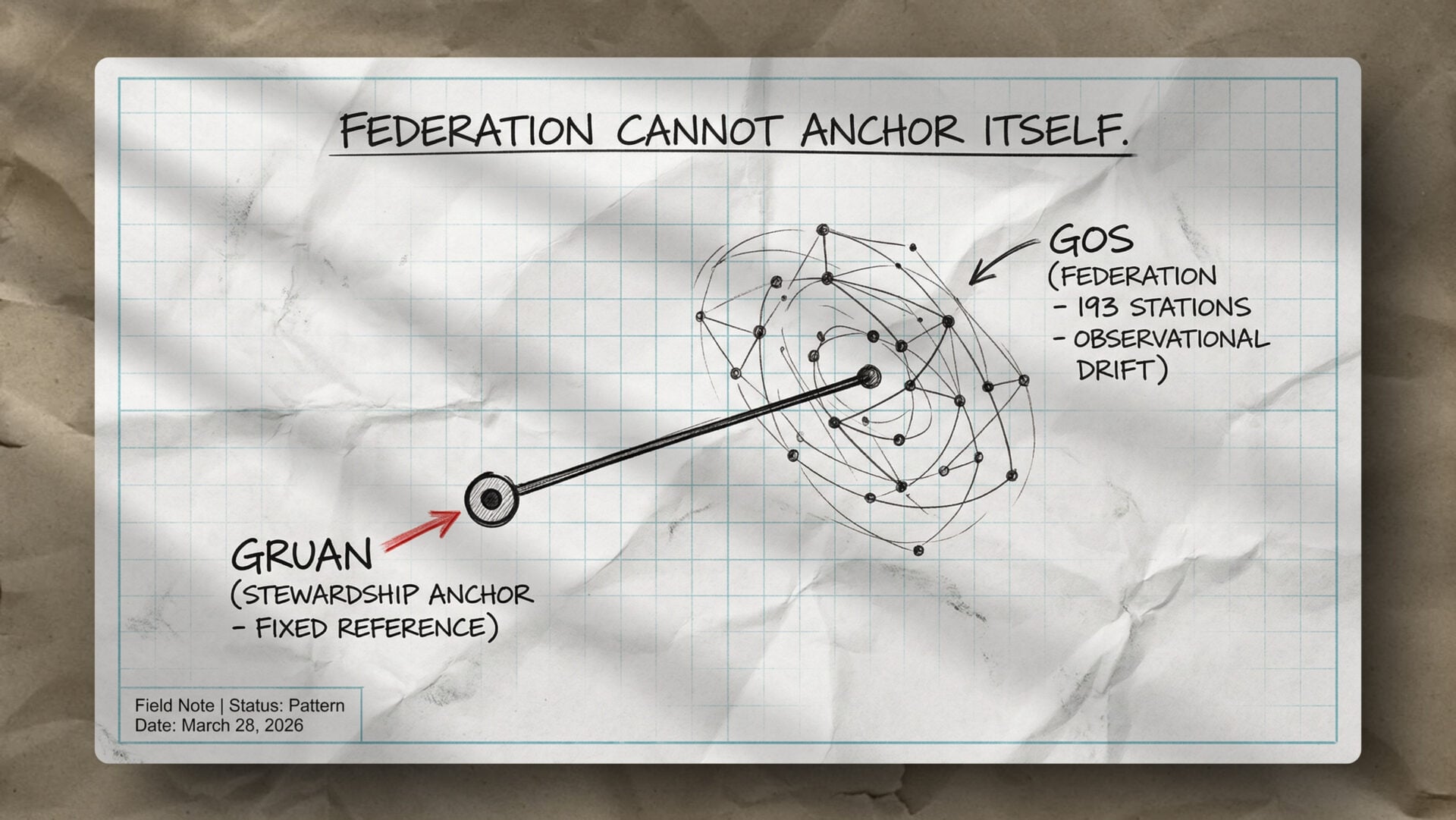
Operational resilience is the discipline of acting under conditions where the substrate has collapsed entirely. No Amount of Federation establishes that not all data is golden, while Federation Cannot Anchor Itself (GRUAN) proves that network architecture cannot compensate for a broken anchor node. Finally, The Repeat Oblique addresses the operational response: when you cannot wait for the golden dataset, there is a repeatable pattern for producing decision-quality truth fast enough to matter.
The physical stakes of these tensions are documented in Guarding the Room, which uses the Hubbard Brook Experimental Forest to show what happens when 60-year baselines rely on culture instead of a mandate. Finally, When the Governance Instrument Exists delivers the structural cure, proving how institutions like the NSF and European consortiums write named stewardship obligations directly into their operating contracts.
Evidence Does Not Implement Itself extends the series one layer upward. The earlier pieces ask whether the physical, data, network, and governance anchors are still intact. This piece asks what happens after the evidence exists but before it reaches the administrative room where budgets, reorganizations, disposal decisions, and institutional commitments are made. Its answer is that long-term scientific infrastructure needs named translational stewardship: not communication as decoration, and not science as self-defense, but a formal role accountable for carrying evidence across the policy-implementation seam.
Start anywhere. The pieces are designed to be entered from any direction.

Anthony Veltri Explains why Federation Cannot Replace Stewardship
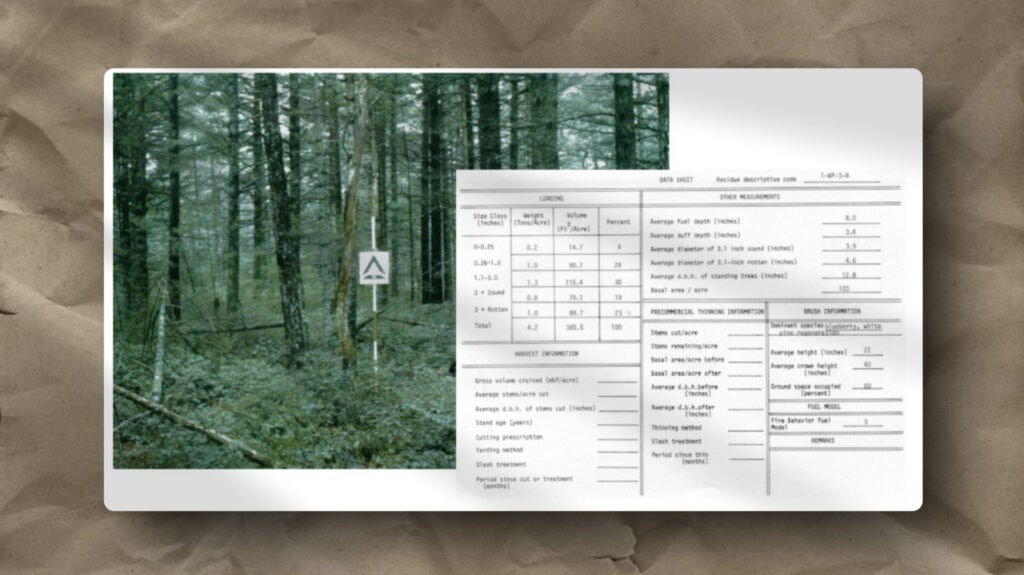
When the Ground Moves: Why Institutions Misread Their Own Sensor Metrics

No Amount of Federation Saves a Broken Anchor Point
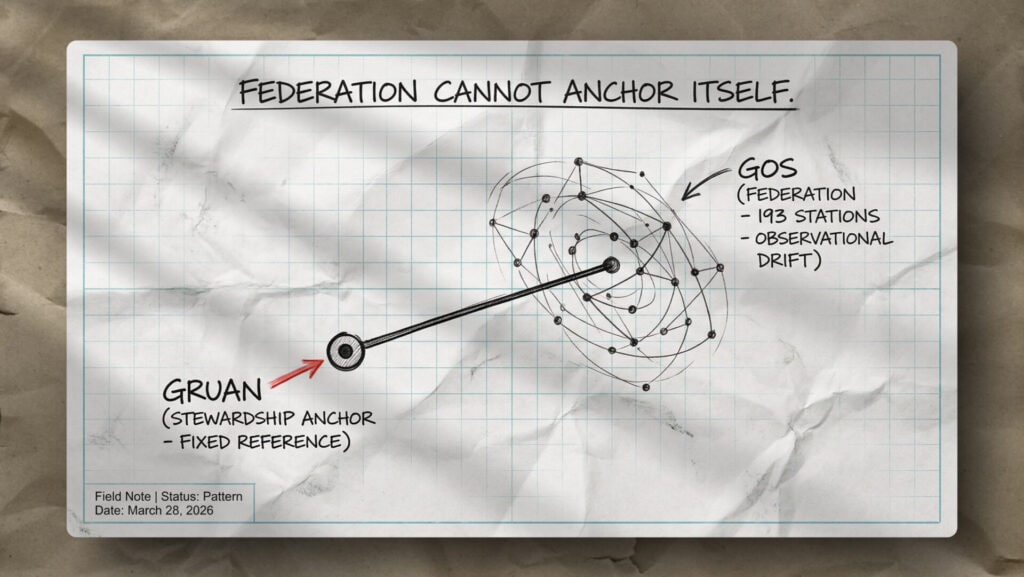
Federation Cannot Anchor Itself – GRUAN and the Hidden Stewardship Layer in Global Observing Systems

Guarding the Room: A Hubbard Brook Story About Science and Funding
Evidence Does Not Implement Itself: Why Science Needs Stewards at the Policy-Implementation Seam
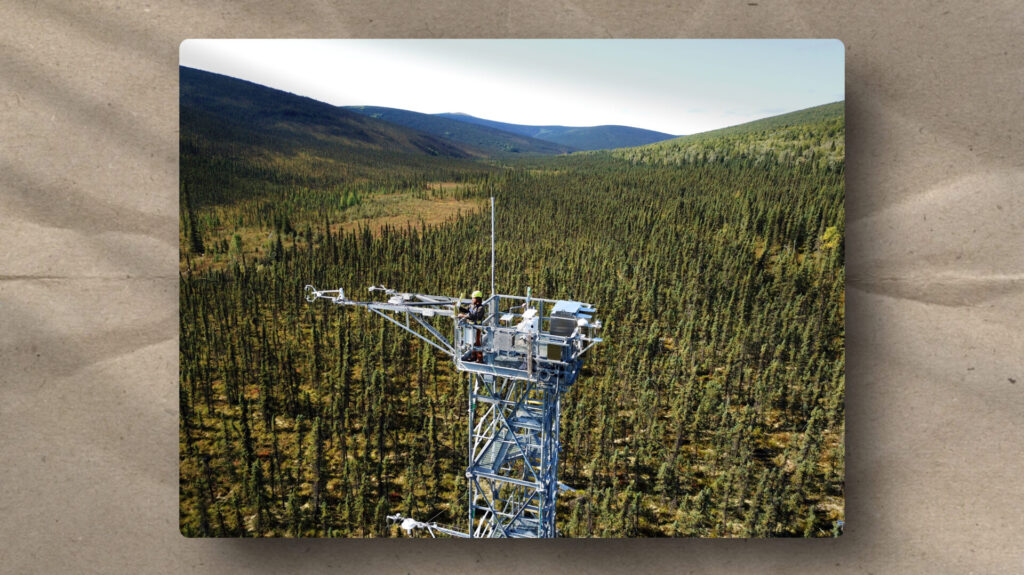
When the Governance Instrument Exists: ICOS, NEON, and the Two Paths to Named Stewardship
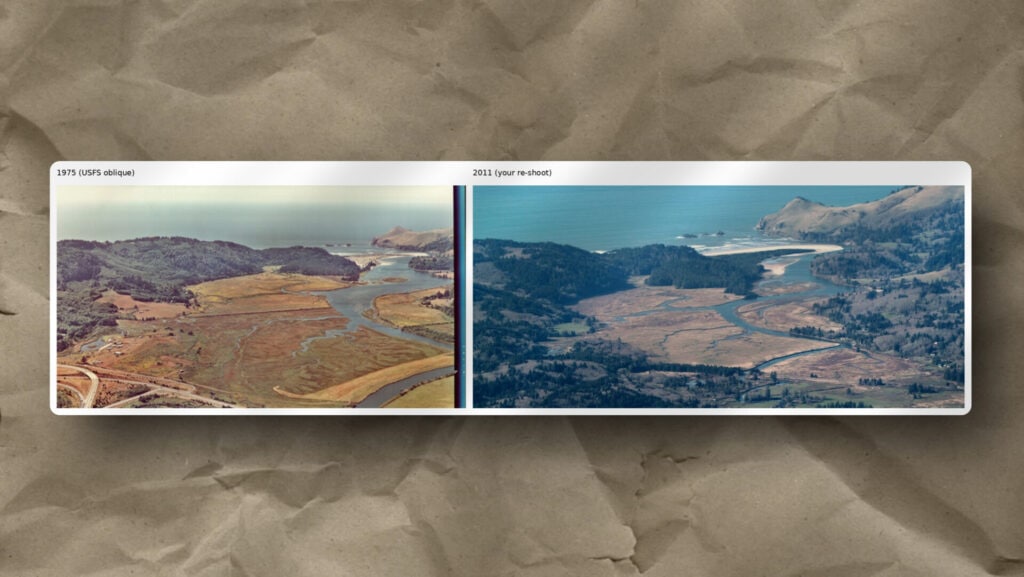
Repeat Oblique Photography: When You Cannot Wait for a Golden Dataset
Doctrine 25: The Five Stewardship Layers – A Diagnostic Taxonomy
The Structural Record:
The Physical Problem: When the Ground Moves: Why Institutions Misread Their Own Sensor Metrics.
The Data Reality: No Amount of Federation Saves a Broken Anchor Point.
The Network Architecture: Federation Cannot Anchor Itself – GRUAN and the Hidden Stewardship Layer.
The Institutional Stakes: Guarding the Room: A Hubbard Brook Story About Science and Funding.
The Governance Solution: When the Governance Instrument Exists: ICOS, NEON, and the Two Paths to Named Stewardship.
The Institutional Stewardship Function: Governance of Long-Term Scientific Infrastructure: Public Value Does Not Protect Itself names stewardship intelligence as the function responsible for identifying where scientific value is exposed to ordinary budget, staffing, maintenance, and administrative pressures before that exposure becomes irreversible loss.
The Policy-Implementation Seam: Evidence Does Not Implement Itself: Why Science Needs Stewards at the Policy-Implementation Seam. This piece identifies the named ownership gap that appears when evidence is real, valuable, and well documented, but no formal role exists to carry that value into the administrative decisions that determine whether the archive, platform, or observing system survives.
The Operational Response: The Repeat Oblique: When You Cannot Wait for a Golden Dataset.
The Diagnostic Taxonomy: Doctrine 25: The Five Stewardship Layers maps each piece in this series onto a unified framework of stewardship failure modes, from operational collapse at Layer 1 through cascade failure to translational stewardship at Layer 5.
The Peer-Reviewed Synthesis: Federation Cannot Replace Stewardship: Governing the Calibration Chain in Continental-Scale Observation Networks brings the physical anchor point, calibration chain, fitness-for-use question, federated architecture, and named stewardship obligation into a single governance argument. Readers who want a section-by-section explanation can begin with the plain-language companion.
Why This Matters More Now
As machine-generated language becomes cheaper, the scarce asset is not a polished explanation. It is provenance: the ability to trace a claim back to physical reality, field observation, custody, calibration, institutional responsibility, and accountable interpretation. Ground truth is not just data. It is the maintained relationship between evidence and the world it claims to describe.
Last Updated on September 13, 2026