Field Note: The Room She Chose
A field note about late bloomers, developmental environments, and creating conditions where non-obvious competence has time to emerge.
This field note uses youth jiu-jitsu as the field site, but the pattern applies to hiring, education, training, leadership development, and other systems that select people based on early visible performance. It examines why fast starters are often mistaken for high-potential performers and why developmental systems can create false negatives by filtering slow learners too early. This piece is an observation from a advanced kids BJJ class (six to eight kids who showed up because they chose to, not because anyone made them). It is about what happens when you build developmental conditions and step back, and what those conditions produce in people you were not necessarily building them for. It is also about what systems designed to identify and keep only the most obvious talent (“weed-out” or extraction systems) miss when they sort for the visible spark and walk away from the slow fire (and what that means for anyone responsible for designing a room where people are supposed to develop). This is a folllow-on to what is described in The Initial Spark Fallacy. The two pieces are meant to be read together.
The Setup
I have two kids in the program. I am also one of the coaches. My son is thirteen. My daughter is nine.
My son has been training jiu-jitsu for several years and has attended multiple academies and camps. He is athletic. He is also what I would call a slow learner in the specific sense that he needs to own a move before it sticks (I am also a slow learner, glacially slow in comparison to him). He cannot watch a technique demonstrated, drill it ten times, and carry it into a live roll. He needs to experiment with it. He needs to find the version that works for his body, fail with it several times, adjust, and arrive at something he can actually use under pressure. That process takes longer than a standard kids class can always accommodate. Kids classes have a structure that serves most students well. That structure moves through material in a specific way. For my son, the kids class is valuable, but it has a ceiling he keeps bumping into.
In January we added a Tuesday class. It was not designed as a remedy for any particular learning style. It was designed as a more advanced session taught with an adult approach (ninety minutes to two-hours, less structured, more exploratory, more rolling, more space for students to work through material on their own terms). The kids who showed up were the kids who were ready for that format and wanted more of it. Six to eight of them, consistently, week over week. They raised their hand once and kept raising it. The only reliable evidence that a room is giving people something worth coming back for is that they keep coming back.
My son raised his hand. The Tuesday class gave him what the kids class could not quite reach: time and space to experiment. He gets significantly more from adult-style sessions than from highly structured kids sessions, and that has been true across every academy and camp he has attended. The Tuesday class did not fix his learning style. It accommodated it.
My daughter raised her hand too, though in the early months her attendance looked less like choice and more like proximity. Her brother was going. I was coaching. So for better or worse, she was along for the ride.
What I Did Not Expect
My daughter has been training for roughly two and a half years. She was not new to the mat when January started. But the Tuesday class was new to her, and honestly she probably was not fully ready for it without me being there. That is a condition I can provide for my own child that I cannot provide for every student, and I want to name that plainly rather than let it go unacknowledged.
What I expected: the Tuesday class would serve my son in the way described above. More space, more experimentation, better fit for how he learns.
What I did not expect: five months later my daughter would choose to go alone.
This past Tuesday her brother was home sick. The easy out was available. She chose to go anyway.
There was one other student in the class that day. Another girl, eleven years old, roughly the same size and weight, a gray belt who has been developing steadily. On any competitive measure the eleven-year-old is ahead. She can still handily beat my daughter in a live roll. That gap is real and it is not the point.
In ninety minutes, with just the two of them on the mat, we taught the Ezekiel choke from mount, from closed guard, and from side control. Then the wrestle-up to an ankle pick. Both of them got it. Both of them drilled it on each other to learn, then with some resistance. Both of them left having added something they did not walk in with.
Six months ago that session was not available to either of them in that pairing. My daughter was not yet a useful partner for the eleven-year-old at that level of technical instruction. The eleven-year-old could not have gotten the reps she needed from a partner who was not ready to be there. The session required both of them to have crossed a threshold they had not yet crossed.
The threshold arrived because the room kept meeting them.
What the Data Shows
We track attendance. Over seventeen weeks of logged sessions this year, a clear pattern has emerged in who is attending the Tuesday class and how many hours they have accumulated there.
My son leads the program in total mat time. A meaningful portion of that (roughly forty-six percent) has been in the Tuesday class. He has logged more advanced hours than any other student, which tracks with what the class was designed to offer him.
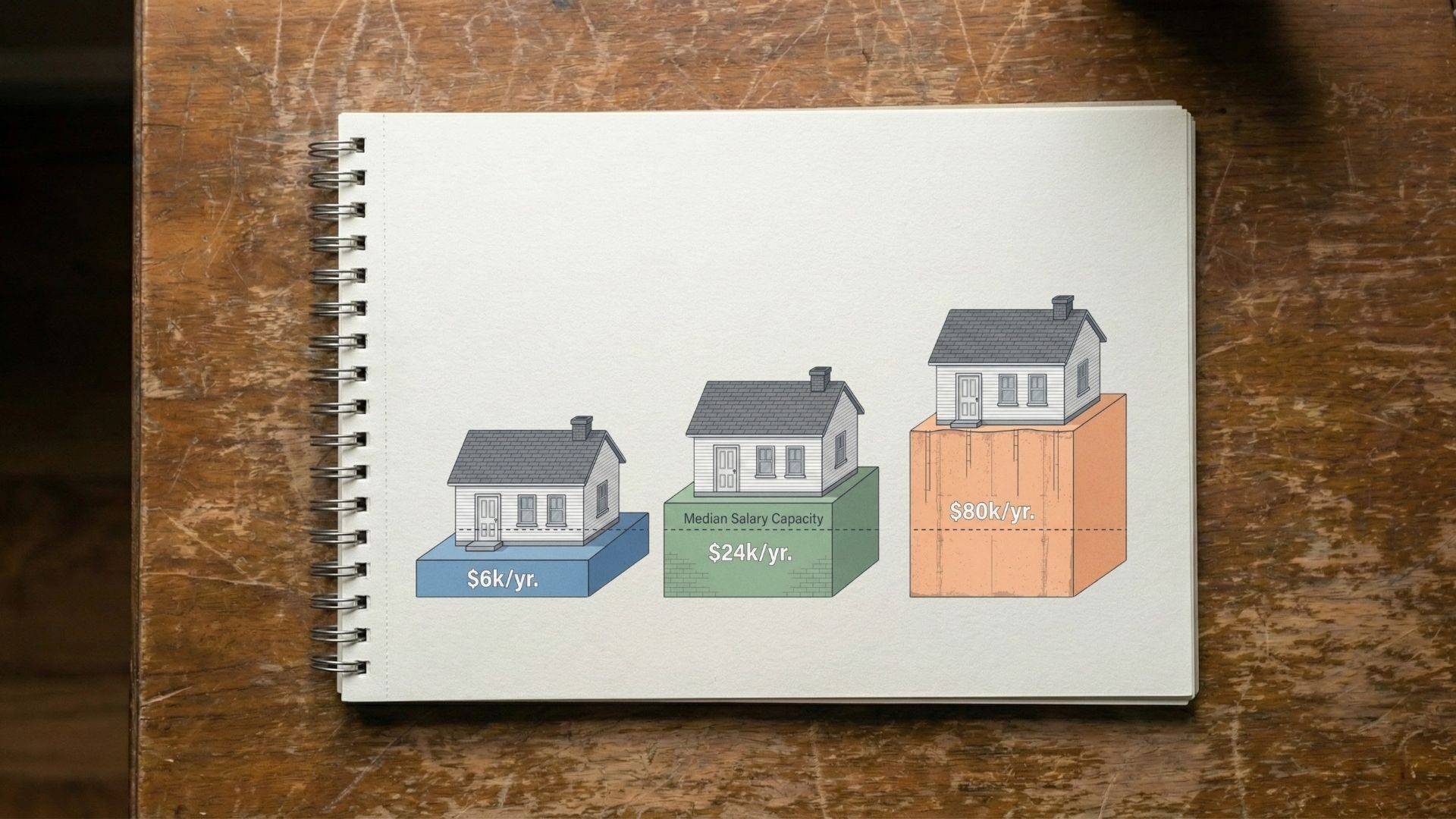
My daughter has logged eighteen hours in the advanced class this year. Thirty-four percent of her total mat time. She arrived at those hours by showing up, repeatedly, in a room she did not choose at the beginning.
One of the older students in the Tuesday cohort has accumulated so many advanced hours that the Tuesday class now represents the majority of her mat time this year. She is not supplementing her program with Tuesday. Tuesday has become her program.
I want to be careful about one thing the data does not show. The students with zero Tuesday hours are not students who chose not to come. The Tuesday class is not universally accessible. Some kids are not ready for a ninety-minute adult-style session. Some could be ready but cannot make the time. The zero column is not a choice signal. It is a constraint signal. The comparison that matters is not who is on Tuesday versus who is not. It is what Tuesday has produced in the kids who are there.
What This Has to Do With the Initial Spark Fallacy
The Initial Spark Fallacy is the mistake of confusing early, easy success with long-term skill. The corollary that field note did not name directly is the error of forecasting the absence of durable competence from early visible struggle.
My son’s development on Tuesday was predictable in outline. He is athletic, he has context from years of training across multiple programs, and he learns best in rooms that give him space to experiment. I built the conditions with students like him in mind, even if not exclusively for him. His response to those conditions was expected.
My daughter’s development was not.
She was uncomfortable in January. She was outmatched. She was there because the schedule required it. If you had applied standard evaluation criteria to what you saw in the first few weeks (early fluency, visible engagement, obvious momentum) you would not have flagged her as a kid to watch. She was the slow fire. Underground. No visible flame.
The Tuesday class did not identify that. It did not evaluate her. It simply held the conditions open long enough for the fire to find air.
The difference between an extraction system (a ‘weed-out’ culture) and a stewardship system is not the standard. It is the time horizon. An extraction system exits the relationship before the deeper question can be answered. A stewardship system stays in the relationship until the question answers itself.”
This Tuesday, my daughter answered it herself. She walked through the door when nobody required her to. Her brother was home. I did not need her there. She came because she wanted to be in the room.
What I Take From This
I did not design the Tuesday class to produce this outcome. I designed it as a higher-demand session for kids who were ready for more. The self-selection that followed was theirs, not mine. The data makes visible what was already happening.
But it is also clear, looking at what those conditions have produced across five months, what the Tuesday class is doing alongside the rest of the program. It is creating room for non-obvious competence to become visible. For a slow learner with deep athletic foundations, it creates space to experiment. For a reluctant nine-year-old whose brother dragged her along in January, it created something her father did not design and did not anticipate.
I cannot provide these conditions for every student. My presence as a parent-coach gave my daughter access to a room she might not have been in otherwise. That is a real limit and I am not going to pretend it generalizes cleanly.
What does generalize is the principle underneath it.
The first spark is easy to see. A slow fire requires stewardship.
The Tuesday class, whatever we intended it to be, became a room where slow fires could keep burning.
Do not coach the spark. Coach the conditions.
This field note is an Observation. It documents a specific instance of doctrine playing out in a real room with real students. It should be read alongside the Initial Spark Fallacy field note, which makes the general argument this piece makes concrete.
Last Updated on September 28, 2026