A Letter to Forest Service Colleagues: On the Clock That May Have Changed
3 April, 2026
Dear friends and former colleagues,
I have been thinking about many of you lately.
I am no longer with the agency, but I still care deeply about the people of the Forest Service and about the work you have carried for years, often under conditions that asked far too much of you. I know this is a hard and uncertain time. I also know that uncertainty can freeze people in place, especially when they are trying to be responsible, loyal, and patient. The agency’s mission remains vital, even when the structure executing it is under extreme stress.
One thing I have been reflecting on is how easy it is, in a complex bureaucracy, to let the clock make the decision for you. Not because you are weak, and not because you are blind, but because waiting can feel prudent. You wait for clarity. You wait for the next announcement, the “new guidance.” You wait for things to settle. You wait because making a big decision in the middle of uncertainty feels risky.
I understand that instinct. I felt it too. And for most of a federal career, that instinct is often correct. Budget cycles reset. Administrations change. New initiatives eventually run their course. Running the clock out is a legitimate strategy, and most of us learned it because it worked.
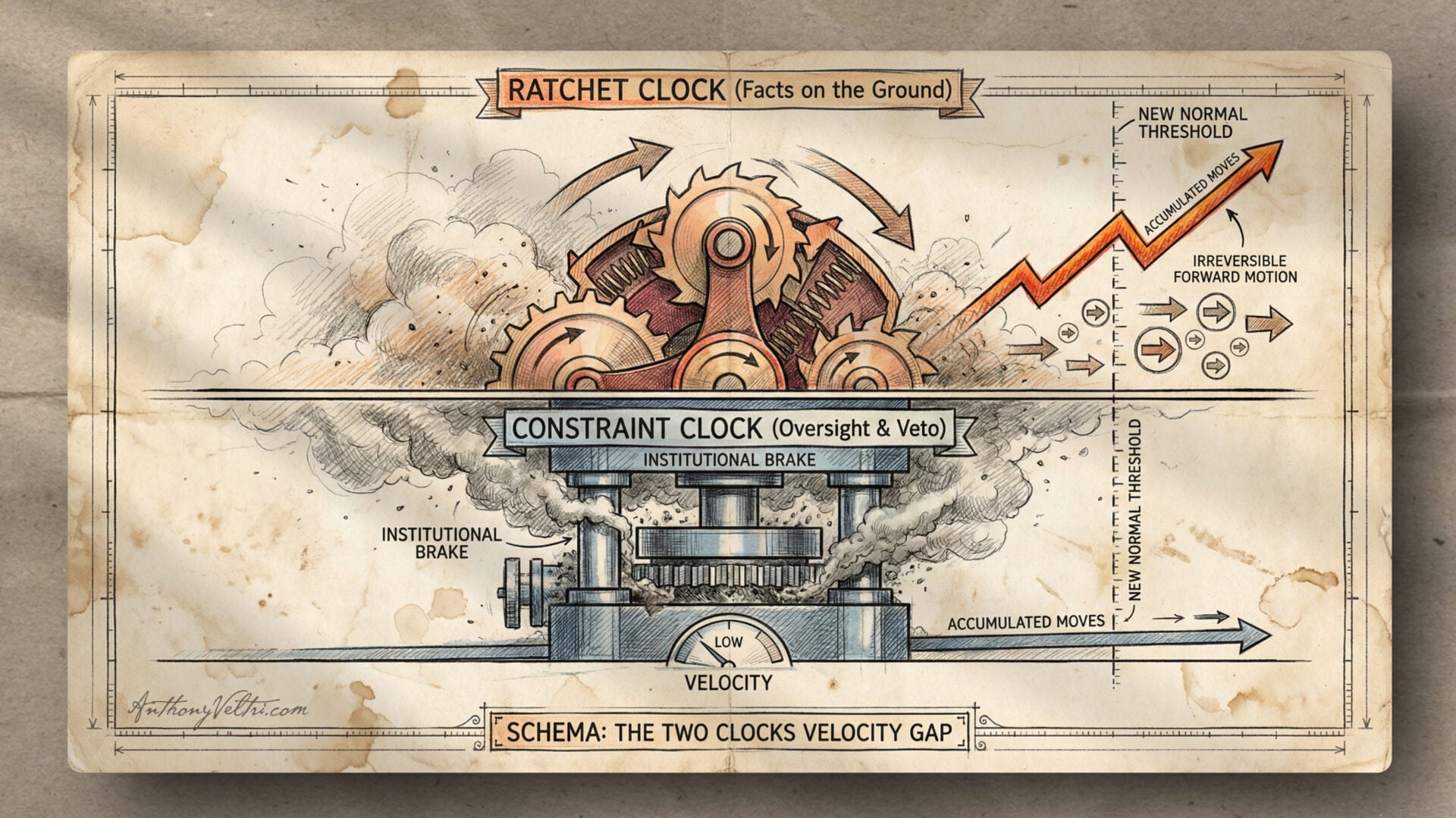
What I want to name carefully, as someone who cares about you, is that this may not be one of those moments. The environment that rewards patience is one where time works in your favor, where waiting preserves your options and the system eventually corrects. There is a different kind of environment, one where each passing month does not preserve options but quietly reduces them: confidence, external contacts, marketable momentum, the energy required to start something new. In that kind of environment, waiting does not buy safety. It borrows against it.
I am not saying that is definitively where things stand. Each person reads their own situation from the inside, and I respect that. What I am saying is that it is worth asking the question honestly, not once, but regularly, and not waiting for a single clear signal that may not come in a recognizable form.
When I was eliminated in February 2025, I did not get the luxury of waiting. I was forced to make decisions sooner than I would have chosen. That was painful and destabilizing. But with time, I have come to see that being forced to act early also preserved something important. It forced me to begin rebuilding before too much time, energy, and confidence had drained away.
I am not writing to tell anyone what they should do. Each person’s situation is different. Families are different. Financial realities are different. Callings are different. I also know many of you are still serving with integrity in a situation that may feel increasingly difficult to read.
I only want to offer this: do not let prolonged uncertainty quietly make your decisions for you.
Take stock of where you stand. Name what you know. Name what you are tolerating. Name what is changing in you while you wait. If staying is still the right choice for now, let it be a real choice, made consciously. If preparing options outside the system is wise, do not postpone that preparation simply because the next memo might bring clarity. Protect your agency while you still have it.
You have given a great deal. More than most people will ever know. Whatever comes next, I hope you will remember that your value is not exhausted by a title, a reporting line, or an institution’s current condition. The qualities that made you matter there will still matter elsewhere: judgment, steadiness, care for the land, care for people, competence under pressure, and the ability to keep going when the work is hard.
I have been writing about these patterns more formally here for anyone who finds that kind of framework useful. But the core of it is simple and I mean it personally: I am rooting for you. Whatever choices you make, I hope they are choices you can still recognize as your own.
With utmost respect and care,

Anthony
Related Frameworks
For those who want to examine the structural mechanics behind these patterns, they can be further explored here:
The New Guidance: On Waiting, Agency, and the Clock That May Have Changed
Last Updated on May 2, 2026