When the Ground Moves: Why Institutions Misread Their Own Sensor Metrics
Sometimes the measurement is correct.
The problem is that the world it was calibrated against no longer exists.

Sometimes the measurement is correct.
The problem is that the world it was calibrated against no longer exists.

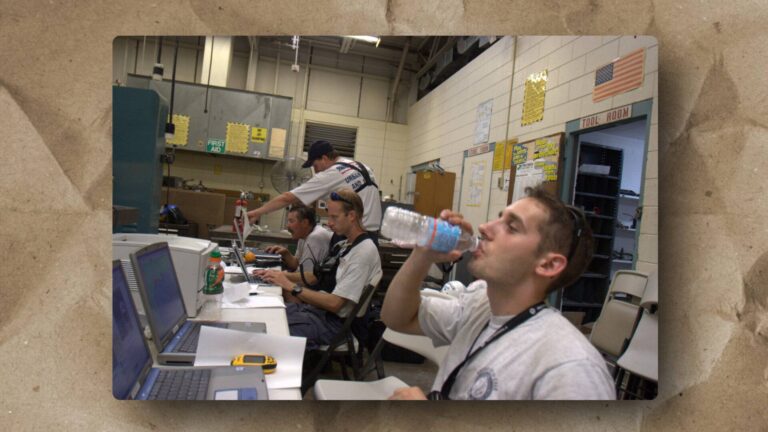
Doctrine Claim: Technical interoperability is impossible without organizational interoperability. When a federating body ignores the communication boundaries of its sovereign partners, the resulting system will predictably fracture. I watched the physical manifestation of Conway’s Law long before I knew the academic term for it. In 2005, a USAR team operated out of a high school…

Why Your PM Toolkit Breaks Down in Federated Environments, and What to Use Instead Domain: Federation Architecture / Interface Stewardship Author: Anthony Veltri | anthonyveltri.com Related Doctrine: Doctrine 24: Stewardship Places the Burden on the Steward | Doctrine 11 Companion: Agency vs. Outcome Operational Basis: Hurricane Katrina (2005), Hurricane Florence (2018), iCAV / DHS GII…

Stakeholder Engagement Architecture for Federated SystemsAudience: Enterprise architects facing impossible stakeholder roles, and leaders trying to understand why “leaning harder” destroys the relationships they’re trying to build Scene You’re the stakeholder coordinator for a federal interoperability initiative. Six months in, you’ve engaged 50+ agencies across federal, state, local, and tribal jurisdictions. Some are participating actively….

This note covers the internal silencing mechanisms: cultural gatekeeping, legal confusion, organizational centralization, and more. In federal service, you take the king’s coin and you become the king’s man. The salary, the benefits, the pension – these come with obligations. One of those obligations is silence. Not legal silence. Not classification. But cultural silence.

Approval predicts compliance. It does not certify legitimacy.
“It had legal clearance.”
Someone says it with finality. Higher headquarters approved it. The lawyers signed off. There’s a memo. A stamp. Closure.
You feel relief. A hard gate has been passed.
That relief is the trap.

In stable environments, we navigate by “Instrument Flight Rules.” We trust the dashboard. We trust the map. We trust that the blue line on the screen matches the road on the ground.
In a crisis, this trust is dangerous.

I’m describing a pattern: capability-first builds operational tools, and post-hoc theory provides handles that make those tools transferable.

The Opening Salvo: A Standard of Mutual Sovereignty Let me be clear: this is not a field note about the inferiority of manual craft. I have a bone-deep respect for the “Chisel Purist.” My lineage is built on the scent of physical resistance. I grew up with the unmistakable, heavy smell of a hot engine…

The next office is not late because they are sloppy. They are late because they just finished their own internal pre-brief. One more manual verification cycle. One more spreadsheet reconciliation. One more “let’s make sure the numbers match before we walk into the synchronization meeting.”
This is the hidden human cost of interoperability dysfunction. It punishes your best people on both ends of the spectrum.
End of content
End of content
Anthony Veltri · Enterprise Architect (Interoperability + Governance) · Designing decision infrastructure for cross-boundary ecosystems. · Introductions