Why Career Opportunity Is Not Enough: Accessible, Legible, and Convertible Are Three Different Things
What the mills left behind, and why access is not the same as a route you can see
I grew up in the cultural neighborhood of the Amoskeag Mills story, even though I did not grow up in Manchester.
In Rhode Island grade school, we got the Samuel Slater version of industrial history. Water power. Textile machinery. Brick mills. New England ingenuity. The story arrived as a clean line of progress: invention, growth, jobs, prosperity.
We did not spend much time on what those mills asked of the people inside them. Or what families carried forward after the machinery stopped.
Years later, after reading more about Amoskeag, I began to understand that it was not simply a factory. It was a system that organized a city. It shaped where people lived, which work was visible, what counted as respectable, who had status, what a family could afford, and what kind of future seemed realistic.
I use the phrase caustic ash in other field notes to describe what happens when a manager treats a committed crew as a compliance problem. The task may get done, but something corrosive settles afterward. The mills left their own version of that ash. Some of it was physical, the ordinary residue of heavy industry. Some of it was social: the rules families learned about work, loyalty, risk, property, and survival.
Work hard. Learn something useful. Fix what you can. Save what you can. Do not depend on people who can leave you. Stay close to family. Own something tangible when you get the chance.
Those were not foolish rules. They were earned.
But rules that help one generation survive can become a bad map for the next one when the terrain changes underneath them.
What My Grandfathers Could See
I have been thinking about my two grandfathers.
My mother’s father left school after eighth grade, worked in a mill, went off to World War II, and later became a mechanic. He had deep practical knowledge of household and automotive electricity and of the electronics of his era. He understood vacuum tubes, transistors, wiring, testing, and repair. He could diagnose a problem, explain it plainly, and fix it.
On a mechanic’s salary, he bought a three-lot home site, built his house, and supported three children.
My other grandfather came from Italy in 1955, from a country still rebuilding after the losing side of World War II. He brought his family to the United States and built a small construction business. At one point, he owned six houses that he had built and paid for himself. He built homes, sold them, and sometimes retained one when he subdivided a lot so it could generate rental income.
He could do the practical mathematics of construction in his head. Rise and run for stairs. Roof calculations. Brick quantities, including grout. He was not doing math to prove he could do math. He was using it to make things fit, stand up straight, and earn money.
It would be easy to tell these stories as an argument that education did not matter.
That would be the wrong lesson.
Neither man was uneducated. Their formal schooling was limited. Their practical education was not. They learned through work, repetition, responsibility, observation, and the constant test of whether a thing actually functioned.
More importantly, both men could see a route from competence to stability.
Learn the work. Become useful. Build trust. Earn. Buy something. Retain an asset. Build a household. Pass something forward.
The route was difficult. It was not guaranteed. It required intelligence, discipline, physical labor, and luck.
But it was legible.
Accessible Is Not the Same as Legible
We usually talk about opportunity as an access problem.
Can someone apply? Can they enroll? Can they borrow? Can they get admitted?
Those questions matter. They are not enough.
A path can be technically accessible and still be nearly impossible to use because it is not legible.
By legible, I mean that a person can see what the work actually is, how someone gets started, what the intermediate steps look like, what it costs, who helps, what gatekeepers care about, what failure looks like, and whether the path can actually lead to a stable life.
There is a third question too. Even a visible path may not be worth taking unless it is convertible. Can the training, effort, and cost plausibly turn into income, ownership, security, or meaningful mobility?
| Question | What it asks |
|---|---|
| Accessible | Can I technically enter this path? |
| Legible | Can I understand and navigate the route? |
| Convertible | Will the route plausibly turn effort into a stable life? |
Those are different questions. Our institutions often treat them as one.
A young person may technically be able to attend law school. A scholarship may technically be available. But if nobody in their family or community can explain the admissions process, internships, debt, professional norms, licensing, and the first difficult years of practice, the route may not feel real. It exists. But it is not legible.
The same is true in trades, creative work, public service, entrepreneurship, skilled technical work, healthcare, and higher education.
Training Is Not Always the Same Thing as a Route
Consider a young person who loves baking and already works in a bakery. I knew many such people growing up in Rhode Island in the late 1990s and early 2000s, and my family had a closer view than most: my parents took over a restaurant for a family member during my formative years, and even in that short window I watched the economics and expectations of food service shift in ways that did not reverse. The path from bakery work to a livelihood was not straightforward then either, but the debt required to enter it formally was considerably smaller, and the distance between demonstrated craft and a viable income was not yet what it has since become.
What made that arrangement possible was something that receives almost no attention in conversations about small business and food service: my grandfather had built and owned the building the restaurant operated in. When my parents sold the restaurant, the building stayed in the family. The asset outlasted the business. That kind of capital formation, building something, retaining it, and letting it generate income through successive tenants and uses, is not impossible today. But the distance between craft or trade competence and owned commercial property has grown long enough that most families never see it as a realistic sequence to attempt.
An expensive culinary program might offer something genuinely valuable. It may provide serious mentorship, relationships with respected kitchens, placement support, a recognizable affiliation, and people who will answer the phone when a graduate needs an opportunity. That is not merely instruction. That is a route.
Or the program may offer classroom training and a credential while the jobs available afterward mostly reward production speed, quality, reliability, food-cost discipline, and someone willing to vouch for the worker. Those are radically different purchases, and a family cannot make a sound decision until it knows which product it is buying.
The distinction becomes sharper when you understand what the credential is actually doing in the labor market.
Law requires a law degree to practice. Medicine requires a medical degree and a license. Those credentials are legally mandated conversion gates. Without them, you cannot work in the field at all. The debt may still be severe, but the credential is not optional. It converts across the entire labor market, not just at the top.
There is an old medical school joke that sharpens this. What do you call the student who graduates last in their medical school class? Doctor. Because that credential, earned by whoever finished last, still grants the legal right to practice medicine. The person at the bottom of the class and the person at the top sit for the same licensure exam.
The salary gap between a neurosurgeon and a family practitioner is real and substantial, but the comparison is less straightforward than it appears. Neurosurgery is not simply a higher-paying outcome from the same credential. It requires entry into a highly competitive seven-year residency, and some surgeons then add fellowship training for further specialization. The family practitioner and the neurosurgeon both entered through the same legal floor. One stayed there. The other passed through additional defined gates to reach higher ground. But both are practicing medicine, and neither is working a job that would have hired them without the credential. The credential creates a floor beneath the entire field, even for the person who finished last.
Baking, pastry, and most of hospitality have no such floor. The last graduate of a culinary program walks out with the same debt as the first and into a labor market that does not require the credential at all. There is no licensure exam. There is no legal protection. A local bakery, a hotel kitchen, a catering company, a food service operation, a grocery chain in-house bakery: none of these are licensed professions. The vast majority of working pastry professionals spend their careers in exactly these environments, and none of those environments required the credential to enter.
There is a narrow exception worth naming. Large institutional food service contractors operating at scale, the kind that manage dining operations for national park concessions and large institutional clients, do hire into management roles where formal credentials carry some weight. But that is food service management, oriented toward procurement, compliance, volume operations, and contract administration. It is a different credential for a different job. A baking and pastry arts degree does not fit that slot.
Which leaves one remaining conversion window where the pastry credential genuinely matters: the apex of the culinary world. And here is where the comparison becomes precise.
Berklee College of Music produces graduates at every tier of the music industry: session players, touring musicians, producers, teachers, working composers, and yes, occasionally, Grammy winners. Johnson and Wales produces graduates at every tier of the culinary world: hotel kitchens, catering operations, food service management, local bakeries, and yes, occasionally, Michelin-starred restaurants. Neither institution is misrepresenting itself.
The legibility failure is not that these schools lie about outcomes. It is that the debt is uniform while the distribution of outcomes is not. Most graduates land somewhere in the middle of the field, which is a respectable and livable outcome in music or in baking. But the middle of the culinary field does not ask where you trained, and the middle of the music industry cares far more about your output, your network, and your reliability than your diploma.
At full sticker price, the financing burden can be sized as though a high-end outcome were the expected destination, even though most graduates will land in the middle of the field. Individual debt will vary with aid, family resources, and borrowing choices. The convertibility question remains the same: does the likely outcome justify the actual cost carried by that student? The labor market places most graduates somewhere else. If that distribution were made visible before the decision, the calculus would look different for most families.
That is the convertibility question in its sharpest form: not whether the credential converts at all, but whether it converts at the tier where most graduates actually land, and whether the debt was sized accordingly.
At nationally recognized culinary programs, undergraduate tuition commonly runs between $40,000 and $50,000 per year. Room and board adds another $15,000 to $17,000. A four-year baking and pastry credential can generate $220,000 to $270,000 in total cost before interest. The Bureau of Labor Statistics reports median baker pay at $36,650 annually. A standard ten-year loan repayment on $240,000 at 6% runs roughly $2,664 per month, or about $31,974 per year. That would consume roughly 87 percent of median gross baker pay before rent, food, transportation, or healthcare.
The arithmetic does not require editorial commentary. It is the convertibility question, answered in numbers.
What the Biography Leaves Out
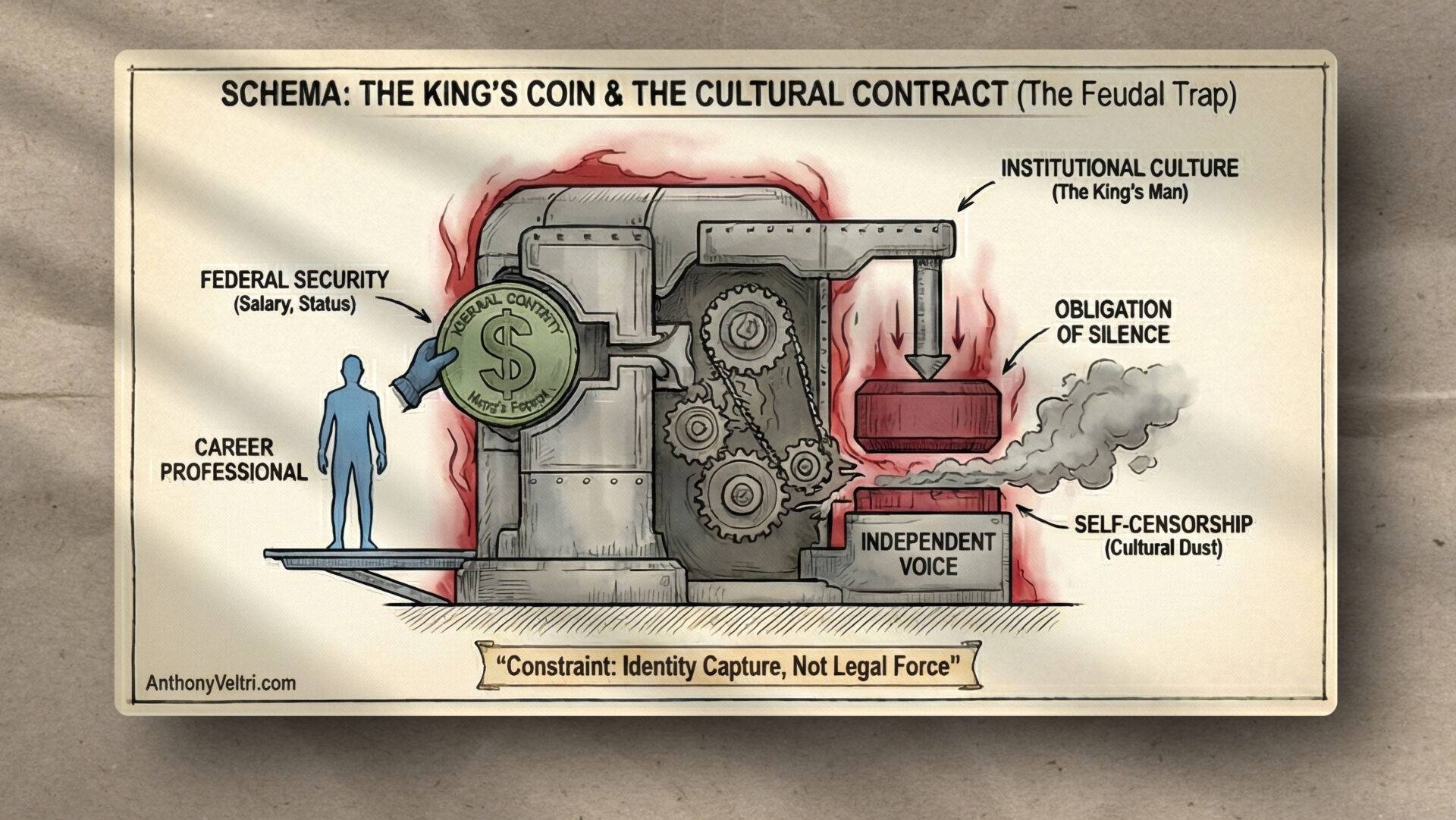
The credential problem runs in a less obvious direction too. Families do not only misread which credentials are necessary. They also misread why visible success stories succeeded.
I grew up in Rhode Island and knew many people who went to Johnson and Wales across many fields and many outcomes. Rhode Island is small and the community around that institution was visible in everyday life. This is not a critique of the school. It is an observation drawn from watching a range of people move through it and into the world.
In the early 1990s, a rock climbing gym opened in Pawtucket, right off the railroad tracks. It served a tight community of climbers who knew each other and the owners by name. In the late 1990s, two partners bought it. Both held Johnson and Wales degrees. They stayed at the original location briefly, then moved to a new space, then opened another, then another. What became one of the larger indoor climbing gym companies in New England grew from that first acquisition. Both partners were present and accessible in those early years, the kind of owners who were always on the floor and talked openly with the people around them about what they were building and how.
The business degree is present in that story. It likely contributed something real to how they approached operations, marketing, and growth. But the detail that mattered most in the early expansion was not the curriculum. One partner’s brother was a commercial real estate attorney. He helped them negotiate long-term commercial leases with terms structured heavily in their favor. Those leases gave each new location the runway to survive the early years, to build membership, to reach viability before the economics were required to be perfect.
A standard undergraduate business program will teach you that commercial leases exist and that legal review matters. It will not teach you how to negotiate specific lease terms that determine whether a new location survives its first three years. That knowledge lives in specialized legal and real estate practice, which the family connection made accessible. The JWU degrees appear in the biography, but the lease structure does not.
This is a legibility failure of a particular kind. Families looking at a visible success story attribute causation to the most visible element. The credential is present, the business succeeded, therefore the credential explains the success. The actual conversion mechanism, the family expertise, the favorable lease, the specific piece of social capital that created the structural conditions for growth, remains invisible to anyone reconstructing the story from the outside.
Both partners were clearly capable operators. The original owner built the gym. The JWU partners built the company. Those are genuinely different skills, and the transition from one location to many required real operational judgment at every step. The lease created runway. They still had to fly the plane, and they did. But the family watching from the outside sees the business degrees and draws the obvious conclusion. They are not wrong that the credential was present. They are wrong about what it was doing.
The Old Map No Longer Matches the Territory
My grandfathers faced hard work, uncertainty, and real constraint. I am not pretending their lives were easy. But their economy had fewer invisible handoffs between competence and stability.
A mechanic’s practical skill could lead to a wage that could plausibly support a home. A capable builder could learn the trade, earn trust, acquire a lot, build a house, retain property, and create a family asset. The distance between being useful and building a stable life was shorter.
I learned firsthand how quickly that distance can change.
When I was a teenager, my parents told me to get a job at Almacs. The chain had been there my whole life and their whole lives before that. It was unionized. It was stable. It was the kind of institution that seemed permanent because it had always been there. I have early memories of being pushed through it in the baby seat of a shopping cart. A year or two after I started working there, Almacs went out of business. The advice was not wrong when they gave it. The institution just did not stay.
That is the nature of the old map. It describes a real place. The place changes. The map does not update automatically.
The convertibility problem runs deeper than institutions closing. I completed a master’s degree researching wildland fire spread using satellite remote sensing, which is precisely the technical work the Forest Service depends on. The Forest Service was not interested. The credential was real. The expertise was documented. The direct route did not convert. I eventually reached the Forest Service, but only after routing through the Army and the Department of Homeland Security, which had their own reasons to care about remote sensing and change detection. No map I was given showed that route. I found it by moving through institutions that valued adjacent capabilities, not by following the legible path from my thesis topic to the obvious employer.
That is convertibility failure at the institutional interface. The training existed. The competence existed. The credential existed. The direct line between all three and the institution that should have wanted them did not.
Today, the handoffs are more fragmented across the board.
Schools can provide education. Lenders can provide financing. Employers can demand experience. Landlords can demand income and credit. Professional networks can reward people who already understand their rules. No one is necessarily responsible for showing a young person whether the whole chain closes.
Each individual step may be accessible. Together, they can become an invisible maze.
That is why old advice can be sincerely meant and still be dangerous.
“Work hard. Get a degree. Get a stable job. Buy a house when you can.”
Those were not lies when earlier generations said them. For many families, they were instructions that had worked. But the ratios changed. Housing costs changed. Education costs changed. Employment became less stable. Healthcare became more expensive. Credentials multiplied. Entry-level work became harder to identify and harder to secure.
The old map may still describe the place your parents remember. It does not always describe the terrain their children are entering.
Why This Matters More Now
This distinction is becoming more important, not less.
The noise floor is rising. Someone running a small online business in 2001 had more organic visibility than a practitioner with documented credentials and published work can reliably expect today. Good content used to surface. Now it competes with volume, paid placement, and authority signals that take years to build. Artificial intelligence accelerates this dynamic. It has not made routes more legible. It has made it harder to distinguish signal from noise, which means the people who most need route information have even less chance of finding it without a guide.
The legibility failure can also run the other direction. Dexter Holland, the lead singer of The Offspring, reached global commercial fame in the 1990s. He later returned to the University of Southern California to complete his doctorate in molecular biology, which was conferred in 2017.
What makes his experience striking is that he was not an unknown quantity to the institution: he had already earned his bachelor’s and master’s degrees in biology from USC before his music career exploded.
Yet, despite having a proven academic pedigree within their own system, he has said publicly that he felt pressure to conceal his musical career from his professors during his doctoral work. He was concerned that being known as a famous rock musician would signal that he was not serious about his research.
This is worth restating. A student with two prior degrees from that exact university felt he needed to hide his primary profession from the institution credentialing him, simply because the framework for what counted as serious intellectual work had no category for the coexistence of both.
The credential system was not wrong to have standards. But a system that cannot read what a person is actually doing is not fully legible in either direction. It is a one-way mirror: it asks the student to make themselves legible to the institution without offering equivalent transparency about what the institution values and what it cannot see.
Platforms continue to separate workers from the institutions that once trained and protected them. Credentials keep multiplying while their conversion value becomes harder to judge from the outside. Housing, debt, and healthcare costs leave young people less room to spend five years discovering that a path they were sold does not actually lead where they thought it would.
The practical question is no longer only: what do you want to be?
It is also: what does the first five years of this path actually look like? What does it cost to prepare? Who hires from this program? What does the credential signal, and equally important, what does it not signal? What role do affiliation and placement play, as distinct from instruction? What happens if the first job does not materialize? What is the alternate route when the original plan fails?
At its best, a school, apprenticeship, employer, or mentor does more than let someone in. It makes the path visible. It introduces the hidden rules. It shows what the hazards are. It gives people enough information to decide whether the route is worth the cost.
That is not hand-holding. That is navigation infrastructure.
People do not always choose the statistically best route. They choose the routes they can see, explain, and imagine themselves surviving. That is not a failure of ambition. It is a failure of route information.
A Route Is More Than a Door
The longer report on this site, College Financing and the 5-Year Home Runway, looks at what happens after a route is chosen. It asks whether the debt, wages, housing, and early-career risk actually leave enough room for a young adult to become independent rather than merely solvent enough to keep paying.
This field note asks the question that comes before it: can a family see the route clearly enough to make an informed choice?
Opportunity is not a door that happens to be unlocked.
It is a route a person can see, understand, afford to travel, and reasonably expect to lead somewhere.
When we offer only formal access, we do not create equal opportunity. We create invisible mazes, then blame people for getting lost.
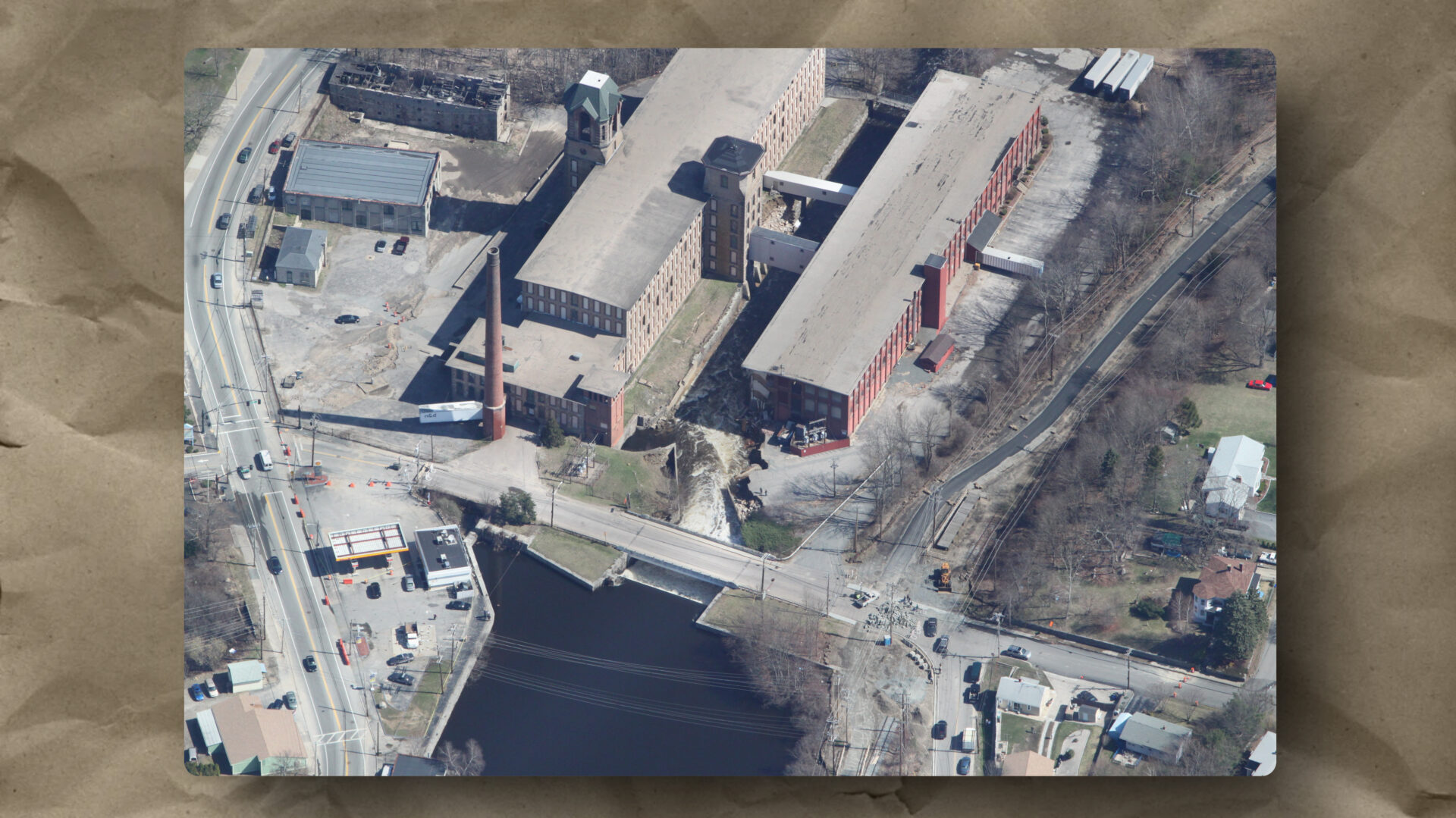
Featured Image: Arctic Mill complex, South Branch of the Pawtuxet River, West Warwick, Rhode Island, April 2010. The Pawtuxet River crested nearly thirteen feet above flood stage on March 31, 2010. The dam that once powered production has failed. The paved surface and building corner at center are washing into the river. The physical system fails. The community built around it absorbs the consequences. Photograph by Anthony Veltri.
Related reading: Field Report: College Financing and the 5-Year Home Runway
Last Updated on June 28, 2026